

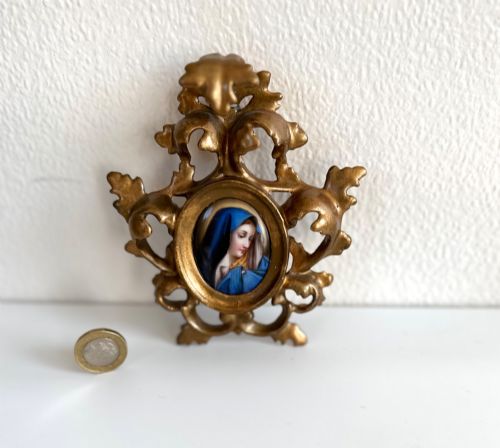


Antique Enamel Portrait Plaque
An antique enamel portrait plaque is a miniature painted likeness fused to metal or porcelain, sought after for its intense miniature detail and rich colours.
Antique Enamel Portrait Plaque
An antique enamel portrait plaque represents a detailed miniature painted likeness, often mounted in gilt metal, ormolu, or set within decorative domestic objects. When you search for an antique enamel portrait plaque, you are looking at small-scale portraits spanning the eighteenth and nineteenth centuries, including Victorian and Regency examples.
The pieces on this page appear in various forms, from standalone wall plaques and framed miniatures to decorative accents on clocks, tazzas, and table mirrors. You are most likely to encounter Limoges enamels on copper and porcelain plaques produced in French and English workshops.
The subjects range from classical figures and historical personalities, such as Moliere and Prince Charlotte, to religious icons like the Madonna. These portraits capture miniature artistry at its finest, preserving delicate brushwork through the vitrification of glass powders.
Materials and construction methods
The foundation of these pieces relies primarily upon copper plates or porcelain bases, upon which finely ground coloured glass pastes are applied. Each layer of enamel requires firing in a kiln to fuse the vitreous colours permanently to the metal substrate.
Many plaques feature protective gilt bronze, ormolu, or brass mountings designed to frame the delicate painted surface. These metal housings often incorporate elaborate revival styles, from French Baroque to Victorian Rococo, securing the plaque within a rigid structural frame.
Antique Enamel Portrait Plaque Retail Price Guide 2026
Typical asking prices for enamel portrait plaque among the pieces listed under this phrase on Sellingantiques today, from the lower quarter to the upper quarter. They describe what is for sale here now, not the wider market.
Listings feature eighteenth-century and nineteenth-century pieces utilising copper, porcelain, ormolu, and gilt bronze across various decorative forms.
Factors determining quality
The sophistication of the mounting hardware also dictates overall merit. Cast ormolu frames with chased detailing and secure bezels elevate the piece above simple brass or plain wooden surrounds.
Henry Pierce Bone·F. Bienvue
The Antique Enamel Portrait Plaque Glossary
- Limoges enamel
- Painted enamelwork originating from the French city of Limoges, renowned for opaque and translucent colours over copper. This technique reached notable heights during the eighteenth and nineteenth centuries.
- Ormolu
- Gilded bronze or brass furniture and decorative mounts popular in French furnishings. It provides a bright, gold-coloured finish that frames many portrait plaques.
- Vitreous enamel
- Glass fused to a metallic surface through high-temperature firing. This process creates a durable, glossy coloured surface that resists fading.
- Tazza
- A shallow bowl or cup mounted on a stem and foot, often decorated with inset porcelain or enamel plaques. They served as ornamental display pieces on nineteenth-century tables.
Antique Enamel Portrait Plaque: Frequently Asked Questions
How do I clean an antique enamel portrait plaque?
Dust the surface gently with a soft, dry brush to prevent accumulation. Avoid all water, chemical cleaners, and abrasive cloths that could scratch the delicate glass surface or damage the metal mount.
Keep the piece away from direct sunlight and high humidity to protect both the pigments and the underlying copper or porcelain base.
Were these plaques originally meant to be hung or mounted?
Many eighteenth and nineteenth-century examples functioned as standalone wall art or cabinet pieces. Others were integrated directly into larger decorative objects such as clocks, mirrors, and comports.
Their versatile format allowed makers to use them both as independent portraits and as ornamental inserts for luxury furnishings.
How can I tell an eighteenth-century plaque from a nineteenth-century one?
Examination of the reverse side and the mounting style often reveals the manufacturing period. Earlier pieces frequently show counter-enamelling on bare copper backs, while later Victorian and revival examples display different framing techniques and distinct stylistic motifs.
Comparing the handling of the paint and the composition to dated examples helps clarify the likely era of production.
What is the difference between porcelain and copper enamel plaques?
Copper-backed enamel plaques involve fusing glass paste directly to a shaped metal sheet. Porcelain plaques utilise a fired ceramic base painted with enamel colours before a final glaze firing.
Both materials achieve permanent, vibrant imagery, but they require different handling and present distinct weights and reverse textures.