





Antique Enamel Picture Frame
These antique enamel picture frame examples bring vibrant colour and metalwork into a room, offering miniature works of art for displaying cherished portraits.
Antique Enamel Picture Frame
An antique enamel picture frame combines protective glass and a sturdy structure with smooth, fired vitreous pigments to display small portraits and photographs. Buyers searching for an antique enamel picture frame will encounter various formats, from French table stands to wall-hanging plaques and paired display pieces originating in the nineteenth and early twentieth centuries.
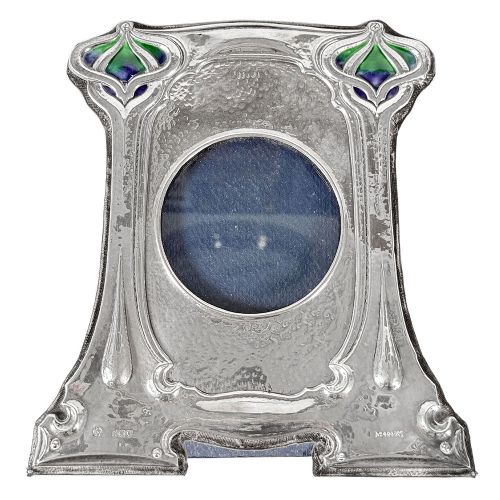
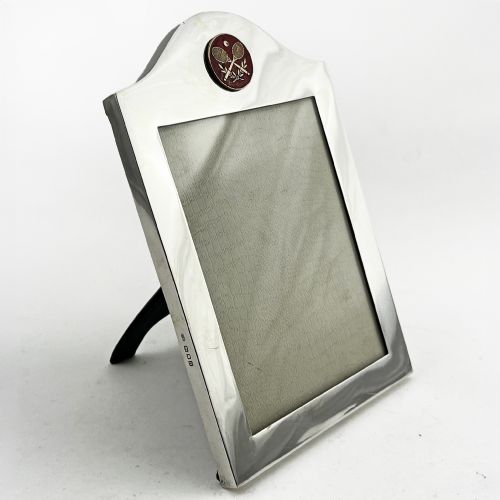
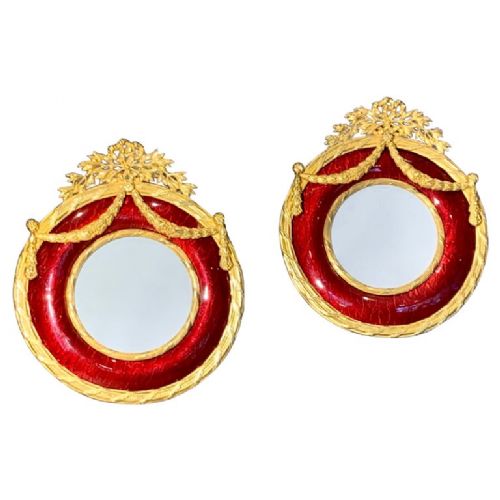
The selection ranges from French gilt bronze designs set with champleve patterns to British Arts and Crafts silver work. Pieces span periods including the Georgian era, Napoleon III, Edwardian times and Art Deco, reflecting shifting tastes in domestic display.
While many objects serve primarily as photograph frames, the category also encompasses related items such as hand mirrors, wall clocks and painted porcelain plaques housed in metal mounts. These diverse objects share a focus on decorative metalwork combined with colourful surface decoration.
What Varies in Quality
Quality depends on the precision of the metal casting and the clarity and depth of the fired enamel colours. Finer examples display crisp detail in chased bronze or worked silver, with even surfaces free from cloudiness or heavy restoration.
The sophistication of the design dictates value, distinguishing standard production work from items bearing specific maker attributions or detailed figural subjects like cherubs and historical themes. Intricate framing elements, substantial metal gauges and well-preserved original backings elevate certain pieces above simpler variants.
Listings feature materials such as sterling silver, gilt bronze, copper, brass, glass, wood and ebonised timber.
William Hutton and Sons·Samson
The Antique Enamel Picture Frame Glossary
- Champleve
- An enamelling technique where troughs are dug into a metal plate and filled with vitreous paste before firing. This method creates bold coloured patterns bordered by thin metal lines.
- Gilt Bronze
- Bronze metal treated with a thin layer of gold or gold-coloured wash to give a rich metallic finish. It provides a durable and decorative framework for enamel plaques.
- Ormolu
- Finely chopped and dissolved gold applied to a bronze base using mercury amalgamation, or simply gilt bronze in later contexts. It yields a bright golden appearance popular in French decorative arts.
- Arts and Crafts
- A design movement valuing handcraftsmanship and traditional materials over industrial mass production. Frames from this style often feature hammered silver paired with simple enamel details.
- Vitreous Enamel
- Glass powder fused to a metal substrate through intense heat in a kiln. The resulting surface resists fading and maintains its vibrant colour for centuries.
Antique Enamel Picture Frame: Frequently Asked Questions
Were these frames always used for photographs?
Many held small paper photographs or painted miniatures of family members during the nineteenth and early twentieth centuries.
Others were designed specifically to house porcelain plaques, embroidered textiles or mirrors rather than personal portraits.
How can I tell French frames apart?
French pieces from the nineteenth century frequently employ gilt bronze with champleve enamel work in geometric or floral patterns.
They often incorporate easel backs, cherub motifs or rich orange and green colourways characteristic of Parisian workshops.
What is the difference between silver and bronze frames?
Silver frames, particularly those from the British Arts and Crafts movement, rely on hammered metal surfaces and simpler geometric forms.
Bronze and ormolu examples tend to feature cast ornamentation, including scrolling foliage, figurative scenes and heavy gilding.