



Antique Enamel Candlesticks
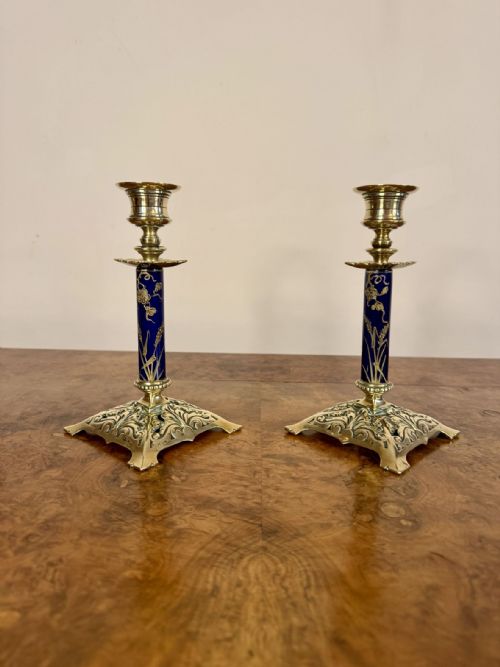
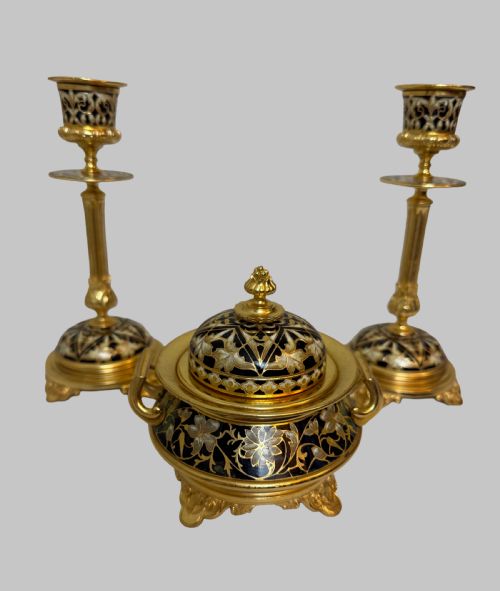
These antique enamel candlesticks bring vibrant colour and metalwork into a room, forged in the nineteenth century across French and English workshops.
Antique Enamel Candlesticks
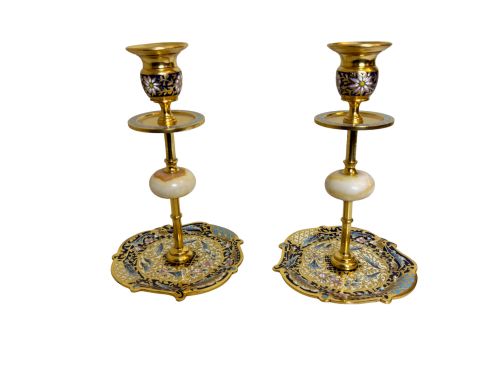
When you search for antique enamel candlesticks, you encounter a range of nineteenth-century lighting and desk pieces combining fused glass surfaces with metals like gilt bronze, brass, and ormolu. The most common forms on this page are matched pairs of nineteenth-century French and English candlesticks, often featuring champlevé or cloisonné enamel work.
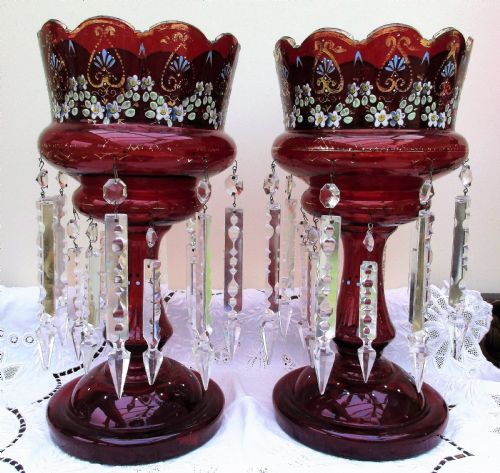
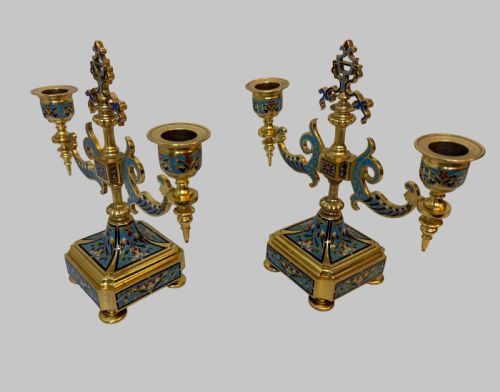
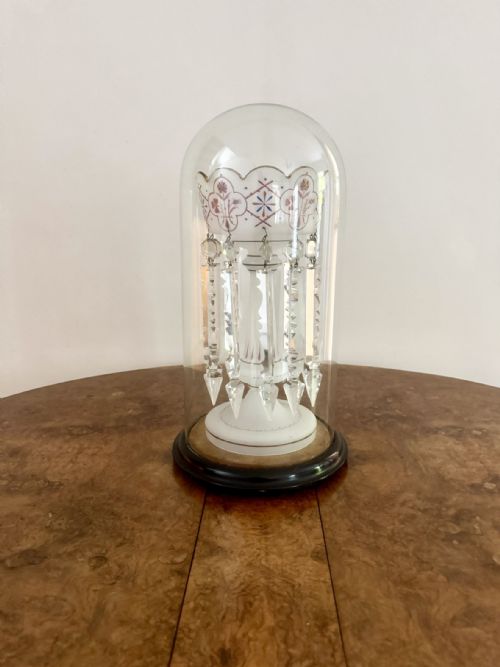
The selection extends beyond simple single-light sticks to include candelabra, mantel lustres with glass drops, and desk accessories like inkwells. Alongside traditional British and French Victorian items, you find pieces influenced by the Arts and Crafts movement and the Grand Tour tradition.
Periods represented stretch from the Georgian era through Victorian production to the turn of the twentieth century. Makers such as Liberty and Co appear alongside anonymous workshops from Paris and English provincial centres.
How they were made
The makers of these items utilised techniques like champlevé and cloisonné, where glass paste is packed into troughs or wire compartments on a metal base before firing. Gilt bronze, brass, or ormolu provided the structural frames, sometimes accented with onyx, ruby glass, or gold leaf.
Pewter and spelter also served as foundational metals for later nineteenth-century and Arts and Crafts examples, paired with enamel panels or cabochons. Porcelain and pottery bodies occasionally received enamel decoration, fused to the ceramic surface in a kiln.
Antique Enamel Candlesticks Retail Price Guide 2026
Typical asking prices for enamel candlesticks among the pieces listed under this phrase on Sellingantiques today, from the lower quarter to the upper quarter. They describe what is for sale here now, not the wider market.
Design styles span Victorian, French Second Empire, Arts and Crafts, and Georgian Rococo periods.
What varies in quality
The distinction between ordinary and exceptional examples lies in the crispness of the metal chasing and the depth of the enamel work. Superior pieces show precise compartments in cloisonné or cleanly carved troughs in champlevé, with smooth glass surfaces that sit flush against the surrounding bronze or brass.
Heavier base metals like gilt bronze and ormolu elevate a piece above standard brass or spelter castings. The integration of auxiliary materials such as onyx columns, ruby glass drops, or micro-mosaic details also signals higher production standards.
Liberty and Co·Archibald Knox
The Antique Enamel Candlesticks Glossary
- Champleve Enamel
- A technique where troughs or cells are dug out of a metal plate and filled with enamel powder before firing. This method creates bold patterns bounded by thick lines of the base metal.
- Cloisonne Enamel
- A process using thin metal wires soldered to a metal base to form small cells that hold the enamel paste. It allows for intricate, multicoloured pictorial designs.
- Ormolu
- Gilded bronze used widely in French decorative arts during the nineteenth century to provide a rich, gold-coloured finish. It requires careful cleaning to preserve the original surface.
- Mantel Lustres
- Decorative ornamental vases or candlesticks hung with cut glass prisms that catch and reflect candlelight. They were popular in Victorian drawing rooms.
- Spelter
- An alloy of zinc and lead used as a cheaper alternative to bronze for casting sculptural figures and candlestick bases. It was often bronzed or painted to resemble heavier metals.
Antique Enamel Candlesticks: Frequently Asked Questions
How do I clean antique enamel candlesticks?
Use a soft, dry cloth to remove dust from the metal and enamel surfaces. Avoid liquid cleaners, abrasive cloths, or chemical dips, which can strip gilding or damage the glass enamel.
For stubborn grime on the metal mounts, a slightly damp cotton swab can be applied with care, ensuring moisture does not linger near any joins or inset stones.
Were these designed for daily use?
Most nineteenth-century examples served both a practical lighting function and a decorative purpose in the parlour or drawing room. Heavier pairs were often kept stationary on mantelpieces rather than carried about.
Candle holders with associated inkwells or desk accessories were intended for writing tables, combining illumination with stationery management.
How do I date a pair of candlesticks?
Dating relies on stylistic clues, such as the heavy ornamentation of French Second Empire pieces or the clean lines of Arts and Crafts production. Material combinations, like spelter with enamel or specific glass colours, point to distinct decades.
Maker marks, registration numbers, or retailer stamps found on the base provide more precise chronological anchors.