





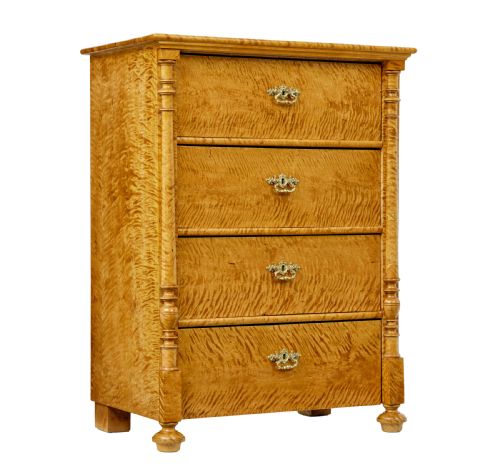
Antique Empire Dresser
These antique empire dresser pieces offer striking architectural presence and deep timber grains, bringing classical dignity and generous storage to a room.
Antique Empire Dresser
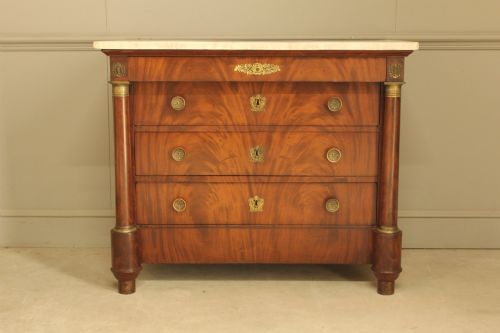
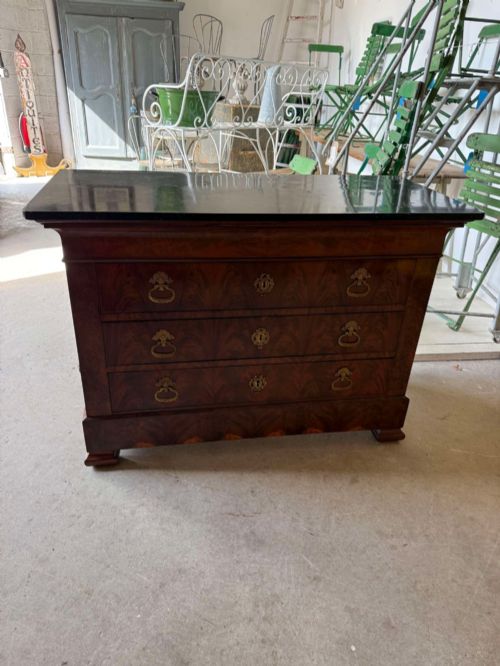
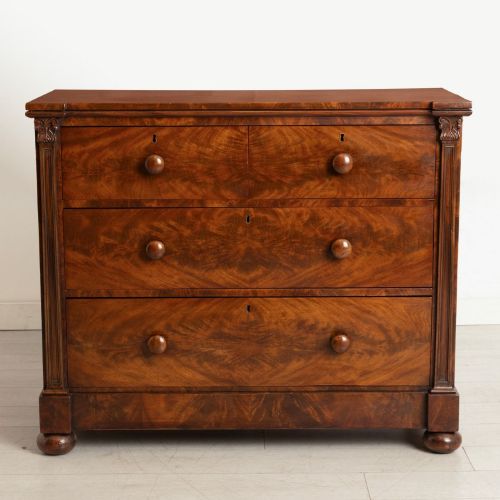
An antique empire dresser typically manifests as a chest of drawers or commode, defined by monumental proportions and restrained classical lines. You will frequently encounter French and Swedish examples alongside British campaign adaptations.
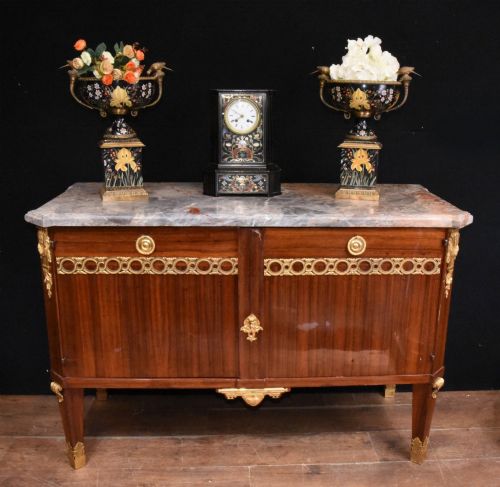
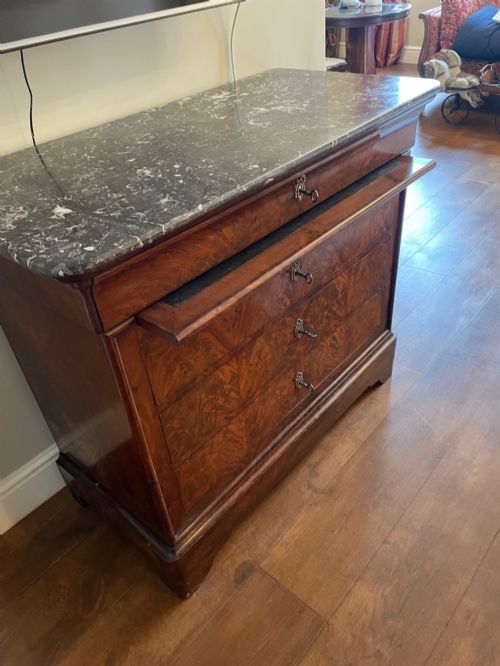
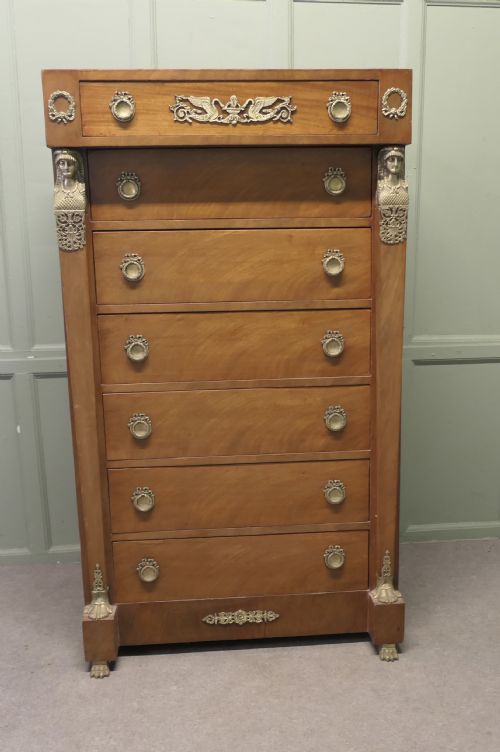
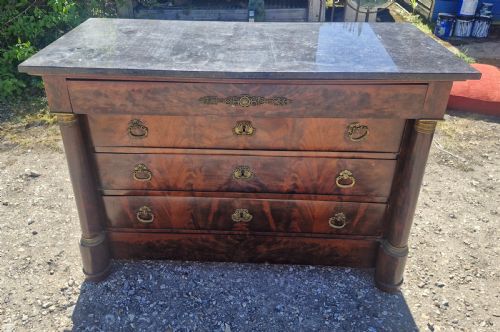
The forms range from tall six-drawer uprights to neat console tables and lower commodes, often topped with contrasting marble slabs. Walnut, mahogany, and birch provide the primary carcasses for these commanding domestic storage units.
How they were made
Cabinetmakers utilised dense native and exotic timbers, selecting flame birch, burr walnut, and mahogany for their rich surface movement. Veneers were carefully bookmatched across the drawer fronts to create symmetrical patterns that catch the light.
Metalwork played a structural and decorative role, with cast ormolu, gilt bronze, and polished brass mounts accentuating key architectural junctions. Marble tops, fossilised or plain, were precision-fitted to the upper surfaces of continental commodes.
Antique Empire Dresser Retail Price Guide 2026
Typical asking prices for empire dresser among the pieces listed under this phrase on Sellingantiques today, from the lower quarter to the upper quarter. They describe what is for sale here now, not the wider market.
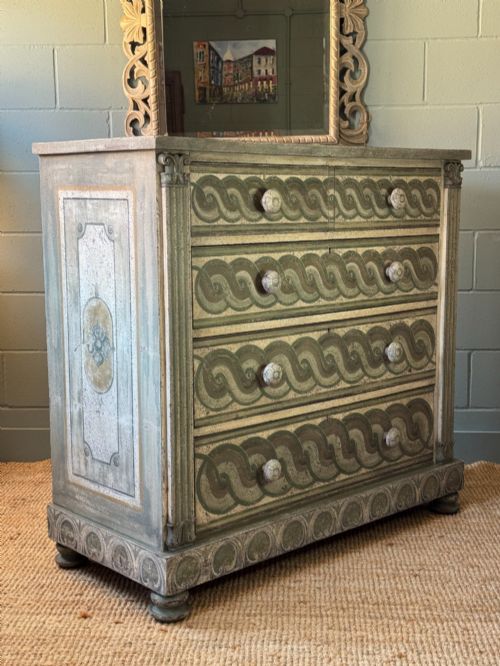
The listings span the eighteenth through to the early twentieth century, incorporating French Empire, Swedish Biedermeier, and Victorian campaign styles.
What varies in quality
The refinement of the timber selection dictates the visual impact, ranging from plain boards to highly figured tiger birch and bookmatched walnut. Superior pieces display seamless veneer matching that wraps coherently across multiple drawers.
Mount quality separates standard production from exceptional workshops, visible in the crispness of the ormolu and the weight of the brass fittings. Carcass construction also varies, seen in the thickness of the pine secondary woods and the precision of the drawer dovetailing.
The Antique Empire Dresser Glossary
- Ormolu
- Gilded bronze applied to furniture mounts and decorative hardware. It provides a bright metallic contrast to dark woods like mahogany and walnut.
- Commode
- A low chest of drawers originating in France, frequently fitted with a marble top. These pieces serve as both decorative console storage and functional bedroom furniture.
- Bookmatched
- A woodworking technique where adjacent veneer leaves are opened like a book to mirror each other. This creates symmetrical patterns across large drawer fronts.
- Campaign furniture
- Modular pieces built for transport with recessed brass handles and corner brackets. They were designed for military officers on the move during the nineteenth century.
- Biedermeier
- A Central European style prioritising clean lines and utilitarian comfort over excessive ornamentation. Birch and walnut veneers were favoured for their natural grain.
Antique Empire Dresser: Frequently Asked Questions
What is an empire dresser?
An empire dresser is a large storage chest or commode rooted in classical European design. These pieces feature strong geometric lines and architectural proportions.
They usually incorporate dark timbers like mahogany and walnut, occasionally accented with bronze mounts or marble surfaces.
How do I clean marble tops?
Marble surfaces require gentle maintenance using soft cloths and warm water. Avoid acidic cleaners that can etch the polished stone.
Dry the surface thoroughly after wiping to preserve the natural lustre of the marble.
Where were these pieces made?
The pieces originate primarily from France, Sweden, and Britain. Continental examples often display distinct regional variations in wood choice, such as Swedish birch.
British makers contributed campaign-style chests designed for military transport.
How do I identify French empire style?
French empire pieces emphasise monumental forms, symmetrical layouts, and classical motifs. They frequently combine dark mahogany or walnut with gilded ormolu mounts.
Marble tops and paw feet also appear regularly on these continental designs.
Are these dressers suitable for modern homes?
These chests offer deep drawers and generous surface space suited for contemporary bedrooms and hallways. Their strong vertical lines anchor room layouts effectively.
Careful placement away from direct heat sources helps protect the antique veneers and polished finishes.