


Antique Embroidery Box
An antique embroidery box brings order to thread and fabric, offering a neat vessel crafted for needlework.
Antique Embroidery Box
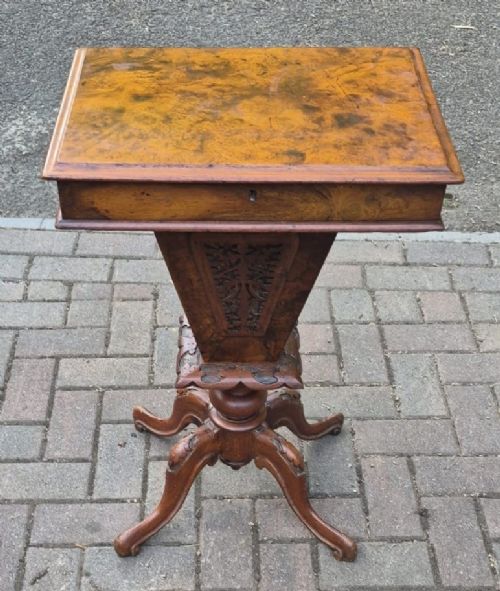
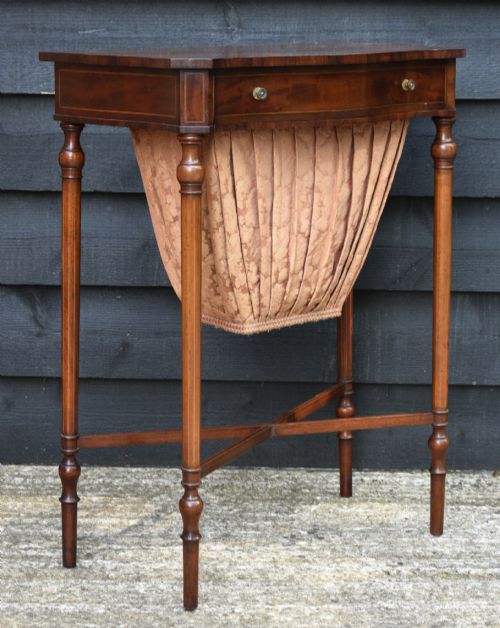
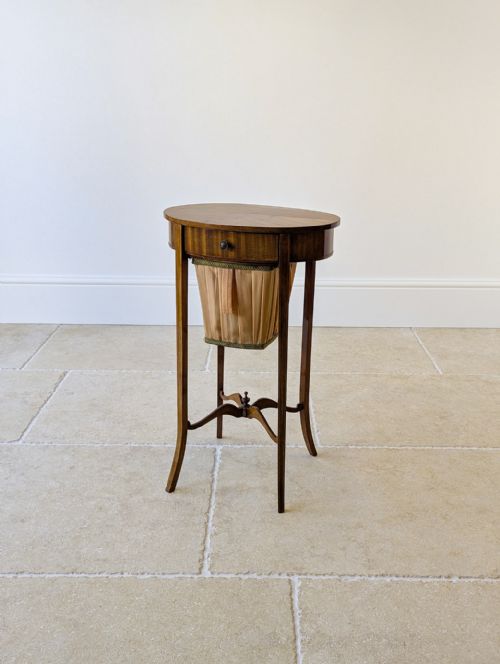
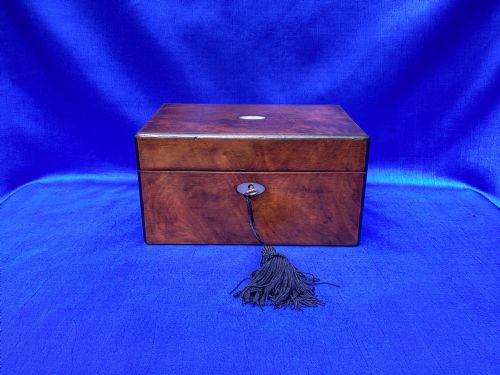
When you search for an antique embroidery box, you encounter various forms designed to hold threads, needles, and cloth. The pieces on this page span several styles and decades, from Regency periods through to Edwardian times.
You are most likely to meet work tables and sewing tables alongside smaller decorative boxes and caskets. These items range from freestanding stands in rosewood and burr walnut to compact boxes intended for tabletop use.
How they were made
Cabinet makers utilised dense timbers like mahogany, rosewood, and burr walnut, often shaping them into sarcophagus or octagonal forms. Surface decoration relied on fine inlay work, intricate Tunbridge Ware, or carved details.
Internal compartments incorporated silk baskets, fabric linings, and fitted sections to organise sewing tools. Brass hardware and tooled leather panels completed the construction of these storage pieces.
Some Edwardian sewing tables include hidden silk baskets that swing out quietly to catch dropped threads.
What varies in quality
The choice of timber and veneer defines the visual weight of each piece, with burr walnut and figured mahogany sitting at the higher end. The precision of the inlay and the crispness of any carving distinguish standard work from finer output.
Internal fittings dictate utility, where original silk baskets, fitted compartments, and working locks elevate an example. Sound structural joinery across the cradle bases and pedestal columns ensures longevity.
The Antique Embroidery Box Glossary
- Tunbridge Ware
- A type of woodwork featuring mosaic patterns created from tiny pieces of naturally coloured wood. This technique produces geometric or pictorial designs on the lids of boxes.
- Sarcophagus
- A coffin-like shape with a domed or sloping lid used for certain box designs. Makers adopted this classical form during the Regency and Victorian periods.
- Work Table
- A freestanding table fitted with drawers or a fabric bag for holding sewing materials. These dual-purpose pieces served drawing rooms and parlours.
- Satinwood
- A durable timber with a golden sheen and lustrous grain used for high-end furniture and inlay. It provides a bright contrast against darker woods like mahogany.
Antique Embroidery Box: Frequently Asked Questions
What is an antique embroidery box used for?
These boxes store sewing paraphernalia, including threads, needles, scissors, and pieces of cloth. They kept domestic needlework organised and portable within the home.
Many double as occasional tables or small storage cabinets that sit comfortably beside chairs or in reception rooms.
How do I date an antique sewing box?
Dating relies on observing timber choices, construction methods, and prevailing stylistic details. Regency examples often feature pedestal bases, while Victorian pieces frequently utilise burr walnut.
Hardware styles and interior fabric linings also offer clues to the specific decade of manufacture.
Where were these sewing tables placed?
Work tables occupied principal reception rooms such as drawing rooms and parlours where ladies performed needlework. Their decorative exteriors ensured they blended with other fine furniture.
Freestanding versions stood beside seating, while smaller boxes rested on desks or side tables.
What woods are common in these boxes?
Rosewood, mahogany, and walnut appear frequently across the periods represented. Burr walnut and satinwood were chosen for decorative effect on top surfaces.
Secondary woods formed internal structures and concealed drawer linings.