





Antique Ecclesiastical Brass
These pieces of antique ecclesiastical brass bring the rich, solemn craftsmanship of church altars and chapels directly into domestic interiors.
Antique Ecclesiastical Brass
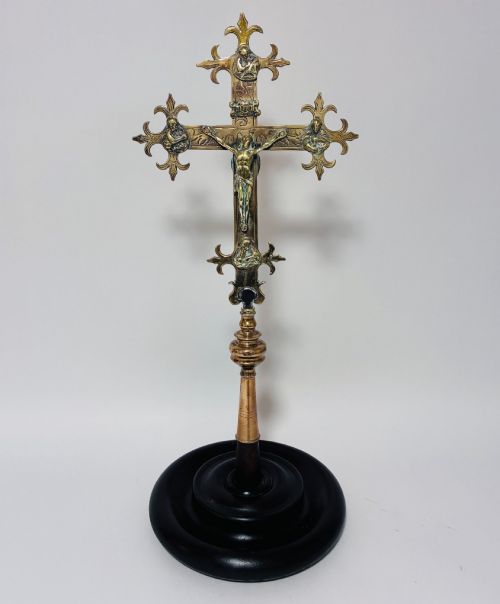
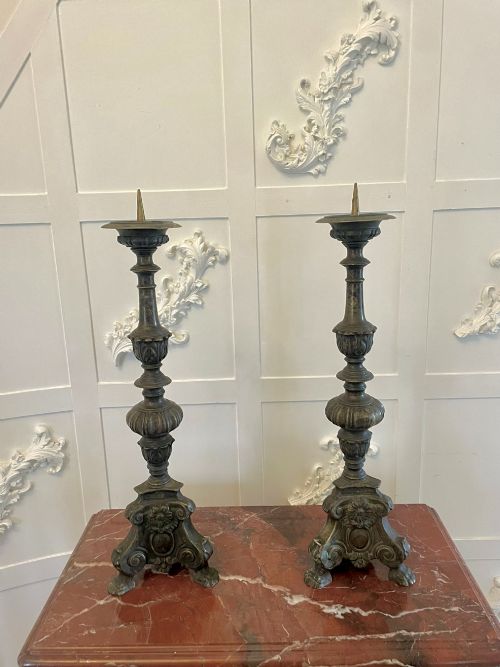
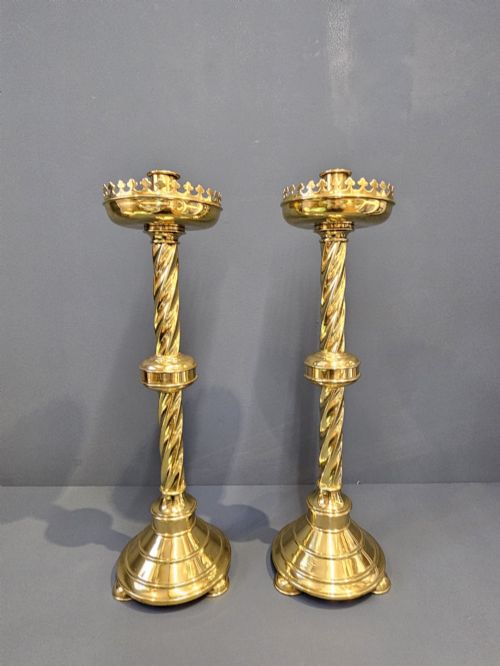
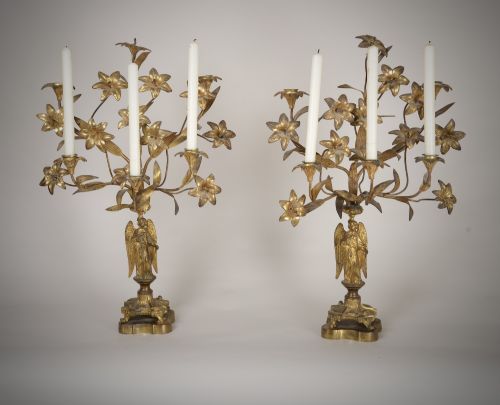
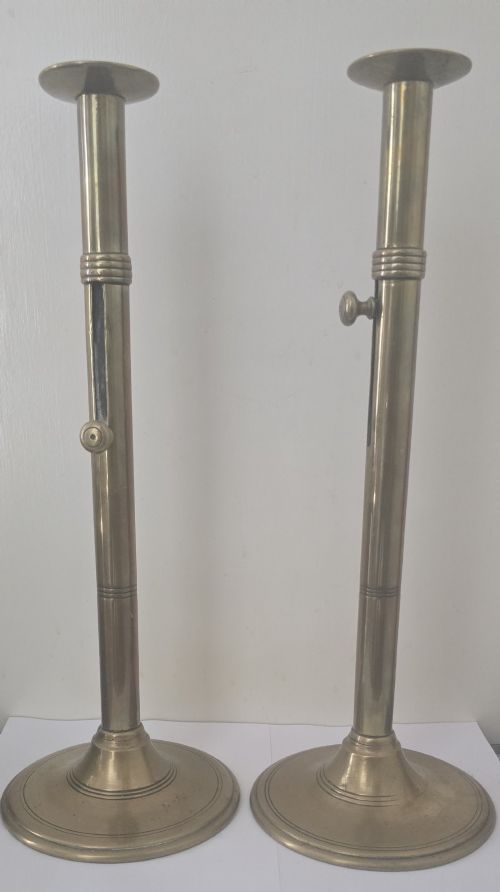
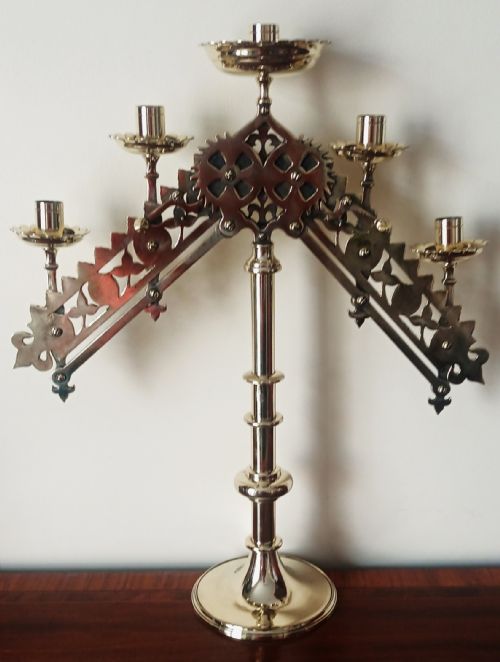
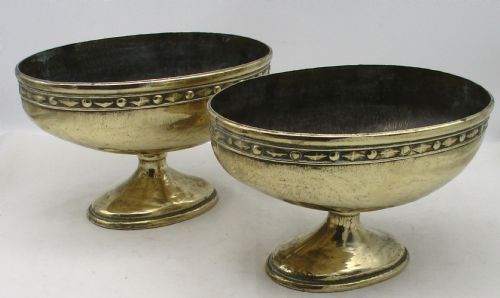
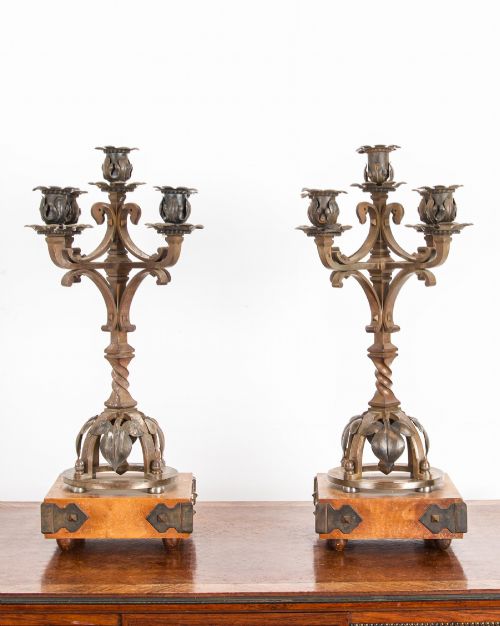
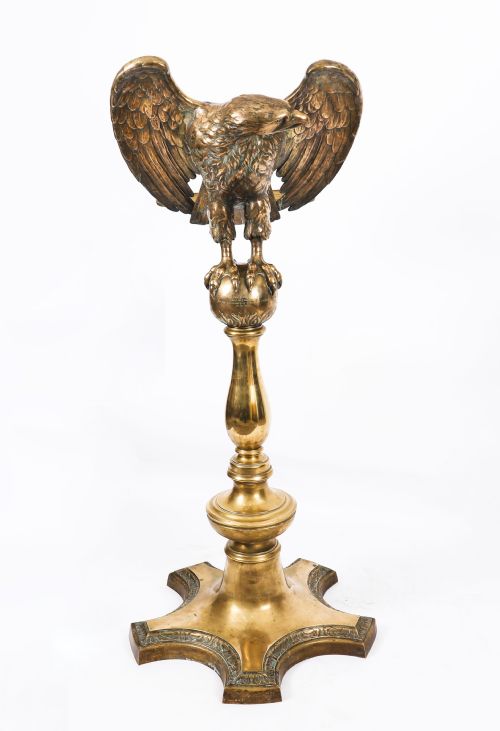
When searching for antique ecclesiastical brass, buyers encounter a specialised category of metalwork originating from churches, chapels, and cathedrals spanning the nineteenth and early twentieth centuries. The selection on this page consists predominantly of candlesticks, pricket candlesticks, altar crosses, and candelabra, alongside less common items such as lecterns, chandeliers, and alms dishes.
Most items date from the Victorian era and the height of the Gothic Revival movement, reflecting the architectural tastes of the period. Pieces range from modest domestic altar furnishings to monumental floor-standing candle holders and heavy bronze or brass church fittings.
Materials and Construction
The objects are principally cast in heavy brass and bronze, frequently supplemented with gilt brass, ormolu, and occasionally combined with materials like oak, glass, and lapis lazuli. Casting techniques allowed for deep relief ornamentation, crisp knops, and intricate architectural tracery characteristic of Gothic design.
Surface finishes vary from polished bright brass to darkened patinas developed through decades of liturgical use, while construction often involves heavy threaded components and robust base plates designed to support tall candles securely.
Several pieces preserve the quiet weight of nineteenth-century Sunday services, now repurposed to hold everyday modern dinner candles.
Judging Quality
Quality in these items rests on the crispness of the casting detail, the weight of the metal, and the integrity of the design proportions. Superior examples display sharp relief work in architectural motifs without the blurring common in mass-produced later castings.
The sophistication of the stylistic execution - particularly in Gothic Revival pieces that successfully translate stone cathedral architecture into metalwork - separates ordinary altar metal from exceptional pieces.
Joseph Wilmotte Liege
The Antique Ecclesiastical Brass Glossary
- Pricket
- A sharp metal spike on a candlestick designed to impale the base of a candle. This form is common in church altar candlesticks.
- Gothic Revival
- An architectural and decorative style popular during the nineteenth century that revived medieval Gothic forms. It utilises pointed arches, trefoils, and heavy tracery.
- Ciborium
- A covered chalice-like vessel used in churches to hold consecrated Eucharistic bread. These are typically heavy in metal construction and often feature embossed ornamentation.
- Alms Dish
- A large plate or basin used for collecting monetary donations during religious services. They are frequently embossed with biblical scenes or decorative inscriptions.
Antique Ecclesiastical Brass: Frequently Asked Questions
How are antique church candlesticks dated?
Datings rely upon stylistic markers such as Victorian Gothic Revival proportions, cast construction methods, and specific decorative motifs popular in the nineteenth century. Hallmarks or maker stamps, where present, provide further chronological evidence.
Material composition and patination also help distinguish earlier nineteenth-century pieces from later reproductions.
Can these church lamps be used at home?
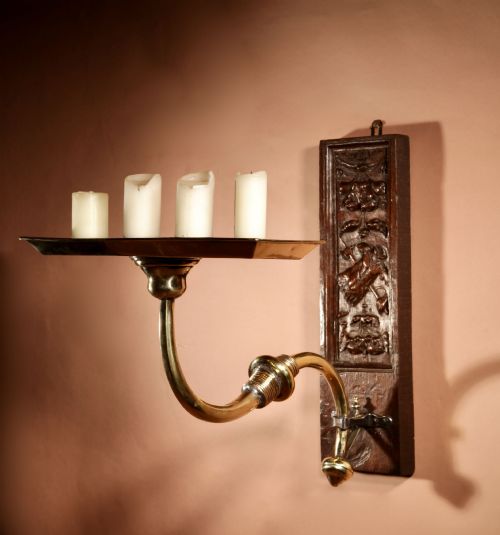
Many items, such as smaller candlesticks and wall sconces, integrate naturally into domestic spaces as statement lighting or decorative objects. Larger floor-standing pieces serve as striking architectural elements in entrance halls.
Some examples have been adapted for modern electrical wiring while retaining their original brass components.
What materials are found alongside brass?
While brass is the dominant metal, pieces frequently incorporate bronze, gilt brass, and ormolu for contrasting surface tones. Combinations with oak, glass, and semi-precious stones such as lapis lazuli also appear in crosses and candle holders.