



Antique Ebony Table
An antique ebony table brings dense tropical timber and crisp contrasting inlay into a room through centre tables, side pieces, and occasional forms.
Antique Ebony Table
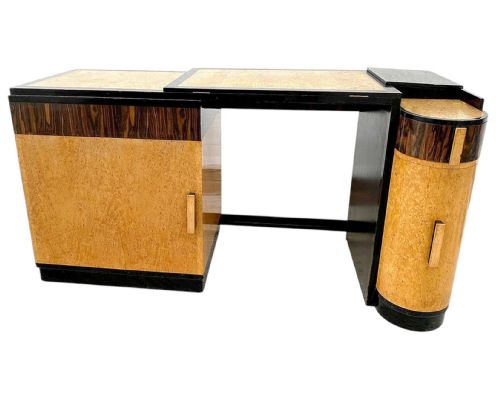
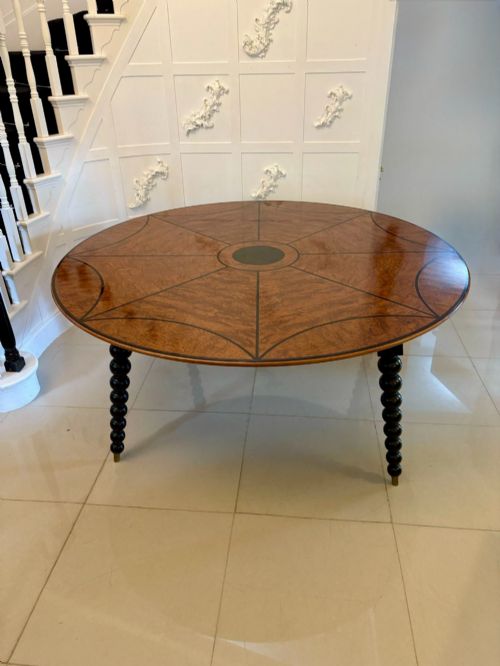
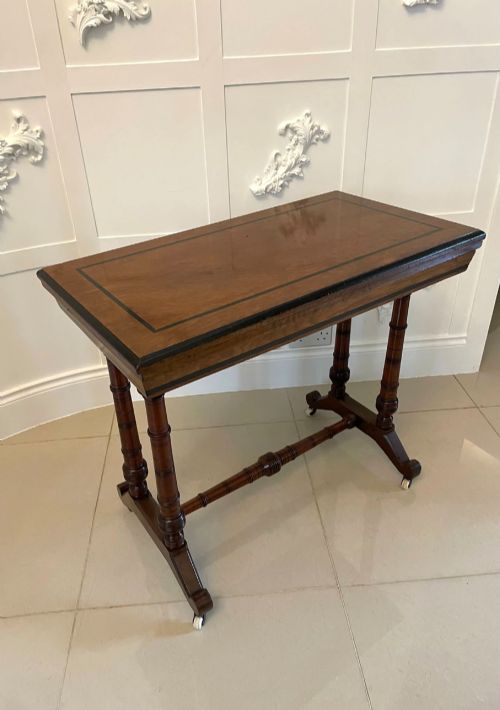
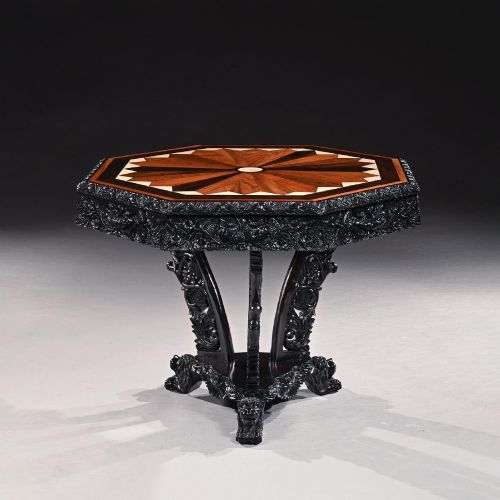
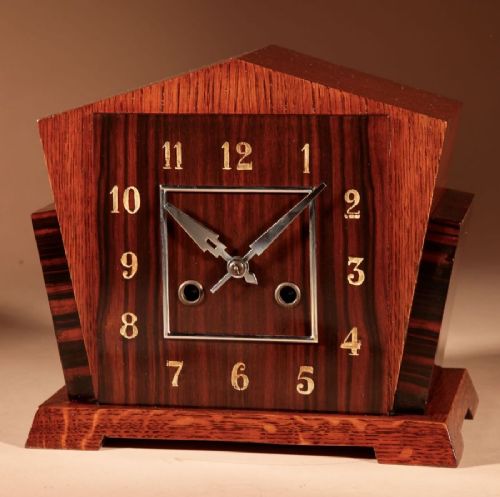
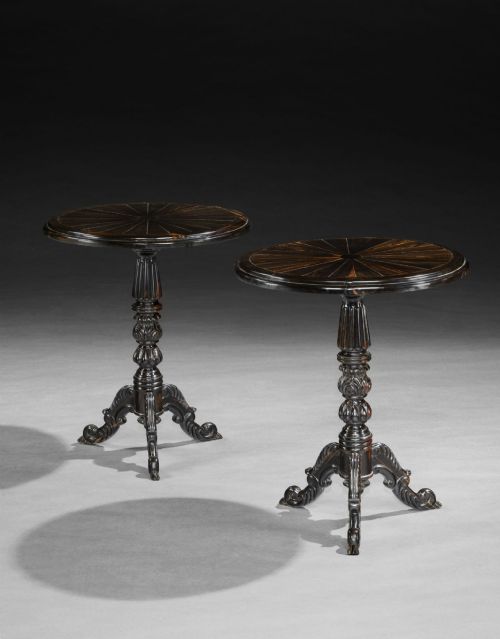
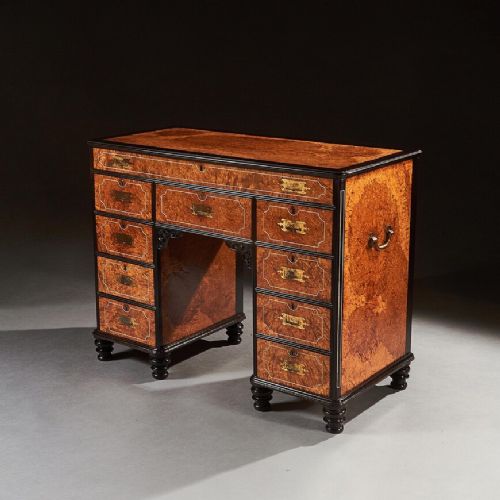
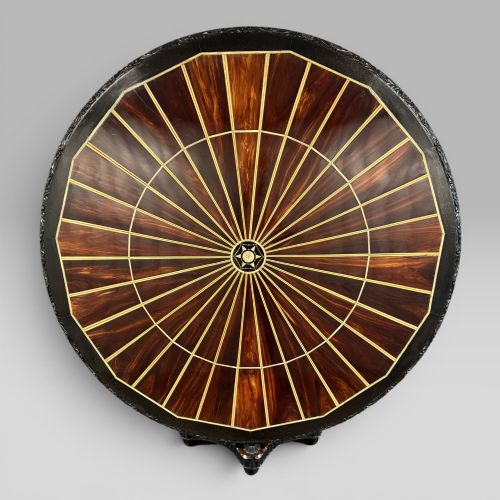
When you examine an antique ebony table, you encounter forms ranging from nineteenth-century Ceylonese tripod stands and occasional tables to Regency mahogany pieces finished with sharp linear stringing. Centre tables and side tables dominate the selection, often featuring dense tropical hardwoods or secondary structural timbers highlighted with dark veneers.
The material vocabulary spans solid exotic species, ebonised surfaces, and intricate geometric parquetry linked to Anglo-Indian colonial production, Biedermeier workshop traditions, and Victorian aesthetic tastes. Buyers frequently select these tables for their compact footprints, contrasting borders, and dark, polished grain patterns that anchor a domestic interior.
How They Were Made
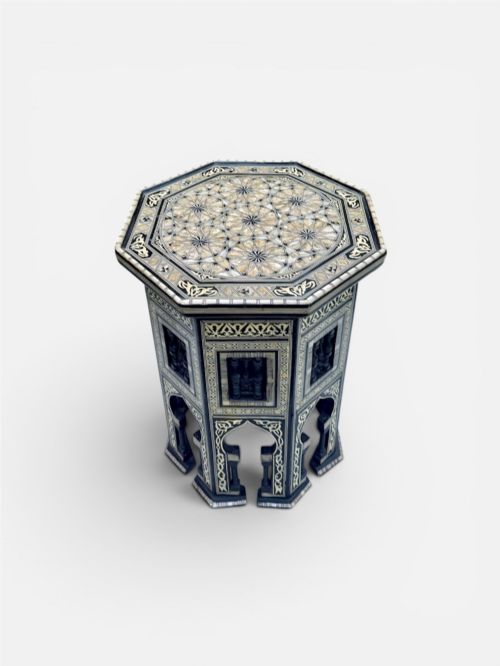
Cabinetmakers constructed these tables using dense tropical hardwoods, solid ebony, or secondary carcases overlaid with fine veneers, combining structural stability with deeply figured surfaces. Workshops integrated contrasting stringing, brass mounts, mother-of-pearl, bone, and boxwood inlays to define edges and create geometric or floral panels.
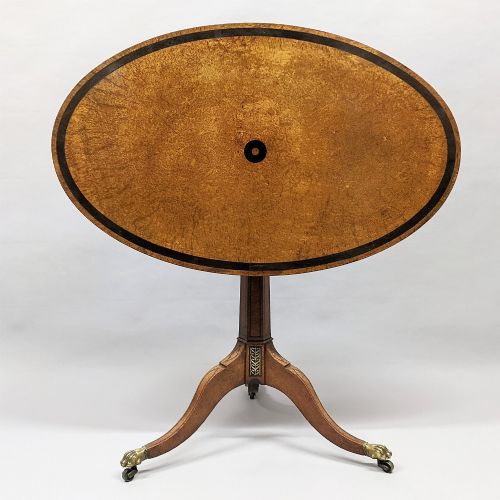
Surface preparation relied on hand-planing, scraping, and French polishing to bring out the natural lustre of the dark timber or the sharp contrast of ebonised fruitwood. Joinery techniques included traditional mortise and tenon frames, dovetailed drawer boxes, and turned or carved pedestals supporting tilt-top mechanisms and tripod legs.
Antique Ebony Table Retail Price Guide 2026
Typical asking prices for ebony table among the pieces listed under this phrase on Sellingantiques today, from the lower quarter to the upper quarter. They describe what is for sale here now, not the wider market.
What Varies in Quality
The standard of execution depends heavily on the precision of the inlay work and the selection of timber figures, where crisp mitres and tightly fitted contrasting borders distinguish finer pieces. Superior examples display balanced proportions, original mounts, and stable sub-frames that have avoided severe shrinkage or warping over centuries.
Workmanship also shows in the depth and clarity of hand-carving on regional forms, such as Ceylonese or Anglo-Indian tripod bases, where crisp relief distinguishes skilled regional workshops from simpler production. The integrity of the polish and the retention of original brass hardware or turning further separate standard utility pieces from high-workshop output.
Gillows·Paul Sormani·Maison Millet·Soubrier
The Antique Ebony Table Glossary
- Ebonised
- Wood treated with stain or pigment to imitate true ebony. This technique was common on nineteenth-century aesthetic and Victorian furniture.
- Stringing
- Thin strips of contrasting wood or light material inlaid into channels cut into the surface. It creates fine borders around table tops and drawer fronts.
- Parquetry
- Geometric wood-mosaic work used to cover surfaces in regular patterns. Makers employed contrasting timbers to form multi-sided tiles and decorative borders.
- Tripod Table
- A small stand supported by a central pillar resting on three legs. These tables often feature tilt-top mechanisms for storage.
- Calamander
- A heavy, durable wood with dark brown and light brown streaks, native to India and Sri Lanka. It appears frequently alongside ebony in colonial pieces.
Antique Ebony Table: Frequently Asked Questions
What is an antique ebony table?
An antique ebony table is a piece of furniture constructed from, veneered with, or heavily accented by dense dark tropical timber. These pieces include centre tables, occasional tables, and writing desks produced across the seventeenth, eighteenth, and nineteenth centuries.
Craftsmen utilised the heavy wood for its natural dark tone or combined it with lighter woods like satinwood, amboyna, and mahogany. They served functional roles in homes as tea tables, card tables, and display surfaces.
Where were ebony tables used?
Ebony tables functioned primarily in reception rooms, parlours, and studies as decorative and functional furniture. Smaller occasional and side tables held small lamps, clocks, or visiting items.
Larger centre tables stood in the middle of principal rooms to display decorative objects or serve gatherings. Fold-over card tables and games tables provided surfaces for evening entertainment.
How do I care for antique ebony furniture?
Preserving antique ebony requires maintaining stable indoor humidity levels and keeping pieces away from direct heat sources. Sudden environmental changes cause timber to shrink and veneers to lift from their carcases.
Dusting with a dry, soft cloth prevents particle buildup without harming the polished finish. Professional wax application helps nourish the wood surface when the finish appears dry.