
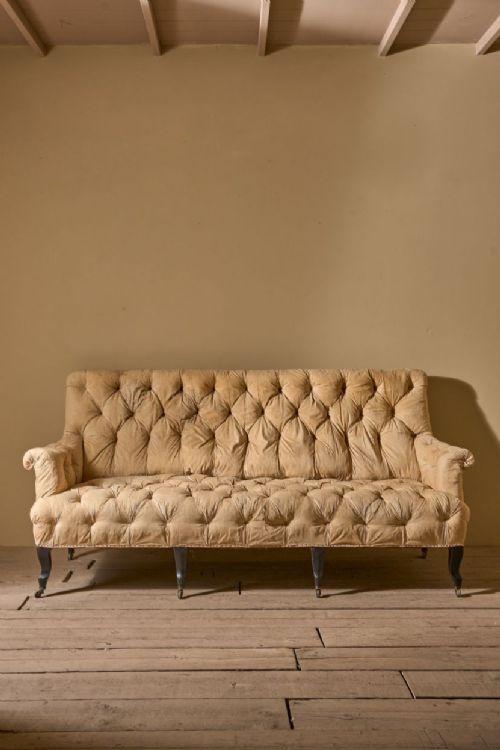
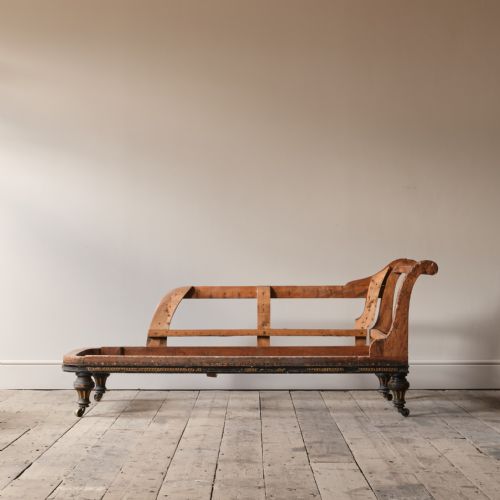
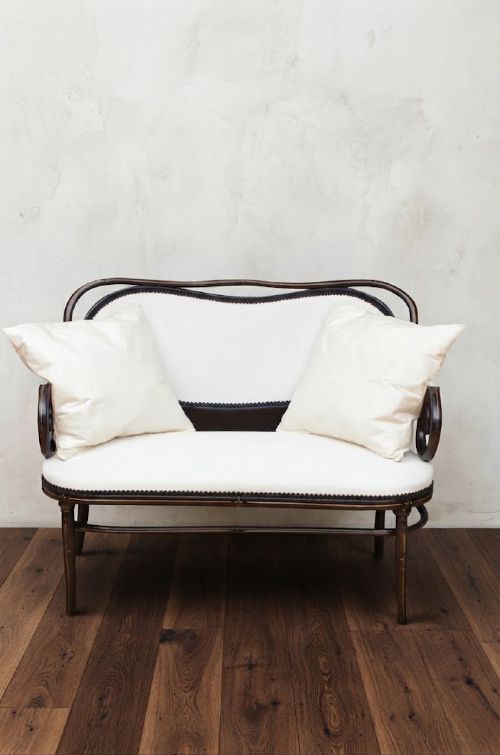
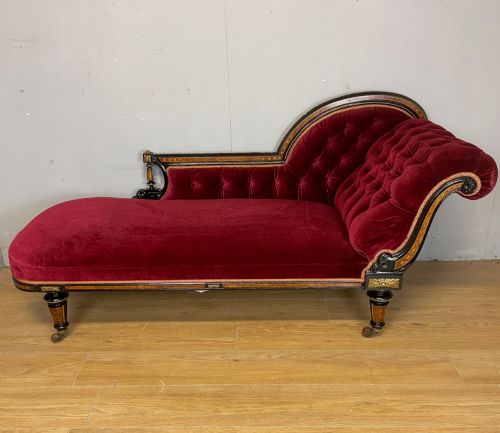


Antique Ebonised Couch
An antique ebonised couch offers dramatic dark woodwork and rich upholstery, bringing distinct Victorian and Regency presence to a room.
Antique Ebonised Couch
When you search for an antique ebonised couch, you are looking at seating finished with dark, blackened surfaces that mimic expensive ebony. The pieces recorded here span from the eighteenth century through the nineteenth century, including the Regency and Victorian periods.
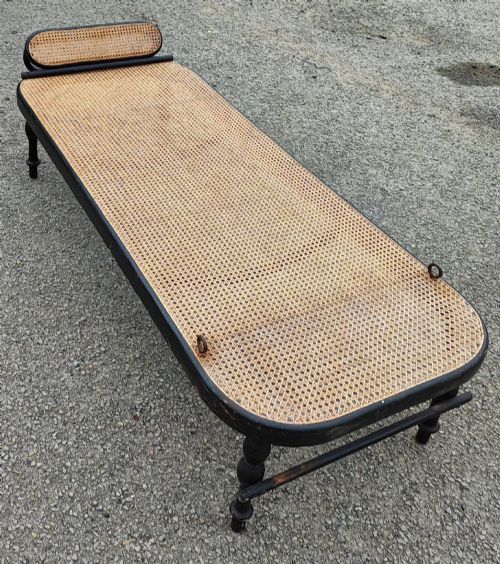
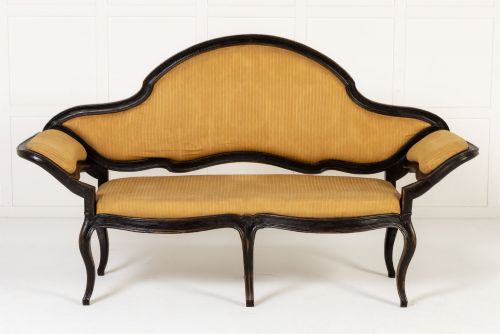
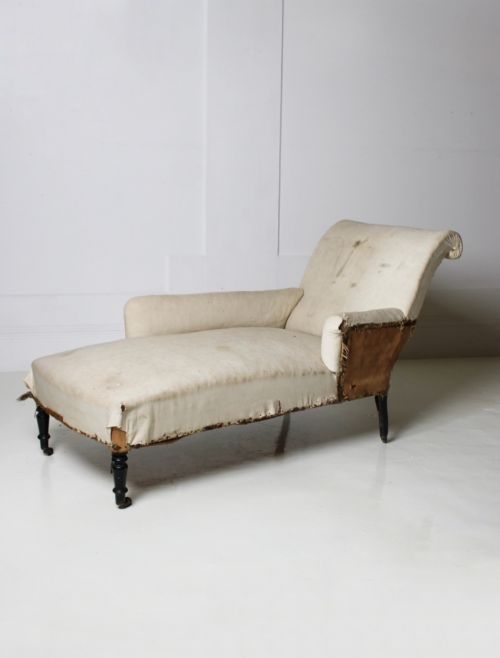
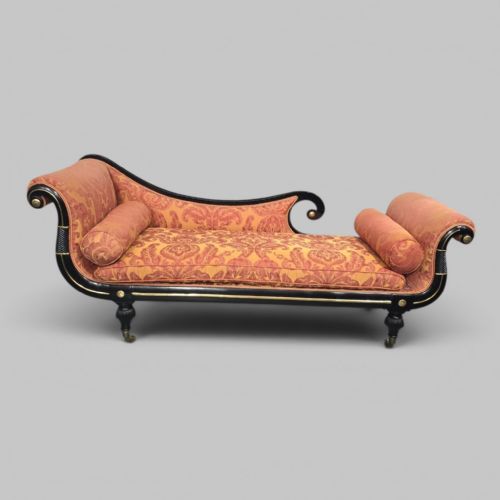
You will encounter various forms under this description, from large country house daybeds and chaise longues to occasional settees and miniature furniture. The Aesthetic Movement and Napoleon III styles appear frequently among the listings, alongside Italian Rococo and French Chateau influences.
Many examples combine the characteristic dark wood frame with detailed upholstery in velvet, fabric, calico, or hessian. Others incorporate structural elements like cane, brass, ormolu decoration, and inlaid walnut panels.
Materials and construction
The primary construction relies on woods such as mahogany, which artisans stained, painted, or chemically treated to achieve a deep, uniform black finish. This ebonised surface often highlights the grain underneath or provides a high contrast to gilt and ormolu mounts.
Upholstery techniques range from traditional buttoned backs and seats to simpler sprung foundations covered in heavy textiles. Structural details such as scroll ends, claw and ball feet, and turned wooden elements shape the silhouette of each piece.
Among the full-scale seating, at least one maker produced a miniature ebonised chaise lounge, perfectly scaled down for a very small occupant.
Evaluating quality and execution
The distinction between ordinary and exceptional pieces lies in the crispness of the carving and the integrity of the ebonised finish. Superior examples maintain their original blackened surfaces with minimal touch-ups, while lesser items show heavy re-painting that obscures the underlying wood detail.
Makers and workshops of note introduce finer joinery and carefully integrated decorative elements like brass inlay or hand-turned wooden components. The stability of the frame and the quality of the secondary timbers dictate how well the piece has survived centuries of use.
Holland & Sons·Thonet·Howard & Sons
The Antique Ebonised Couch Glossary
- Ebonised wood
- Timber treated to resemble ebony through staining, painting, or chemical darkening. This technique gained particular popularity during the nineteenth century for furniture mimicking more costly exotic materials.
- Chaise longue
- An upholstered sofa in the form of a chair with a seat long enough for the legs. These pieces often feature a single raised end for reclining.
- Ormolu
- Gilt-bronze mounts applied to furniture for decoration. Artisans cast and mercury-gilt these metal ornaments to accent the dark wooden frames of nineteenth-century seating.
- Aesthetic Movement
- A late nineteenth-century design style emphasising visual beauty over narrative content. Furniture from this movement frequently employs ebonised surfaces and simplified structural lines.
- Caning
- Woven rattan or split cane used for seat panels or backrests. It provides a lightweight, flexible surface contrasted against solid wooden frames.
Antique Ebonised Couch: Frequently Asked Questions
What is an ebonised couch?
An ebonised couch is a wooden sofa or daybed finished in a deep black coating to imitate solid ebony. These pieces were particularly favoured during the Regency and Victorian eras for their striking visual contrast.
Craftsmen often applied this dark finish to mahogany or fruitwoods, sometimes pairing the blackened surfaces with gilt mounts, brass details, or rich upholstery fabrics.
How do I date an antique couch?
Dating involves examining the structural frame, joinery techniques, and decorative style alongside the materials used. Pieces from the Regency period show classical restraint, while Victorian and Aesthetic Movement examples often display heavier carving or exotic influences.
Upholstery materials and interior stuffing can also offer clues, though most antique seating has been re-covered multiple times over its lifespan.
Where should I place a daybed?
A daybed or chaise longue works effectively in a study, drawing room, or large bedroom where its elongated silhouette can be viewed from multiple angles. Because many examples feature detailed woodwork or finished backs, they do not necessarily need to sit flush against a wall.
Ensure the room has sufficient space to accommodate the extended length and any scroll ends without blocking pathways.
How do I care for ebonised wood?
Maintain ebonised surfaces by dusting regularly with a soft, dry cloth to prevent dirt accumulation. Avoid using harsh chemical cleaners or silicone-based polishes that can degrade the historic black finish over time.
Keep the timber away from direct sunlight and steady heat sources to prevent the wood from drying out and the finish from fading or cracking.