


Antique Dumbwaiter Tray
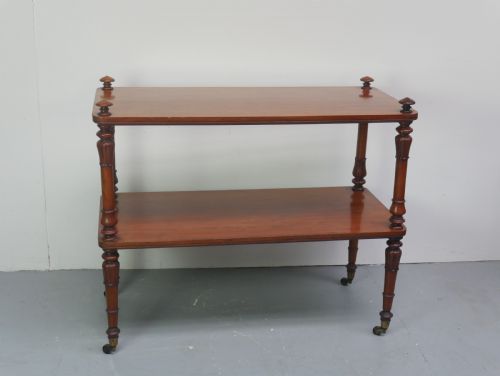
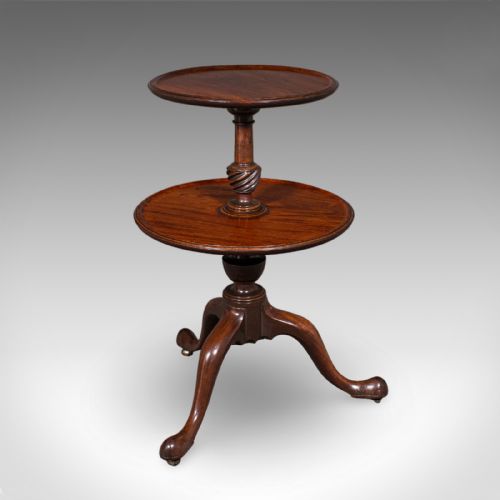
These antique dumbwaiter tray items are tiered serving stands, revolving trays and occasional tables designed for dining and display.
Antique Dumbwaiter Tray
When you search for an antique dumbwaiter tray, you are looking at multi-tiered serving furniture and revolving tabletops designed to hold dishes and drinks. The examples found here span from the eighteenth century through the Edwardian period and the early twentieth century.
The pieces on this page appear as two-tier and three-tier stands, folding cake stands, table top round stands and revolving lazy susans. They draw on Georgian, Regency, Victorian and Edwardian styles, including Chippendale revival interpretations.
Most items on this page are constructed from mahogany, occasionally featuring Cuban mahogany, walnut, burr walnut veneer, oak and brass fittings. Their forms range from sturdy floor-standing dumbwaiters and buffets to smaller table-top rotating trays.
Materials and construction
Makers relied heavily on solid mahogany and walnut, utilising timber selected for its grain figure and depth of colour. Cabinetmakers shaped circular tiers with raised edges or galleries, and joined them to central turned pillars and supportive legs.
Moving elements such as folding hinges and revolving mechanisms incorporated brass components. Turners shaped pillars by hand on lathes, while joiners fitted tiered trays to ensure balanced rotation or stable tiered support.
Some folding cake stands from the early twentieth century allowed afternoon tea to collapse flat into a cupboard when unexpected guests departed.
Assessing quality in tiered serving stands
Quality rests in the selection of timbers, such as figured Cuban mahogany or burr walnut veneer, and the crispness of turned pillars and gallery mouldings. Superior pieces show precise joinery in the revolving mechanisms and folding frames.
Design ambition separates standard production from finer workshop output, evident in well-proportioned tiers, stable weight distribution and maker stamps or signatures.
Maple & Co·Gillows
The Antique Dumbwaiter Tray Glossary
- Dumb waiter
- A multi-tiered serving stand or piece of dining room furniture used to hold food and utensils without the aid of servants. These items typically feature two or three circular tiers.
- Lazy Susan
- A revolving tray placed on a table top or stand to allow food and condiments to be easily shared among diners. Versions recorded here appear in mahogany from the eighteenth and nineteenth centuries.
- Gallery
- A raised wooden border or railing fitted around the edge of a tray or shelf to prevent items from sliding off. Gallery edges often feature pierced or carved fretwork details.
- Etagere
- A piece of furniture consisting of a set of open shelves for displaying small objects or serving food. This term appears alongside tiered serving stands and buffets in the evidence.
Antique Dumbwaiter Tray: Frequently Asked Questions
What is an antique dumbwaiter tray used for?
These pieces served historical dining rooms by holding extra dishes, glasses and bottles within reach of guests without needing domestic staff at the table.
Today, they function as versatile side tables, plant stands or afternoon tea displays in living spaces.
How do I tell a Georgian dumbwaiter from a Victorian one?
Georgian pieces, including George III examples, generally exhibit restrained classical proportions, elegant turned pillars and fine mahogany timbers.
Victorian and later nineteenth century items often introduce heavier proportions, bolder turning, and occasionally mechanical folding frames or maker stamps.
Are revolving lazy susans considered dumbwaiters?
Table top revolving trays share the revolving function and tiered concept of larger floor-standing dumbwaiters.
Both categories appear interchangeably in period dining accessories and serving furniture.
How do I care for a mahogany tiered stand?
Keep wooden surfaces away from direct heat sources and strong sunlight to prevent the timber and veneer from drying out.
Apply natural beeswax periodically and buff gently with a soft cloth to maintain the finish.