


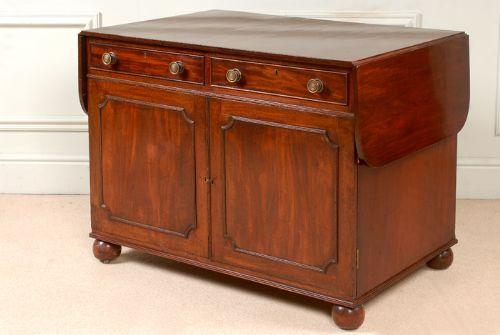
Antique Drop Leaf Chest
These antique drop leaf chest examples bring clever folding surfaces and deep timber drawers into compact corners, offering the practical storage every bedroom needs.

Antique Drop Leaf Chest
An antique drop leaf chest combines the storage capacity of traditional drawer units with the expandable surface of folding flaps, creating flexible furniture for compact spaces. Buyers exploring this category encounter versatile bedside cabinets, small chests of drawers, and dressing chests designed to adapt to changing room layouts.
The pieces appearing on this page span several distinct eras, stretching from the eighteenth century through the Georgian and Victorian periods into Edwardian and later twentieth-century interpretations. Mahogany and walnut dominate the construction, often featuring brass hardware and occasional glass elements that enhance their traditional character.
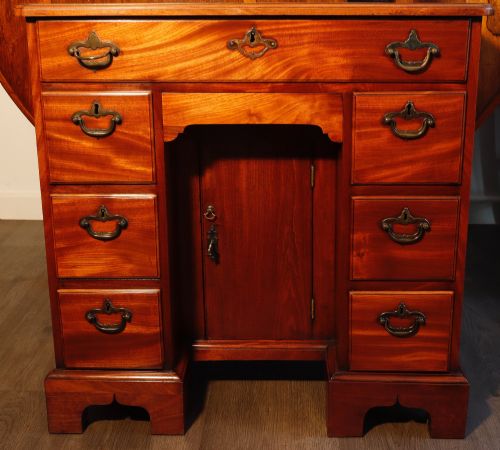
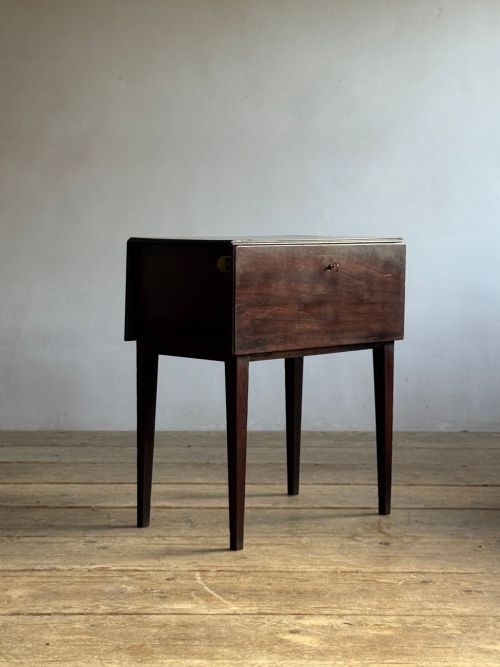
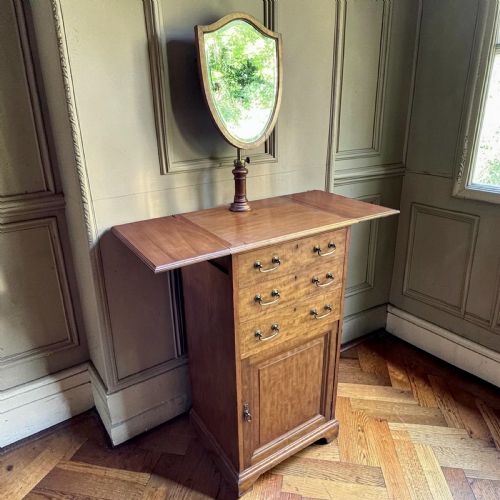
Forms vary considerably across the selection, ranging from sophisticated Georgian deception tables and pedestal worktables to Edwardian bedside cabinets and compact dressing chests with mirrors. This variety reflects how cabinetmakers tailored folding mechanisms and drawer configurations to meet the specific domestic requirements of each successive era.
How they were made
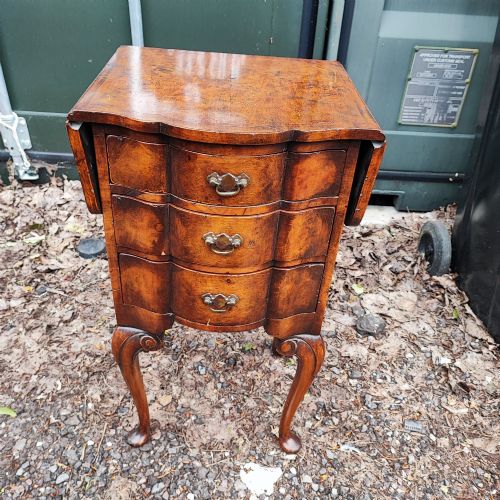
Cabinetmakers constructed these pieces primarily using solid mahogany and walnut, frequently selecting figured burr walnut veneers to create striking surface patterns on drawer fronts and folding flaps. Brass hinges and handles provide durable mechanical support and visual contrast against the dark timber.
Folding mechanisms and drop flaps require precise joinery to ensure the leaves operate smoothly while remaining stable when raised. Traditional framing methods keep the carcasses sturdy, allowing drawers to slide true within their housings despite shifts in domestic temperature and humidity.
Listings span periods from the eighteenth century through the Georgian, Victorian, and Edwardian eras, utilising mahogany, walnut, and brass.
What varies in quality
The distinction between ordinary and exceptional pieces lies in the choice of timber and the precision of the cabinetwork. Superior examples display carefully matched wood grain across the entire façade, while simpler items utilise more uniform boards.
The integrity of the folding mechanism and the tightness of the drawer joints separate fine workshop production from utilitarian manufacturing. Well-executed hinges and smooth-running flaps demonstrate the maker's underlying skill.
The Antique Drop Leaf Chest Glossary
- Drop flap
- A hinged surface attached to a cabinet or table that folds down when not in use. This mechanism allows furniture to save floor space in smaller rooms.
- Pedestal
- A single central support column carrying the weight of a table or cabinet. It often stands on splayed legs fitted with castors.
- Deception table
- A clever piece of furniture designed to conceal its true function behind dummy drawers or disguised compartments. Such items reflect the Georgian taste for ingenuity.
- Burr walnut
- Timber sliced from the gnarled growths of walnut trees, yielding highly ornamental swirling grain patterns. Cabinetmakers prize this material for high-status drawer fronts.
Antique Drop Leaf Chest: Frequently Asked Questions
What is an antique drop leaf chest?
An antique drop leaf chest is a set of drawers or a bedside cabinet featuring hinged flaps that extend the top surface when needed.
These pieces combine traditional timber storage with flexible folding elements designed for smaller domestic spaces.
How do I date an antique chest?
Dating relies on examining the timber species, hardware styles, and construction techniques visible in the drawer framing.
Earlier pieces from the eighteenth century feature different dovetailing methods and handle designs compared to Edwardian or later twentieth-century examples.
Where should I place a drop leaf bedside cabinet?
These cabinets suit bedrooms where surface space needs to expand at night and fold away during the day.
Their compact footprints fit neatly beside beds while providing enclosed storage underneath.
Are mahogany and walnut the only woods used?
Mahogany and walnut form the primary timbers across this selection, often enhanced by burr walnut veneers.
Brass fittings and occasional glass components complete the material palette seen in these traditional pieces.