
Antique Drop Jewellery
Antique drop jewellery brings together pendants and earrings that hang below the ear or chain, capturing Victorian, Edwardian and Art Deco work.
Antique Drop Jewellery
When searching for antique drop jewellery, buyers encounter a broad selection of hanging ornaments including earrings, pendants, necklaces and matching sets. The forms span distinct eras from late Victorian and Edwardian periods through to Art Deco and mid-century designs.
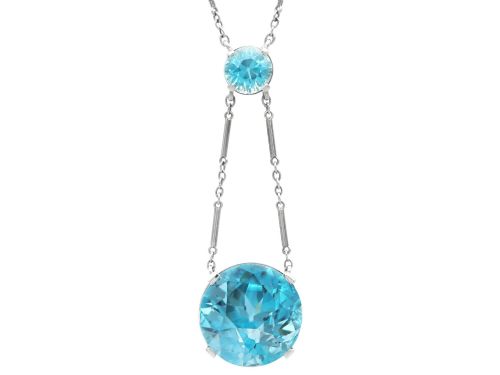
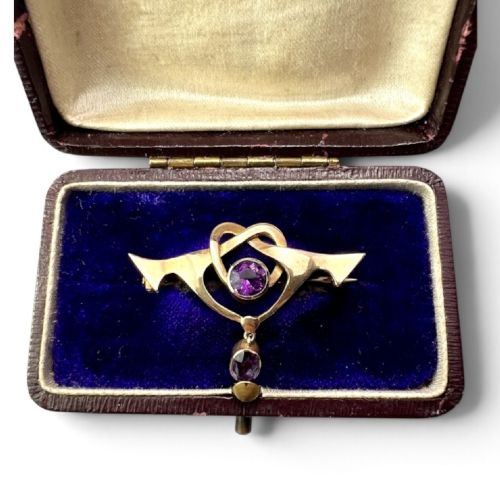
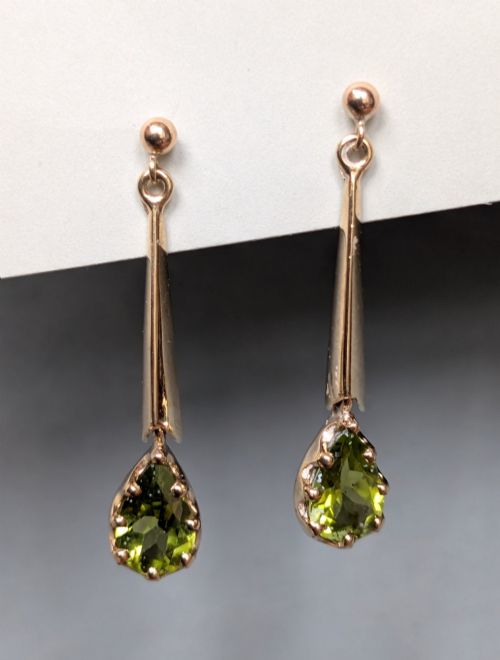
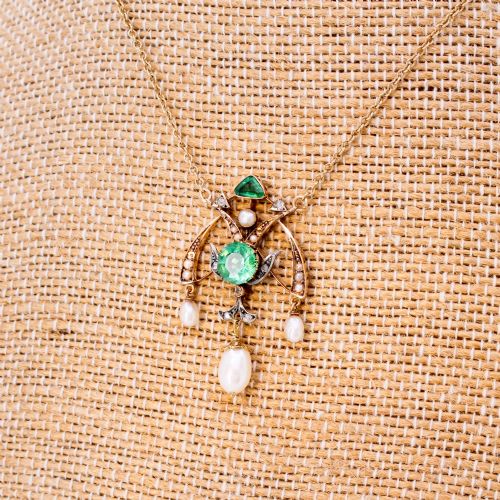
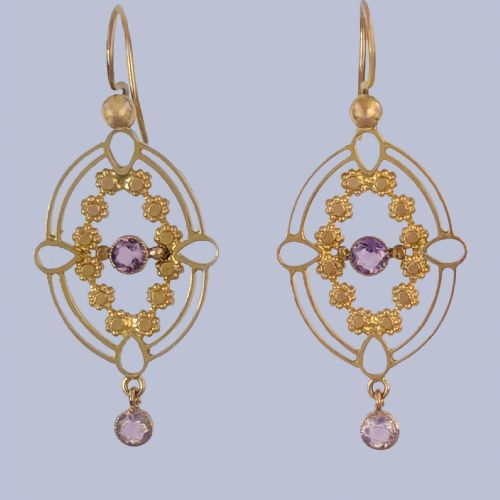
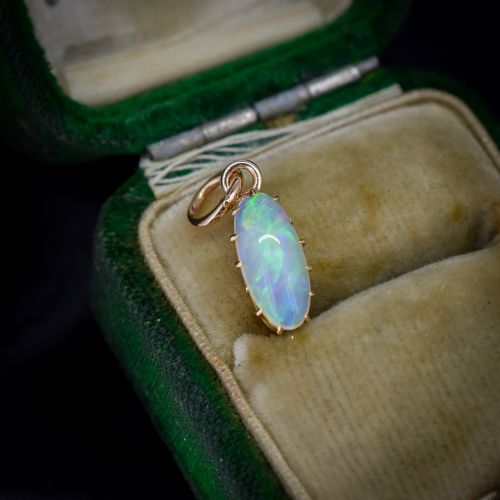
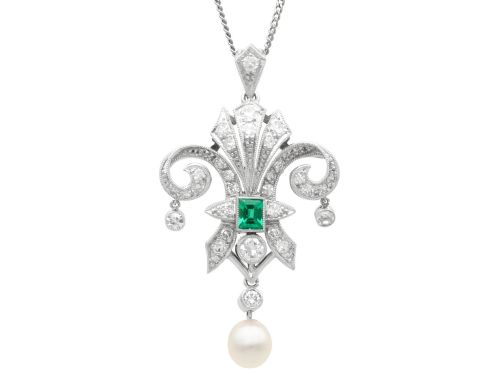
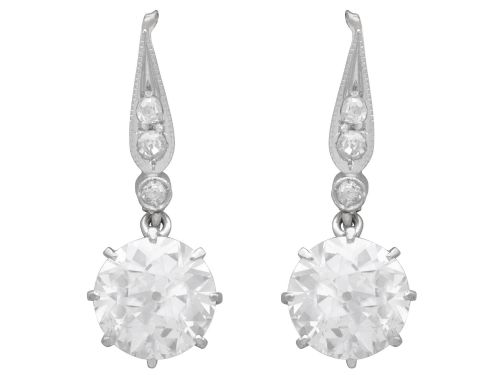
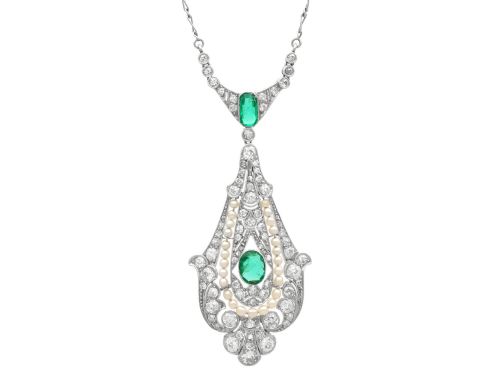
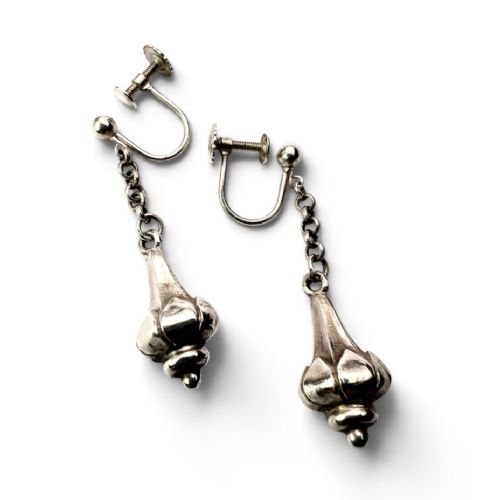
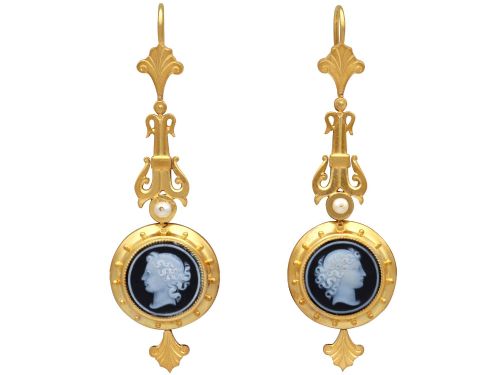
Earrings and pendants form the majority of pieces on this page, often featuring articulated drops that swing with movement. Gemstones such as amethyst, peridot, emerald, sapphire and diamond frequently dangle from delicate chains or secure hook fittings.
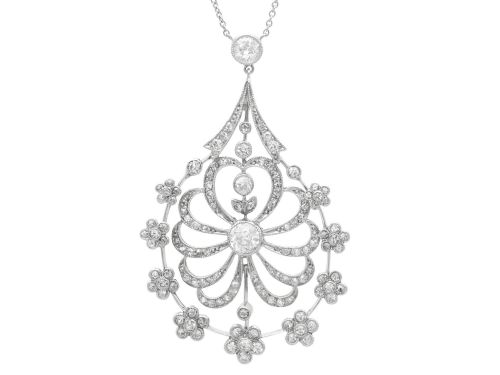
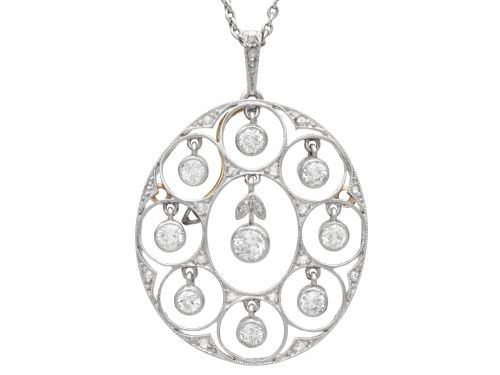
The aesthetic shifts from the ornate floral and openwork motifs of the Edwardian era to the geometric symmetry of the 1920s and 1930s. Pieces range from subtle pearl drops to substantial platinum and gold statement mounts.
Materials and construction methods
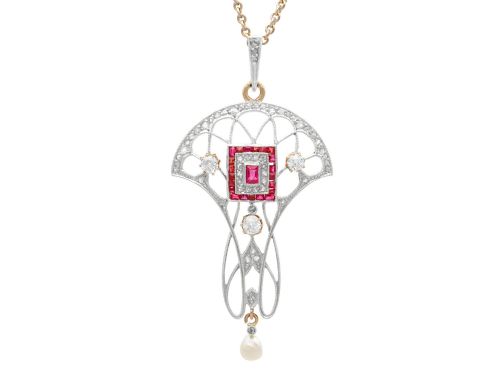
Goldsmiths and jewellers utilised a spectrum of metals ranging from standard silver and various carats of yellow and white gold up to platinum. Settings often combine metals, such as platinum-topped gold, to present bright white surfaces for diamonds while retaining durable yellow or rose gold reverse structures.
Gemstone mounting relied heavily on collet settings, bezel wraps and meticulous claw work, alongside fine millegrain edging seen on Edwardian creations. Enamel techniques, notably translucent plique-à-jour, appeared in Art Nouveau works to mimic stained glass within pendant frames.
Pendants and earrings frequently incorporate natural pearls, seed pearls and hardstones alongside faceted stones like zircon and garnet. Articulated links and pin fittings allow components to move independently without compromising structural integrity.
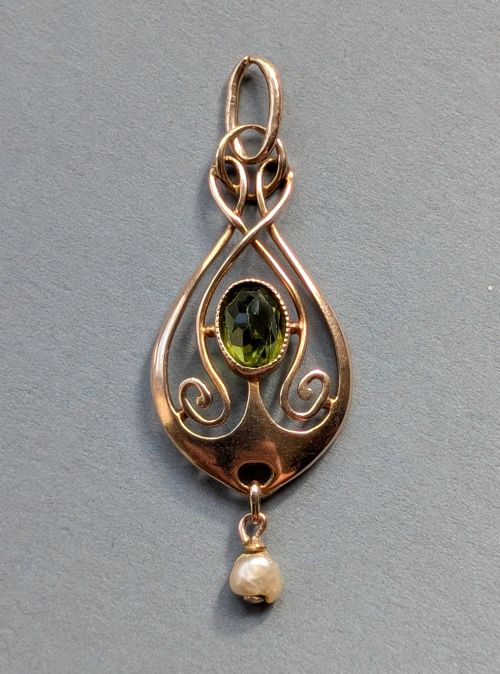
Suffragette jewellery proudly displayed the triad of green peridot, white pearl and violet amethyst to signal political allegiance.
Distinctions in construction and design
The standard of antique drop jewellery rests upon the precision of the metalwork and the integration of components. Finer items display delicate openwork, hand-carved details and secure hinge or screw mechanisms that function smoothly.
Material selection and stone matching dictate the upper tier of pieces, where natural saltwater pearls and cleanly matched diamonds sit in symmetrical platinum or high-carat gold frameworks. Lesser examples utilise simpler stamped mounts or paste stones set in lower-carat alloys.
Design cohesion separates workshop output, where every element from the suspension loop to the terminal drop follows a unified stylistic vision rather than assembled generic parts.
Deakin & Francis·Murrle Bennett
The Antique Drop Jewellery Glossary
- Millegrain
- A decorative technique featuring a raised line of tiny beads along the edge of a metal setting. This finish softens harsh borders and was popular during the Edwardian period.
- Plique-à-jour
- An enamel work technique resembling miniature stained glass with no backing, allowing light to shine through transparent coloured enamel. It is characteristic of Art Nouveau jewellery.
- Old Cut
- A precursor to modern brilliant diamond cuts featuring a smaller table, higher crown and larger culet. These stones were hand-cut to catch candlelight.
- Lavalier
- A pendant featuring a primary drop suspended from a smaller centre stone or chain loop. This style gained prominence in the Edwardian and Art Nouveau eras.
- Paste
- Hand-cut and polished lead glass used as a gemstone substitute in historic jewellery. High-quality paste was faceted and foiled to reflect light intensely.
Antique Drop Jewellery: Frequently Asked Questions
What is drop jewellery?
Drop jewellery refers to decorative items that suspend downwards from a fixed point, such as ear wires or neck chains. These pieces include swinging earrings and hanging pendants designed to move with the wearer.
Such designs highlight stones and metalwork by letting them catch the light from multiple angles during movement.
How do I clean antique earrings?
Cleaning antique earrings requires gentle methods appropriate for delicate settings and organic materials like pearls. Using a soft dry cloth removes surface dust without harming fragile metalwork or soft stones.
Harsh chemical dips and ultrasonic cleaners should be avoided because they can damage pearls, emeralds and historic foil-backed gems.
Can I wear drop pendants daily?
Wearing drop pendants daily is practical if the mountings and chains are secure and inspected regularly. Heavier gemstone pendants suit occasional wear to protect the suspension loops from continuous friction.
Storing pieces individually prevents scratching and preserves the delicate links of antique chains.
How do I identify Edwardian drops?
Edwardian drop pieces are characterised by platinum-topped gold, millegrain borders and light pastel stones like peridot and amethyst. The motifs often lean towards floral garlands, bows and openwork lace patterns.
These lightweight designs reflect the technical shift towards strong yet fine platinum fabrication during the early twentieth century.