


Antique Drink Caddy
An antique drink caddy brings together rich timbers and cut glass to hold spirits securely, offering a glimpse into period hospitality.
Antique Drink Caddy
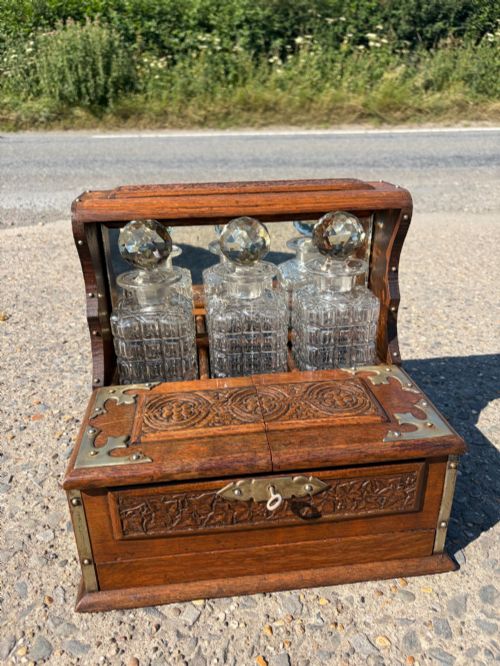
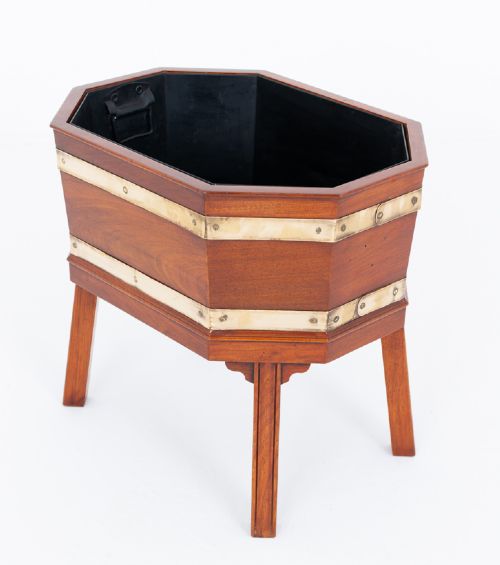
When searching for an antique drink caddy, a buyer encounters a diverse group of receptacles designed to store and serve beverages in a period interior. These pieces range from substantial cellarettes and wine coolers to secure tantalus frames and bottle stands.
The versions most commonly met on this page date from the eighteenth century through to the Edwardian era, spanning Georgian, Victorian, and later revivals. Oak and mahogany predominate, often mounted with brass and fitted with cut glass decanters.
How they were made
Cabinetmakers utilised dense timbers such as mahogany, oak, walnut, and satinwood, frequently employing inlay and brass banding to finish the exteriors. Joinery had to be robust enough to support the substantial weight of liquid-filled bottles and lead crystal decanters.
Metalwork played a structural and decorative role, with silver plating applied to mounts, carrying handles, and locking mechanisms on tantalus frames. Cut glass and crystal formed the vessels within, shaped by blowing and wheel-cutting.
Listings feature mahogany, oak, satinwood, and walnut, paired with silver plate, brass, and cut glass across Georgian and Victorian periods.
What varies in quality
The calibre of timber selection and cabinetmaking distinguishes finer examples from simpler workshop output. Pieces attributed to notable makers display crisp inlay, superior figure in the mahogany or oak, and heavy brass mounts that fit the timber precisely.
Originality of the glassware and working locks with matching keys elevate a piece. The integration of silver plated components with undamaged cut crystal decanters shows a higher standard of original commission.
Gillows
The Antique Drink Caddy Glossary
- Tantalus
- A locking frame that secures decanters by the neck so they cannot be removed without a key, named after the mythical figure who could not reach water.
- Cellarette
- A fitted cabinet or box designed to hold wine bottles and decanters near the dining table, often lined or lead-weighted.
- Wine cooler
- An open or lidded vessel used for chilling bottles, frequently constructed in mahogany with brass bands and liners.
- Silver plate
- A layer of silver fused to a base metal, commonly used for the mounts, handles, and hardware on nineteenth-century drink frames.
Antique Drink Caddy: Frequently Asked Questions
What is a tantalus?
A tantalus is a locking drink caddy frame that holds decanters securely by their stoppers. This design kept the contents safe from unauthorised access by servants or guests.
Most examples appear in oak or mahogany with silver plated metalwork and cut glass bottles.
How were cellarettes used?
Cellarettes sat beneath the dining table or alongside the sideboard to store wine bottles and decanters during meals. Their heavy timber construction kept beverages cool before serving.
Georgian and Victorian dining rooms relied on these locking containers to manage the cellar stock.
How do I date an oak tantalus?
Dating relies on the style of the woodwork, the method of silver plating, and the cut of the glass decanters. Late Victorian pieces often feature heavy oak frames with brass carrying handles and bevelled edges.
Earlier eighteenth-century variants lean towards cellarettes and wine coolers rather than mechanical locking frames.
Are the decanters usually original?
Many pieces retain their matched cut crystal decanters, though replacements occur frequently due to accidental breakage over time. Examining the fit within the wooden base helps determine if the bottles belong to the frame.
Matching cut patterns across all decanters indicate a cohesive set.