


Antique Drink Cabinet Chiffonier
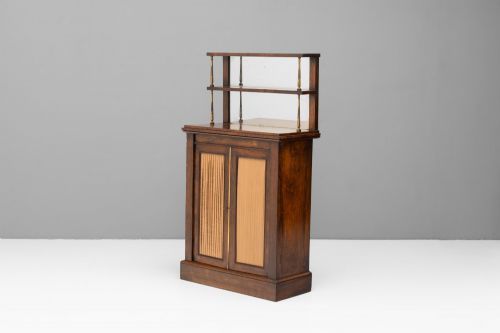
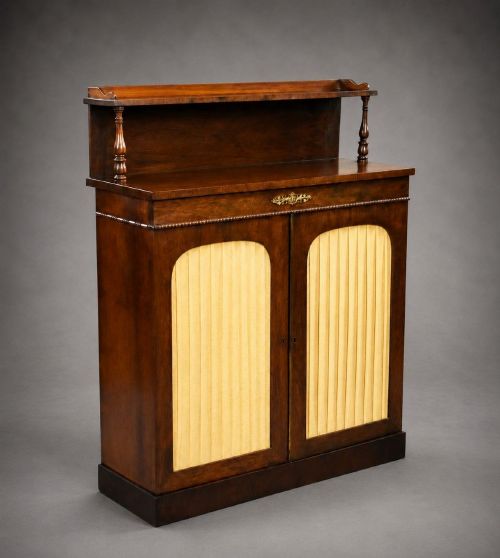
An antique drink cabinet chiffonier offers practical storage with period elegance, combining the enclosed cupboard base of a chiffonier with display space for bottles and glassware.
Antique Drink Cabinet Chiffonier
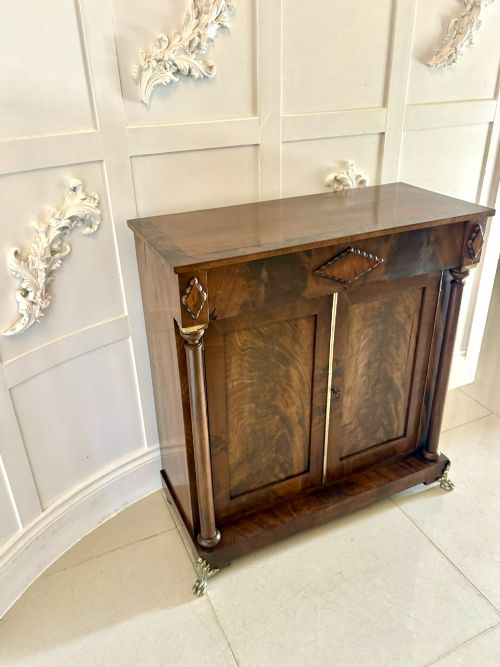
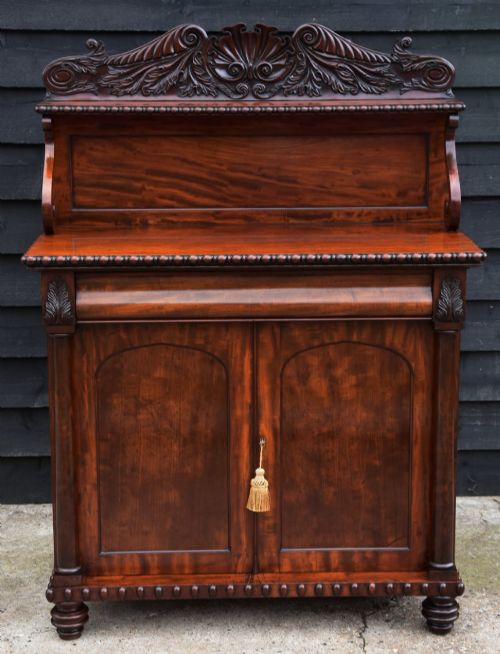
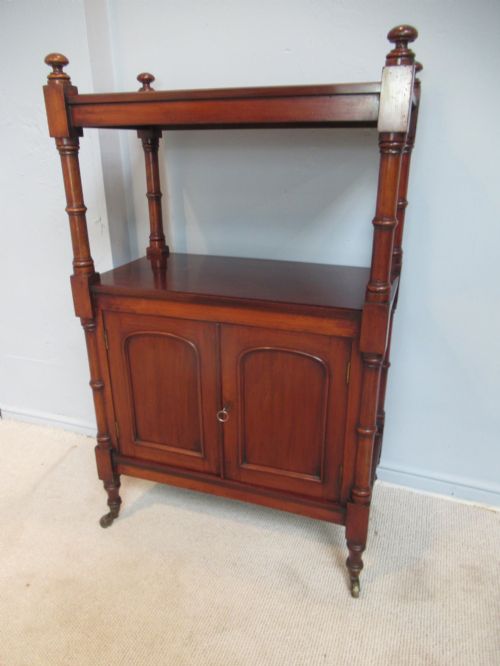
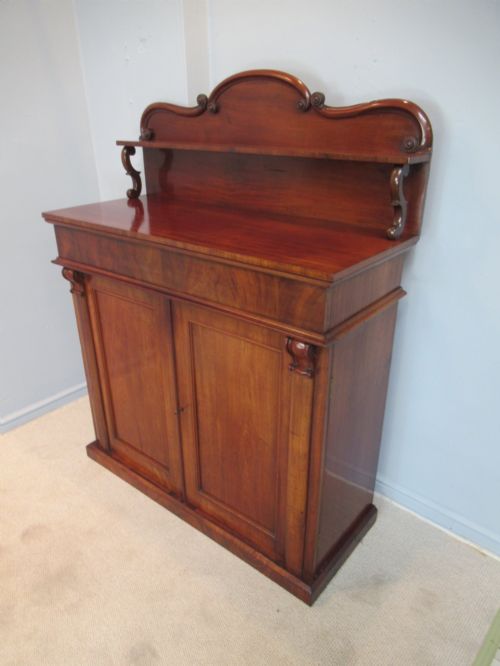
An antique drink cabinet chiffonier brings together low nineteenth-century side cabinets and chiffoniers, which serve as adaptable storage pieces for living spaces and dining rooms. Buyers seeking this form will find that most examples date from the Regency, George IV, and Victorian periods, often constructed from rich timbers with enclosed lower cupboards.
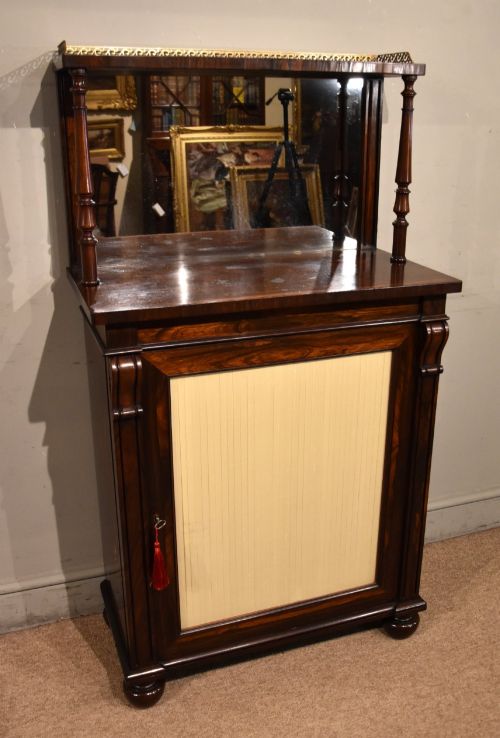
The selections span various regional and stylistic revivals, including Louis XVI influence, French Empire, and campaign-style furniture. These pieces frequently feature lower cupboards paired with raised upper shelves or mirrored backs, originally designed for serving and displaying tableware but easily repurposed for modern entertaining.
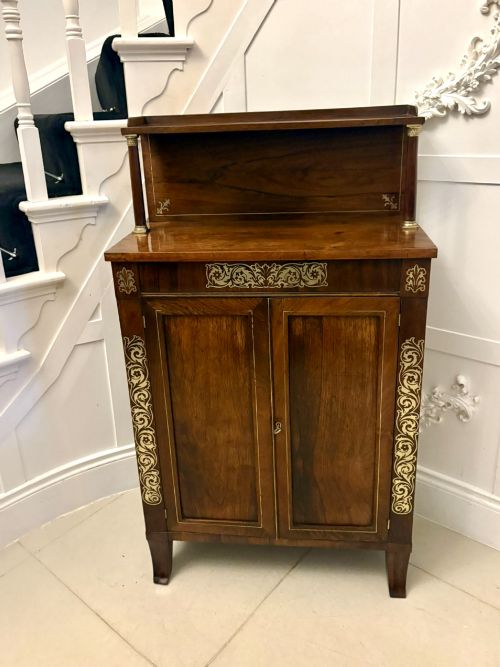
Proportions range from diminutive, unusually small-scale pieces suitable for compact rooms to grander exhibition-quality sideboards. The combination of enclosed lower compartments and upper display ledges gives these cabinets their distinctive silhouette across diverse nineteenth-century iterations.
Materials and construction methods
Cabinetmakers relied heavily on dense tropical hardwoods, building primary structures in solid mahogany and rosewood, often enhanced with figured mahogany veneers and flame mahogany veneers. Burr walnut and satinwood appear on select later nineteenth-century examples, providing contrasting grain patterns across door panels and friezes.
Decorative detailing incorporates brass inlay, gilt ormolu mounts, and fabric panels set behind glazed cabinet doors. Heavier architectural pieces frequently incorporate marble tops, whilst japanned finishes and simulated rosewood demonstrate alternative surface treatments utilised during the Regency and Victorian eras.
Several diminutive chiffoniers were built to such unusually small proportions that they must have required exceptionally tiny crystal glassware.
Distinctions in craftsmanship and finish
Quality rests primarily in the selection of timber veneers and the precision of the cabinetmaker's joinery. Superior examples display carefully matched flame mahogany or figured rosewood grains across the entire facade, whereas simpler pieces rely on plain timber planks.
The refinement of brass mounts, inlay work, and turning on the upright supports distinguishes standard production from exhibition-grade pieces. Interiors finished in secondary hardwoods with dovetailed drawer construction likewise separate workshop standards.
Holland & Sons
The Antique Drink Cabinet Chiffonier Glossary
- Chiffonier
- A low sideboard or cabinet featuring a cupboard base, frequently surmounted by a shelf back for display.
- Flame Mahogany
- A veneer cut from the branch junction of a mahogany tree, yielding a distinctive feather-like flame pattern.
- Ormolu
- Gilded bronze mountings applied to furniture for decorative enrichment during the Regency and revival periods.
- Japanned
- A European imitation of East Asian lacquerwork, created using layered varnishes and metallic dusts.
- Campaign Style
- Functional furniture designed for transport, characterised by recessed brass handles and robust structural corners.
Antique Drink Cabinet Chiffonier: Frequently Asked Questions
What is an antique drink cabinet chiffonier used for?
These cabinets provide enclosed lower storage alongside upper shelving surfaces, making them practical for housing bottles, glassware, and bar accessories in a sitting room.
The combination of concealed cupboard space and display ledged tops allows homeowners to store hospitality items out of sight while keeping servingware accessible.
How do I date a Regency chiffonier?
Regency pieces typically date from the early nineteenth century, displaying classical proportions, mahogany or rosewood timbers, and restrained brass or gilt detailing.
Look for architectural feet, brass stringing, and symmetrical door panels that reflect the neoclassical design idioms popular during the early eighteen-hundreds.
Are these cabinets suitable for modern dining rooms?
Their compact depth and combination of surface display and cupboard storage make these side cabinets well-suited to contemporary dining spaces.
The varied scale, ranging from diminutive nineteenth-century formats to wider sideboards, allows them to fit diverse room dimensions.
What is the difference between a chiffonier and a sideboard?
A chiffonier is generally smaller than a traditional sideboard and typically incorporates a raised shelf back attached to the upper surface of the low cabinet.
Sideboards usually provide longer, uninterrupted top surfaces designed primarily for food service and large-scale dining room storage.