

Antique Dresser Rack
An antique dresser rack brings centuries of domestic history into a modern kitchen, offering open shelving for display and practical storage.
Antique Dresser Rack
When searching for an antique dresser rack, buyers encounter a range of forms designed to hold ceramic plates and kitchen wares, spanning the eighteenth, nineteenth, and early twentieth centuries.
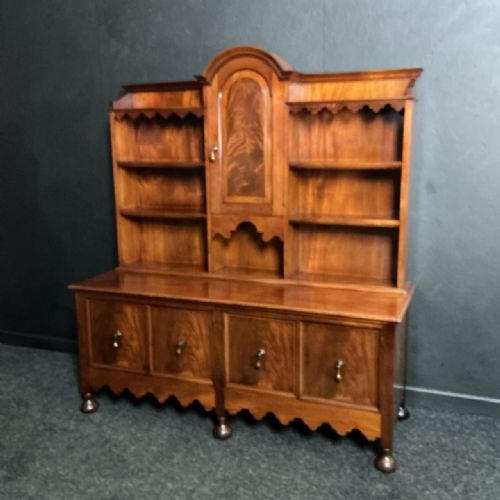
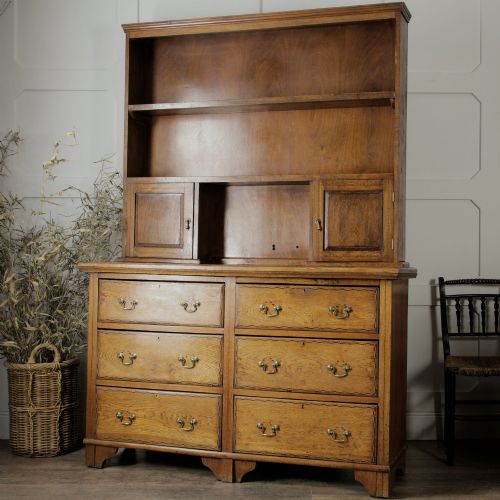
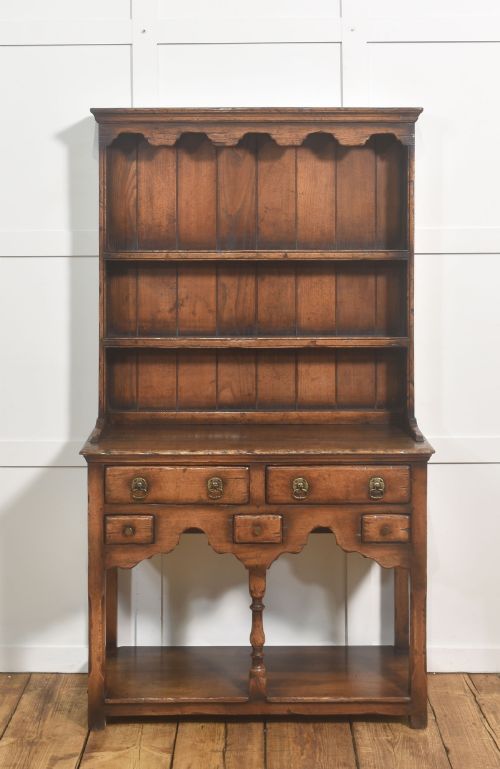
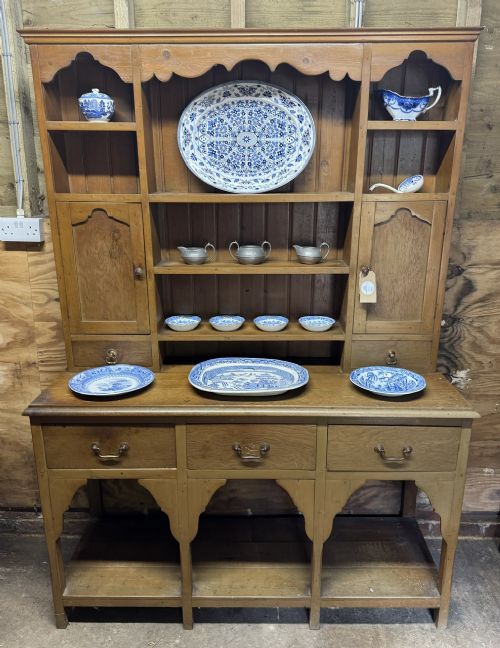
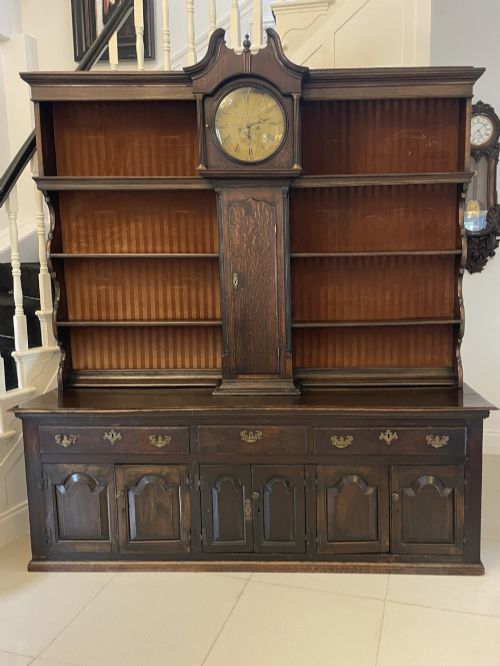
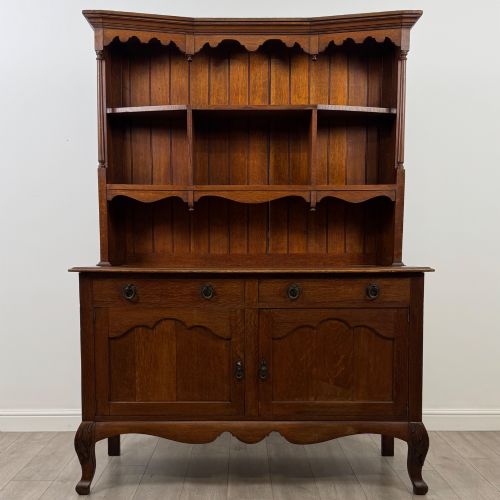
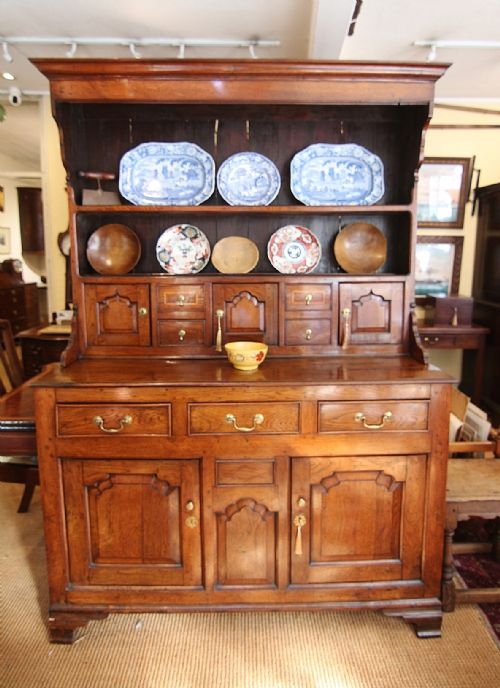
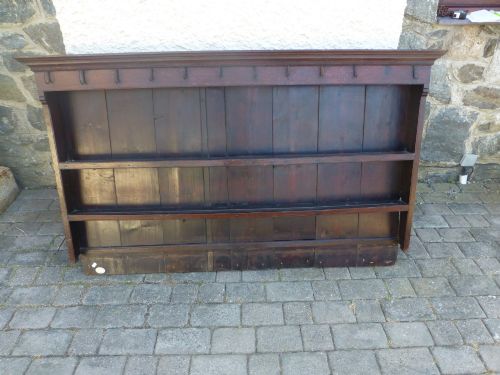
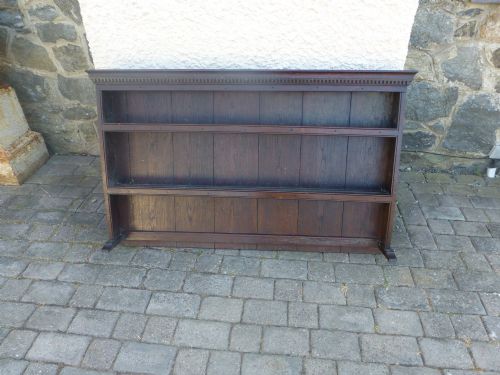
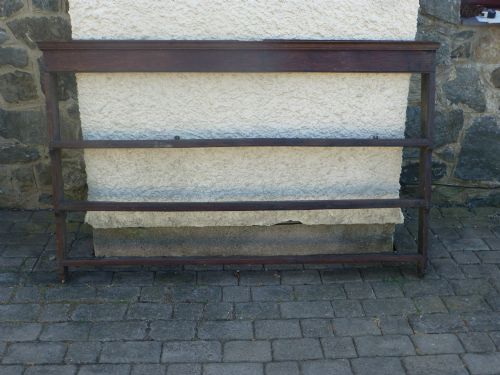
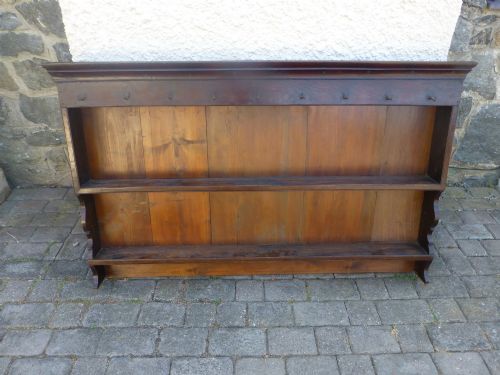
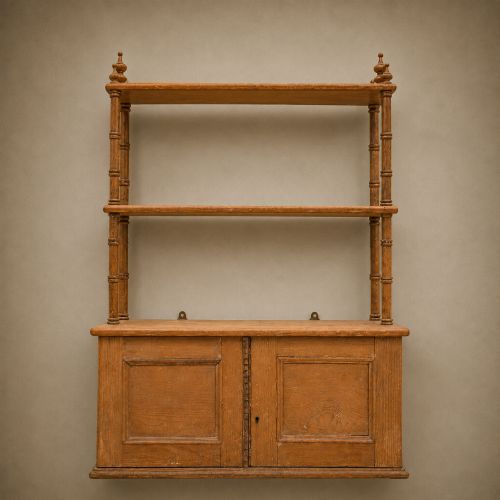
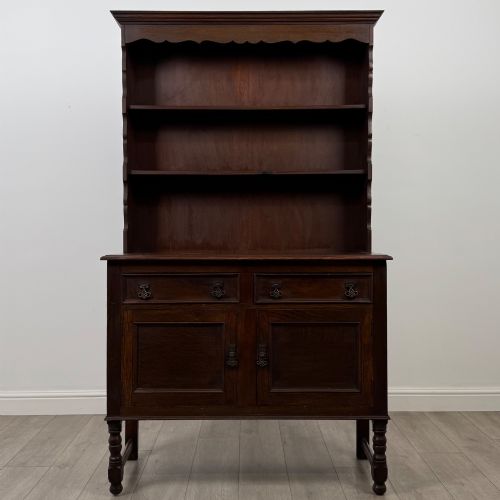
The most common version met on this page is the open-backed plate rack, often integrated into a larger Welsh or country dresser or fitted independently as wall shelves.
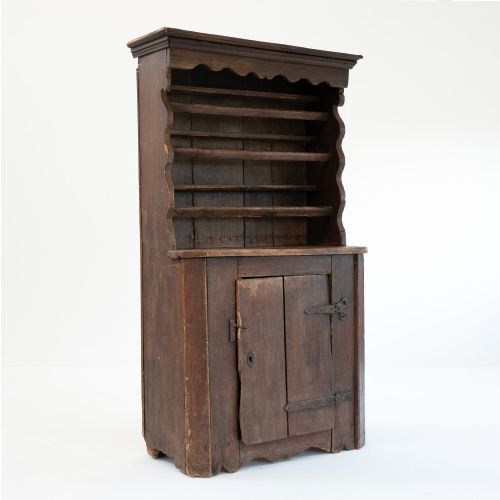
Originating largely from regional workshops in Wales and English rural counties, these pieces reflect vernacular domestic traditions in oak and pine.
Materials and construction methods
Makers constructed these racks predominantly from solid local timbers, relying on oak for sturdiness in earlier pieces and pine for painted or country utility pieces.
Joinery methods involved traditional pegged joints and hand-planed boards, occasionally accented with brass hardware or subtle inlay details in mahogany and bone.
Surfaces developed a natural patina over generations of waxing and daily kitchen use, preserving tool marks and the subtle grain of the wood.
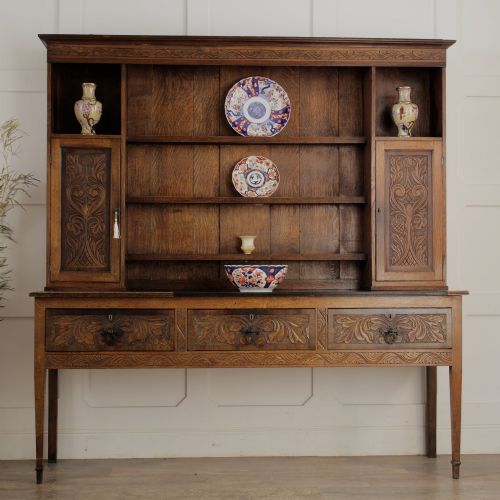
Some nineteenth-century oak pieces feature curious Green Man carvings hiding amongst the foliate woodwork.
Assessing quality in regional racks
Quality rests in the integrity of the original timber and the survival of the original rack back relative to the base sideboard.
Proportion and regional detailing set finer pieces apart, such as breakfront cornices, carved friezes, and potboards unique to specific Welsh counties.
The degree of untouched surface wear dictates desirability, where original patination and minimal timber replacement elevate a piece significantly.
The Antique Dresser Rack Glossary
- Potboard
- A lower open shelf built into the base of a dresser, historically used for storing heavy pots and pans. It distinguishes many country pieces from standard sideboards.
- Delft rack
- An upper set of open shelves specifically designed to display ceramic plates upright. The name derives from the fashion for displaying imported delftware.
- Vernacular
- Architecture and furniture rooted in local traditions and materials rather than academic architectural styles. These pieces were made by regional joiners for everyday rural use.
- Patina
- The deep surface sheen developed through decades of handling, polishing, and ageing. It serves as a visual indicator of authenticity.
- Breakfront
- A piece of furniture featuring a central section that projects forward from the flanking sections. This configuration adds architectural presence to larger dresser bases.
Antique Dresser Rack: Frequently Asked Questions
What is an antique dresser rack?
An antique dresser rack is a set of open wooden shelves, either wall-mounted or resting atop a sideboard base, designed to hold plates and kitchen wares.
Historically, these fixtures formed the upper section of a country kitchen dresser used for both storage and display.
How do I care for a wooden rack?
Maintaining these pieces requires minimal intervention, primarily relying on occasional applications of traditional beeswax to nourish the dry timber.
Keep wooden racks away from direct heat sources and sudden humidity shifts to prevent timber movement and cracking.
Are racks and bases usually matched?
Many surviving pieces retain their original marriage of upper rack and lower base, though some eighteenth and nineteenth-century examples were reunited later in their history.
Matching timber grain, colour, and wear patterns help confirm whether the rack and base belonged together originally.
Where were these pieces made?
The majority of traditional rack backs and dressers originated in rural workshops across Wales and English counties like Shropshire and Yorkshire.
Regional carpenters utilised local accessible woods such as oak and pine to build sturdy furniture suited to farmhouse kitchens.