



Antique Drawing Room Armchair
An antique drawing room armchair is a statement seat built for formal reception rooms, offering period comfort and refined craftsmanship.
Antique Drawing Room Armchair
When you search for an antique drawing room armchair, you are looking at formal seating designed for nineteenth-century and early twentieth-century reception spaces. These pieces encompass varied silhouettes, from button-backed Victorian examples to revival styles echoing earlier centuries.
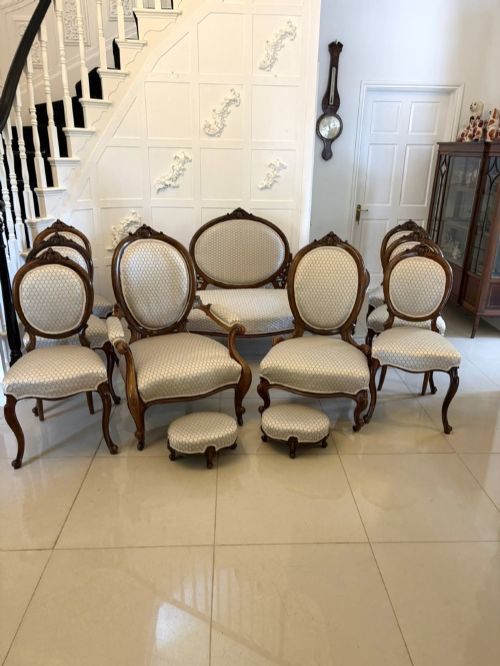
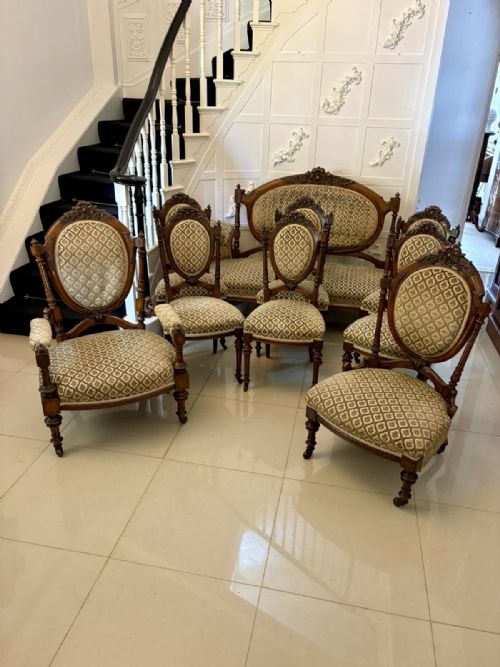
The selections available here range from single elbow chairs and gentleman's armchairs to larger matched parlour suites and open armchairs. Walnut and mahogany frame woods predominate, often paired with period textiles such as damask, velvet, and leather.
You will encounter pieces spanning the Georgian, Regency, Victorian, and Edwardian eras. Many reflect specific historical revivals, including Chippendale taste and French Louis XV influences.
How they were made
Frames are constructed from dense hardwoods like mahogany, walnut, and rosewood, frequently shaped with hand-carving or delicate inlay work. Cabinetmakers utilised traditional joinery techniques to ensure structural integrity across elbow chairs and larger suites.
Upholstery methods involved deep buttoning, springing, and the application of textiles including damask, velvet, leather, and modern replacement fabrics. Brass castors were frequently fitted to the feet of heavier armchairs for ease of movement across formal carpets.
Some gentleman's armchairs include hidden castors so dignified Victorians could glide across the parlour without disturbing the carpet pile.
What varies in quality
The distinction between ordinary and exceptional pieces lies in the crispness of the timber carving and the sophistication of the frame silhouette. Exhibition quality pieces demonstrate superior timber selection, intricate detail, and cohesive design within larger salon suites.
Originality of the frame construction and the retention of period upholstery details separate untouched examples from heavily altered pieces. Finer armchairs exhibit balanced proportions, refined cabriole legs, or precise inlay work that elevates the seating above standard domestic production.
Hindley & Sons
The Antique Drawing Room Armchair Glossary
- Carver chair
- An armchair, often featuring open arms, traditionally placed at the head of a dining table or used as a formal drawing room seat.
- Spoonback
- A chair back curved in three dimensions to mimic the bowl of a spoon, highly characteristic of mid-nineteenth-century seating design.
- Cabriole leg
- A furniture leg that bends outward in a convex curve and tapers inward to a concave curve, reminiscent of animal legs.
- Button upholstery
- A traditional method where deep buttons are pulled tight through the padding to create a secure, patterned tufted surface.
- Elbow chair
- A traditional term for an armchair, particularly those with wooden armrests used in parlours and drawing rooms.
Antique Drawing Room Armchair: Frequently Asked Questions
What is a drawing room armchair?
A drawing room armchair is a formal seat created for the reception rooms of nineteenth-century and early twentieth-century homes. These chairs served both decorative and practical functions in entertaining guests.
They appear in various revival styles, featuring exposed mahogany or walnut frames and upholstered backs designed to complement larger parlour suites.
How do I identify a Victorian armchair?
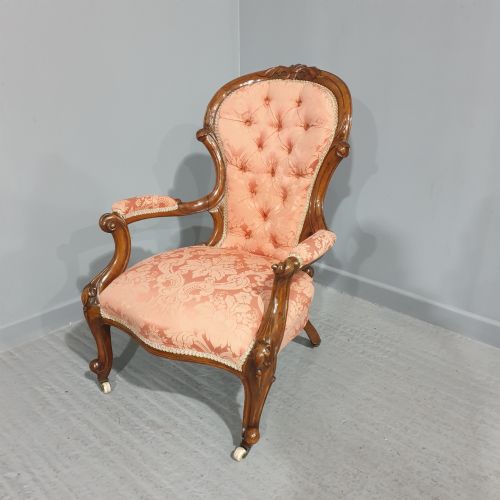
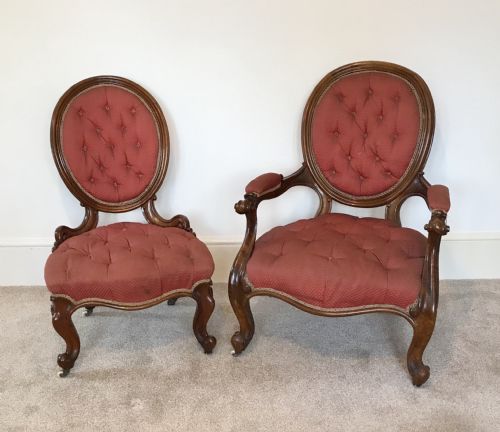
Victorian armchairs are typically identified by their use of walnut or mahogany, substantial padding, and deep button upholstery. Common forms include spoonback designs and carved frames dating from the middle to late nineteenth century.
Many incorporate decorative woodwork or turned legs fitted with brass castors, reflecting the domestic fashions of the period.
Where were these chairs used?
These armchairs were positioned in the principal reception rooms of townhouses and country homes where visitors were received. They often formed part of a larger matched suite that included sofas and side chairs.
In contemporary interiors, they function well as occasional chairs in studies, bedrooms, or main living areas.
What is a Chippendale revival armchair?
A Chippendale revival armchair is a later piece, often dating around nineteen hundred, inspired by eighteenth-century designs. These chairs incorporate classic motifs such as carved splats and elaborate woodwork.
They combine historical aesthetics with the heavier framing typical of late Victorian and Edwardian manufacturing.
Are these chairs suitable for daily use?
Many drawing room armchairs remain sturdy enough for regular seating, though older frames and traditional upholstery require careful handling. Some pieces offered for sale may require professional re-upholstery to ensure modern comfort.
Checking the stability of the hardwood frame helps determine whether a chair suits daily domestic routines.