

Antique Double Table
An antique double table unites craftsmanship and utility, offering generous surfaces designed for shared work or dining across centuries of British and European design.
Antique Double Table
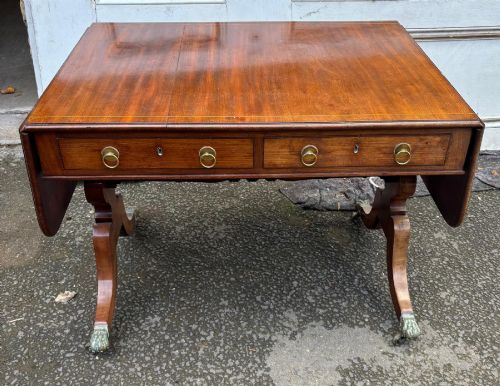
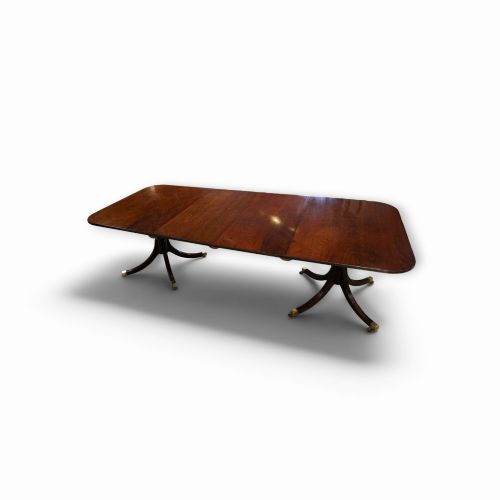
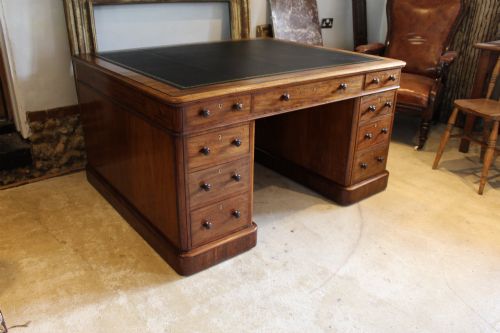
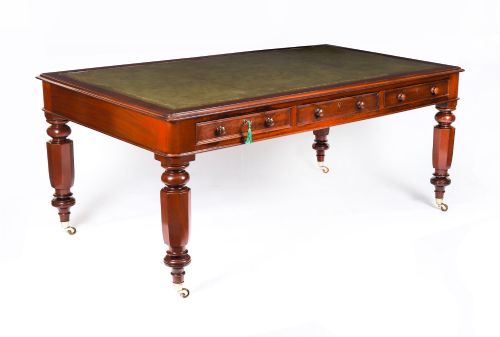
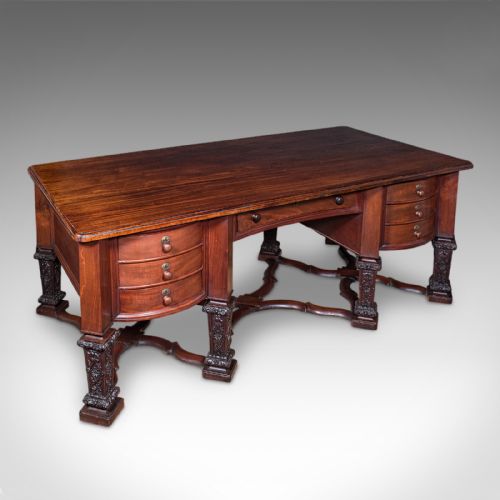
When searching for an antique double table, buyers typically encounter large partners desks, twin-pillar dining tables, and extending tables designed for use from both sides. These pieces originate across the eighteenth, nineteenth, and early twentieth centuries, spanning periods such as the Georgian, Victorian, and Edwardian eras.
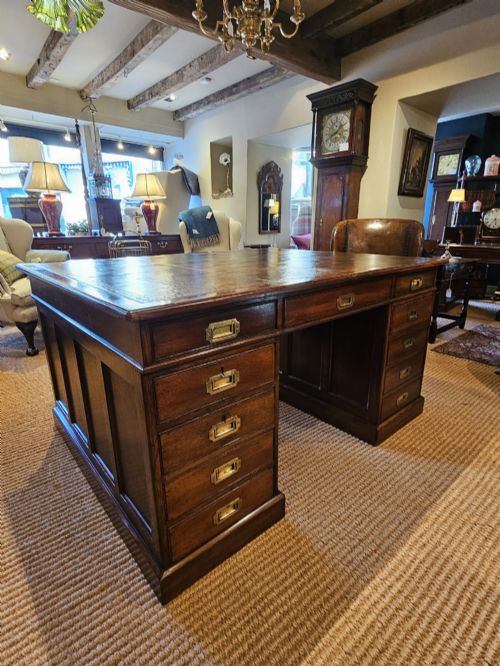
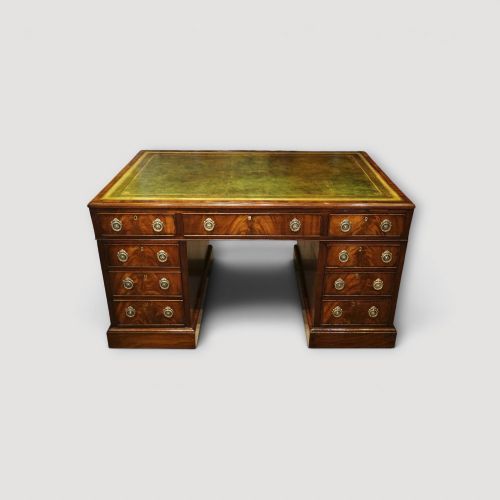
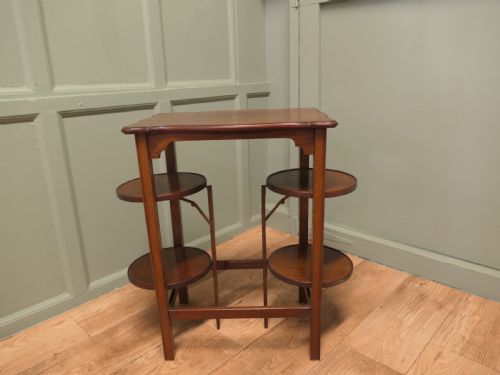
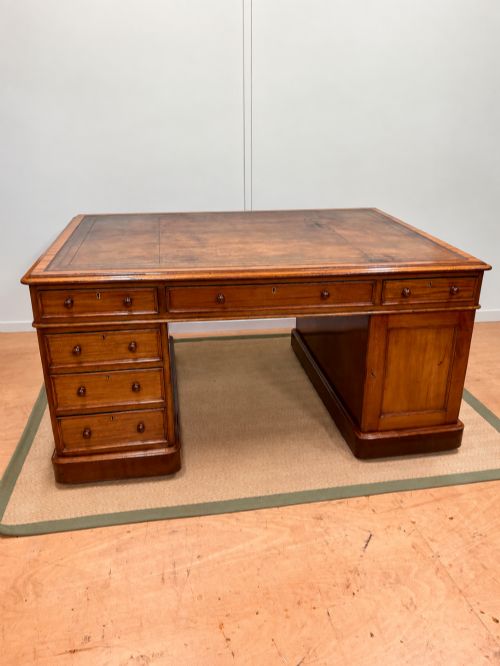
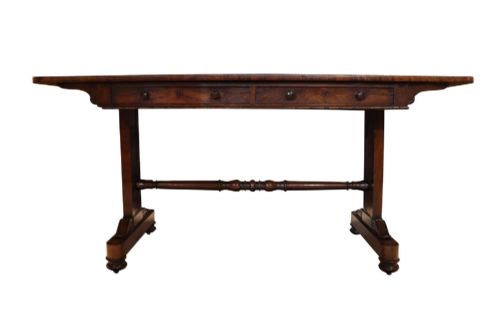
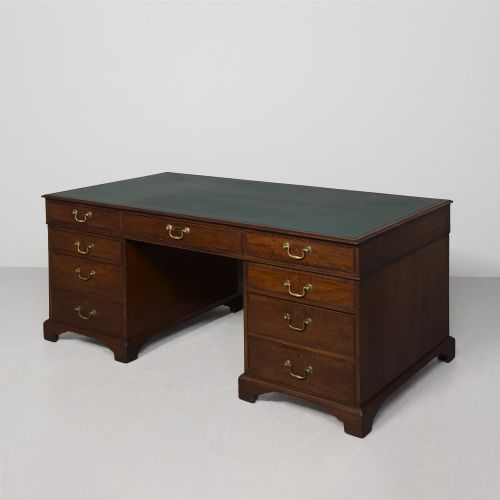
Partners desks represent the core of these listings, constructed in mahogany, walnut, and oak to provide matching drawers and workspace on opposing sides. Dining tables with twin pedestals or extending leaves also appear frequently, alongside specialised library tables and condiment stands.
The selection ranges from robust mahogany writing desks dating to the eighteen-hundreds to lighter Edwardian and twentieth-century interpretations in walnut and oak. Each item reflects the domestic or institutional demands of its era, prioritising dual access and sturdy construction.
How they were made
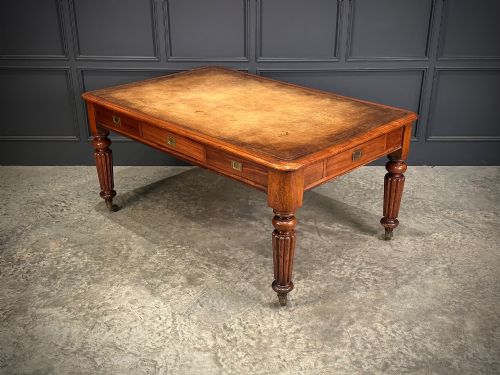
Cabinet makers utilised dense hardwoods including mahogany, walnut, and oak for structural stability, frequently incorporating brass fittings, leather writing inserts, and ebonised details. Timber was selected for grain pattern and durability, especially on large surfaces subject to daily use.
Construction techniques relied on traditional joinery, sturdy pedestals, and extending mechanisms that allowed tables to expand with leaves. Metal components such as brass handles, hinges, and bindings were cast and finished by hand.
Antique Double Table Retail Price Guide 2026
Typical asking prices for double table among the pieces listed under this phrase on Sellingantiques today, from the lower quarter to the upper quarter. They describe what is for sale here now, not the wider market.
The listings span the eighteenth, nineteenth, and early twentieth centuries, featuring mahogany, walnut, oak, and brass.
What varies in quality
The standard of a piece depends heavily on the selection of timber veneers, the precision of the underlying joinery, and the integrity of secondary woods used in drawer construction. Superior examples maintain matching grain patterns across opposing sides and retain original hardware.
Proportion and execution distinguish finer items from standard workshop output, particularly in carved details, the quality of leather desk inserts, and the smoothness of extending mechanisms. Surviving surfaces that retain their original patination demonstrate superior preservation.
Maple and Co·William Comyns·Charles Andrea Nosotti·KPM Berlin
The Antique Double Table Glossary
- Partners Desk
- A large double-sided desk designed for two people to work opposite one another, typically featuring banks of drawers on both sides.
- Twin-Pillar
- A dining table construction supported by two separate central pedestals, often fitted with brass claw feet or castors.
- Extending Table
- A dining surface equipped with a mechanism or loose leaves to increase length when required.
- Ebonised Wood
- Timber treated with a dark stain or finish to imitate the appearance of ebony.
- Patina
- The surface sheen and colour developed by wood, leather, or metal through age and handling.
Antique Double Table: Frequently Asked Questions
What is an antique double table?
An antique double table refers to furnishings designed for dual-sided access, most commonly large partners desks and twin-pillar dining tables.
These pieces allow two people to work or dine opposite one another while sharing a single surface.
How do I identify a partners desk?
Partners desks feature drawers, cupboards, or kneeholes on both long sides, unlike standard desks finished against a wall.
They were originally built for banking or legal partners to share workspace.
What woods were commonly used?
Cabinet makers predominantly utilised mahogany, walnut, and oak for their strength and rich grain patterns.
Secondary woods like pine or mahogany appear inside drawer boxes and internal framing.
How do extending dining tables function?
Extending tables utilise central slides or drop-in leaves supported by pedestals or additional pull-out legs.
This mechanism allows the surface area to expand to accommodate larger gatherings.
How should I care for leather top desks?
Leather inserts require gentle cleaning with a damp cloth and occasional application of appropriate leather balms to prevent cracking.
Avoid placing hot items or direct sunlight onto the leather surface to preserve its colour.