
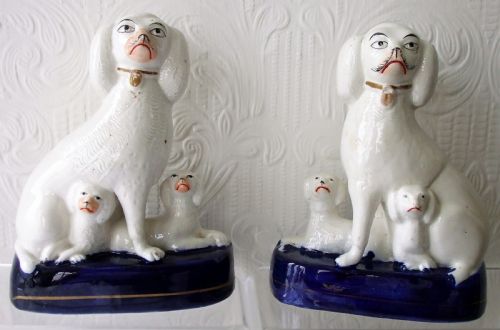
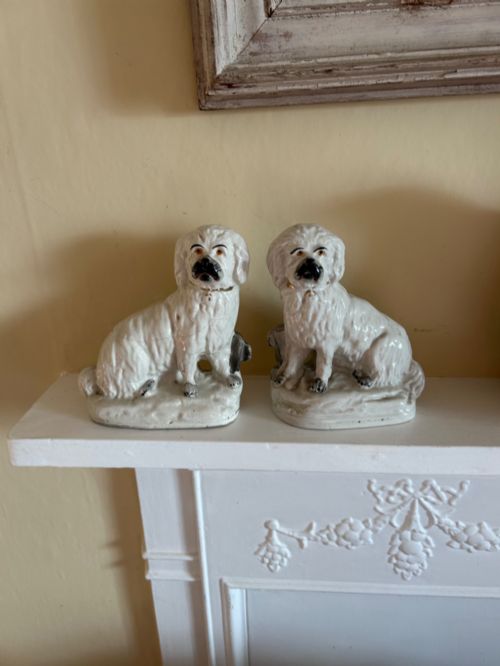


Antique Dog Mantel Ornament
These antique dog mantel ornaments are earthenware and bronze figures that bring nineteenth-century domestic life directly to the fireplace.
Antique Dog Mantel Ornament
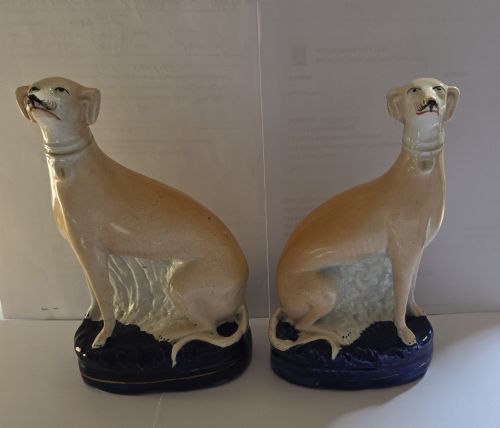
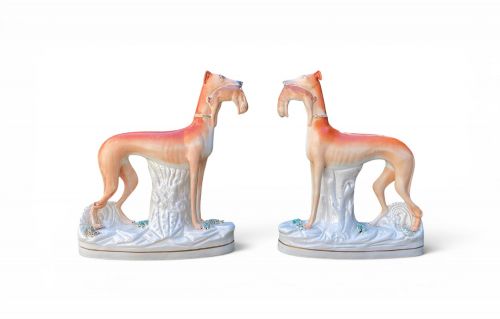
An antique dog mantel ornament sits on a fireplace shelf, taking the form of earthenware pottery and bronze sculptures produced during the nineteenth century. These figures predominantly record spaniels, greyhounds, whippets, poodles and pugs modelled in pairs to flank a fireplace opening.
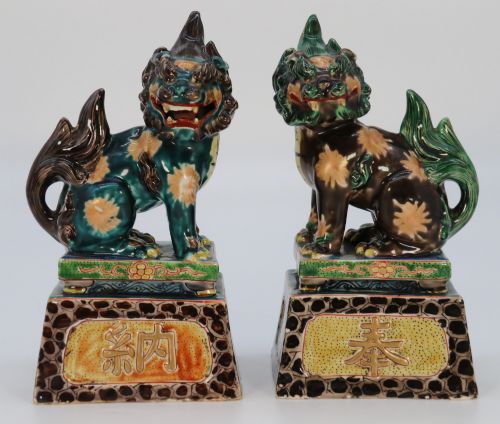
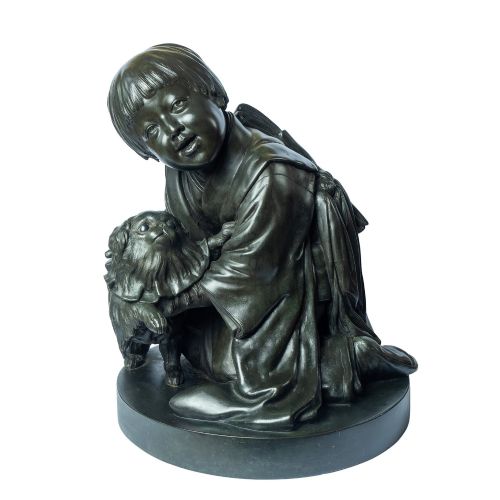
The version most commonly met on this page is the Victorian Staffordshire pottery dog, usually finished in white and gilt, copper lustre, or naturalistic red and white patches. Alongside these English pottery figures appear French animalier bronzes, Japanese bronze okimono, and continental porcelain dog groups.
Makers such as Thomas Parr produced seated greyhounds, while factories like Royal Doulton and Beswick extended the tradition into later periods. The selection encompasses spill vases, clock groups, and figures accompanied by pups or hares.
How they were made
Pottery figures rely on earthenware clay shaped in moulds, then painted with enamel colours and finished with lead glaze before firing. Many Staffordshire pieces incorporate gilt highlights or copper lustre applications to catch the light of a room.
Bronze sculptures and okimono utilise metal casting techniques, sometimes finished with cold painting or surface patination. These methods capture fine detail in the fur, collars, and expressions of the animals.
Victorian spaniels were often called comforter dogs because real toy spaniels were kept by ladies to warm their laps.
What varies in quality
The depth and brilliance of the glaze, the uniformity of copper lustre, and the preservation of original gilding dictate the visual impact of earthenware ornaments. Bronze works depend on the precision of the cast and the integrity of the original surface finish.
Thomas Parr·Royal Doulton·Beswick
The Antique Dog Mantel Ornament Glossary
- Staffordshire pottery
- Earthenware figures produced in the potteries of Staffordshire, England, during the nineteenth century. They include spaniels and greyhounds modelled as mantel pairs.
- Copper lustre
- A metallic glaze technique that imparts a reflective, coppery sheen to pottery surfaces. This finish is frequently found on Victorian dog ornaments.
- Spill vase
- A hollow cylindrical holder attached to a pottery figure designed to hold wooden matches or tapers for lighting fires and candles.
- Animalier
- A nineteenth-century artistic style focusing on the realistic depiction of animals. It appears particularly in French bronze sculptures.
- Okimono
- A Japanese decorative carving or sculpture intended for display on a shelf or mantelpiece. These pieces often depict animals in bronze.
Antique Dog Mantel Ornament: Frequently Asked Questions
What are antique dog mantel ornaments?
These pieces are decorative figures made from earthenware, porcelain, and bronze during the nineteenth century to stand on mantelpieces. They typically depict popular breeds like spaniels, greyhounds, and poodles.
Pottery pairs were traditionally placed on either side of a fireplace clock or grate. The selection also includes spill vases, clock groups, and bronze sculptures.
Where were Staffordshire dog ornaments made?
Staffordshire dogs originated in the potteries of the Midlands in England during the Victorian era. Numerous local kilns produced these earthenware figures for middle-class homes.
Production spanned several decades, yielding variations in size, posture, and colour decoration. Makers such as Thomas Parr contributed to this regional output.
Why were pairs of dogs placed on mantelpieces?
Pairs of seated spaniels and greyhounds served as domestic companions and symbols of loyalty in Victorian parlours. Placing them symmetrically on the mantel shelf created a balanced decorative arrangement.
Some figures doubled as practical items like spill vases for holding matches. Others simply provided colourful ceramic ornament for the hearth.
Are all pottery dog ornaments from England?
While the majority of pottery spaniels hail from Staffordshire, the wider category includes continental porcelain dog figures and bronze sculptures from France and Japan. These international pieces reflect distinct regional casting and glazing traditions.
Japanese bronze okimono and French animalier bronzes offer a different aesthetic compared to English earthenware. Each origin brings specific materials and finishing techniques to the mantel display.