



Antique Display Jars
These antique display jars combine utilitarian origins and cabinet showpieces, offering sturdy chemistry vessels and delicate covered porcelain.
Antique Display Jars
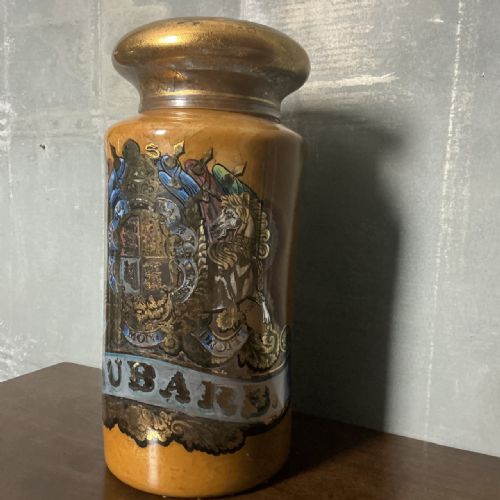
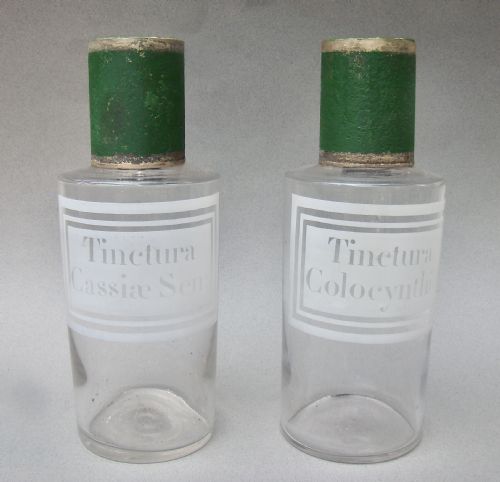
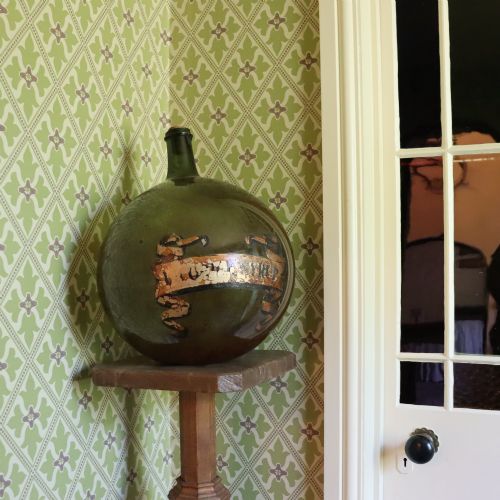
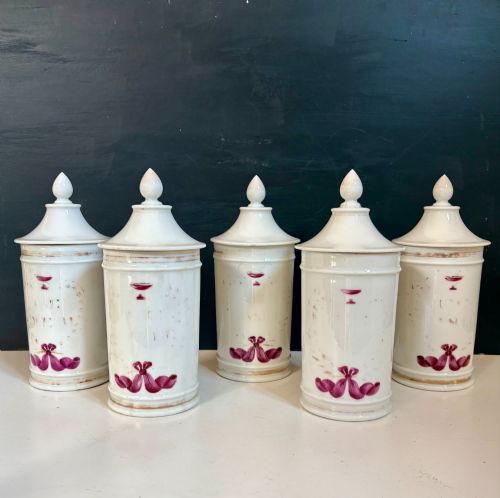
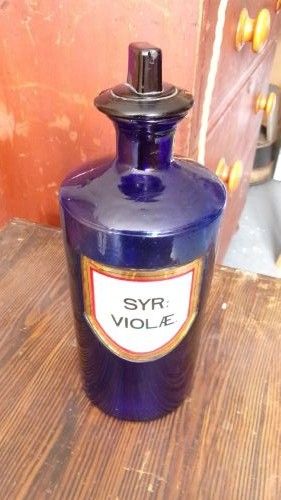
When searching for antique display jars, buyers encounter a diverse selection that bridges functional apothecary vessels and decorative ceramic urns. These pieces range from heavy blown glass chemist bottles labelled for contents like arrowroot to ornamental porcelain jars and lidded vases.
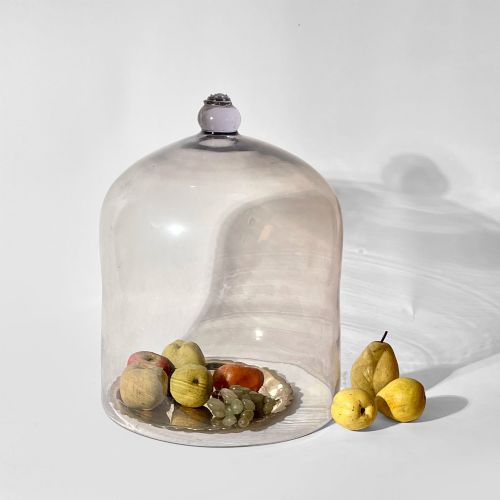
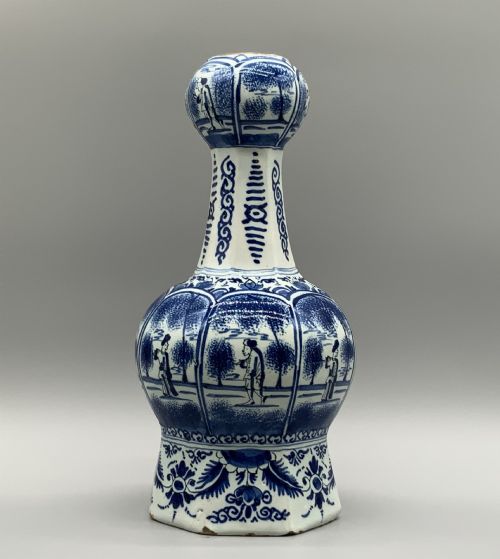
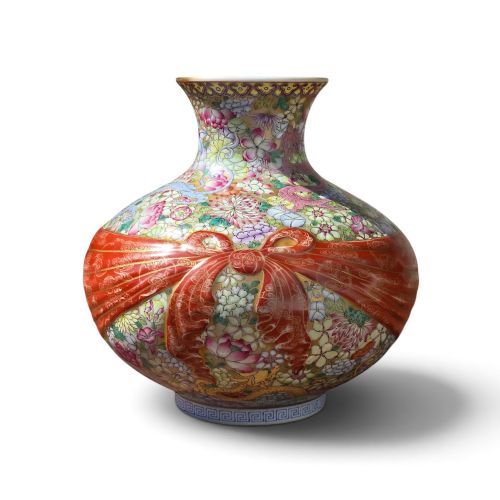
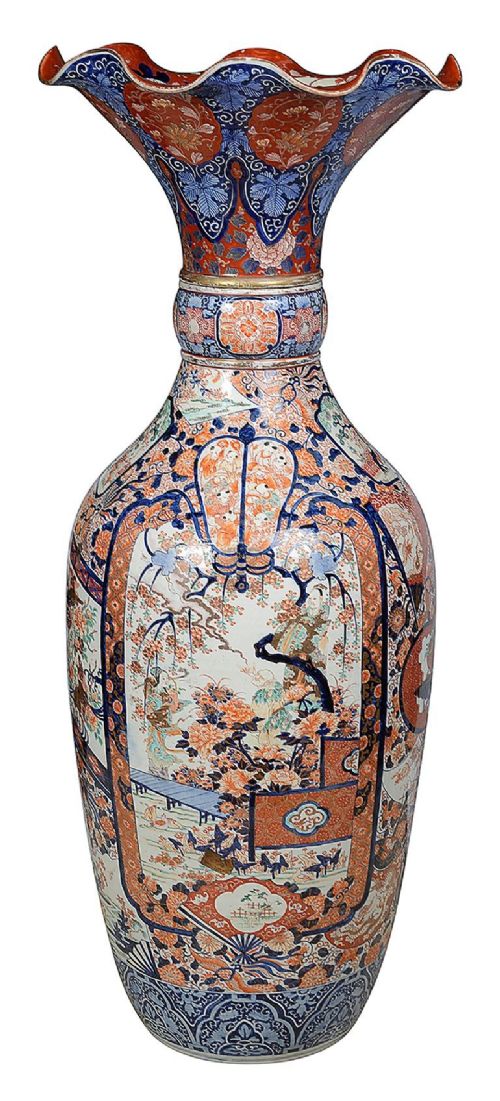
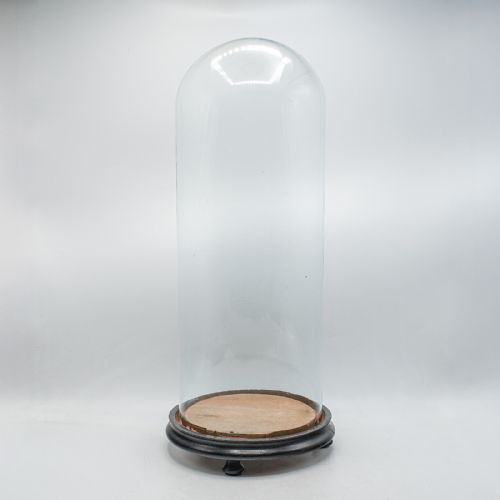
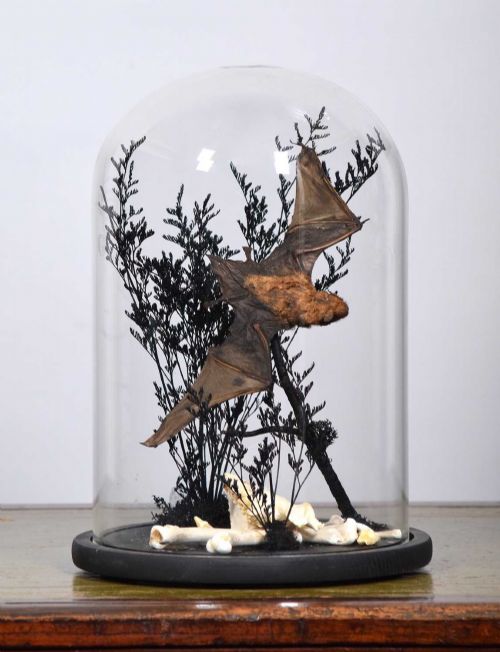
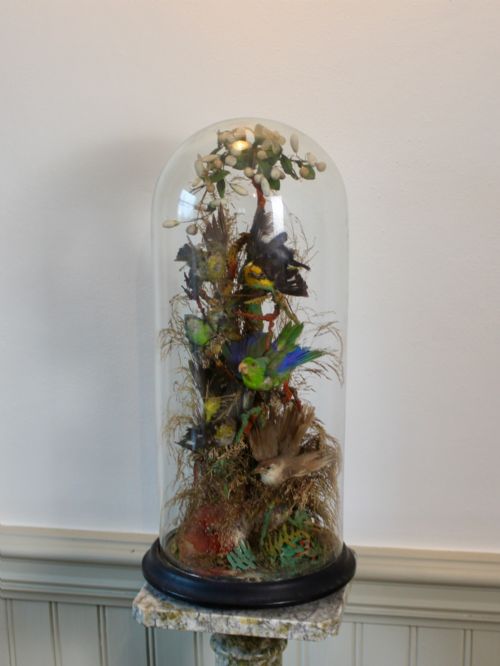
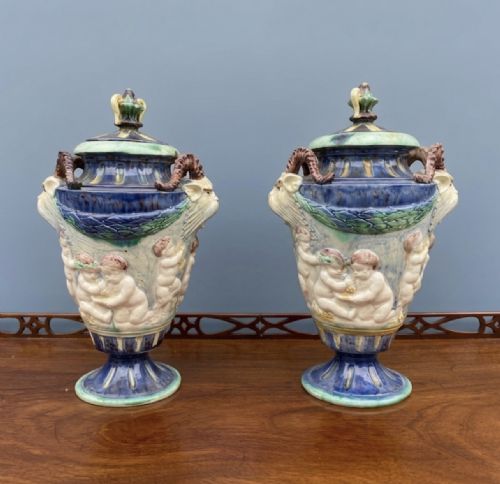
Domestic examples include tall chemist shop show globes and table display domes designed to protect delicate taxidermy or beadwork bouquets. Collectors also find substantial Dutch Delft and Japanese Imari lidded vessels suited for prominent placement on furniture.
How they were made
Glass pieces on this page rely on traditional mouth-blowing techniques, evident in the heavy walls and characteristic pontil marks of nineteenth-century chemist jars and carboys. Cut glass examples utilise deep wheel-cutting to create geometric facets that catch the light through thick lead crystal.
Ceramic vessels combine thrown or moulded earthenware and porcelain bodies decorated with underglaze cobalt blue, hand-painted enamel, or applied gold leaf. Wooden elements such as ebonised, beech, or oak bases anchor glass display domes with turned stability.
Taxidermy showcases and interior arrangements pair blown glass bell jars with fitted wooden platter bases to preserve delicate compositions of birds, bats, and fruit from dust.
Antique Display Jars Retail Price Guide 2026
Typical asking prices for display jars among the pieces listed under this phrase on Sellingantiques today, from the lower quarter to the upper quarter. They describe what is for sale here now, not the wider market.
Listings feature glass, porcelain, earthenware, and bronze across Victorian, Edwardian, and seventeenth-century periods.
What varies in quality
Quality in glass display jars rests on the clarity of the metal, the absence of excessive bubbles or distortion in blown domes, and the precision of cut facets. Heavy, thick-walled chemist bottles and carboys with matching stoppers represent superior manufacturing standards.
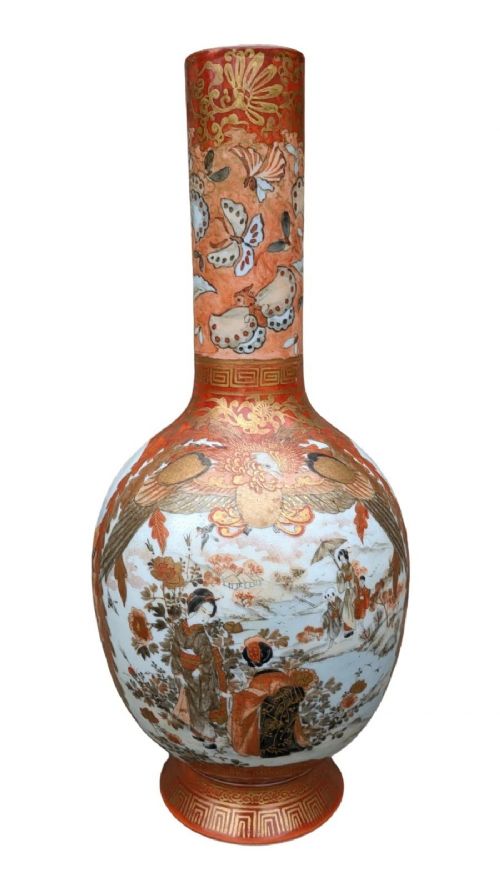
Ceramic examples demonstrate quality through the crispness of painted detail, the richness of cobalt blue or enamel pigments, and the alignment of lids. Finer porcelain jars display intricate hand-painted motifs, such as dual dragons or figurative scenes, executed with steady control.
Tokyo Taizan·Kinrin Workshop·Coalport
The Antique Display Jars Glossary
- Apothecary jar
- A vessel originally used by chemists and pharmacists to store dry drugs, herbs, or ointments. These jars frequently feature ground glass stoppers and painted labels.
- Carboy
- A large, rigid glass bottle traditionally utilised for holding liquids in bulk. In nineteenth-century shop interiors, these served as prominent window displays.
- Display dome
- A blown glass bell jar paired with a wooden base, designed to protect and exhibit objects such as taxidermy or artificial flowers. These items are also known as cloches.
- Faience
- European tin-glazed earthenware, particularly associated with Dutch Delft production. This technique produces an opaque white surface suitable for painted blue designs.
- Imari
- A style of Japanese porcelain decorated in underglaze blue, iron red, and gold. Export wares from the Edo period onwards often featured elaborate panels and floral motifs.
Antique Display Jars: Frequently Asked Questions
What were apothecary jars used for originally?
Apothecary jars served as storage containers in chemist shops and dispensaries to hold dry medicines, powders, and botanical ingredients. Their tight-fitting lids protected the contents from moisture and air degradation.
Over time, larger jars and carboys filled with coloured water also acted as visual symbols outside chemist storefronts to signal a medical practice to the public.
How should I clean an antique glass dome?
Antique glass domes require gentle dusting with a soft, dry microfibre cloth to remove surface particles without scratching the old glass. Avoid using harsh chemical sprays that might damage aged wooden bases or old paper labels.
If the glass needs washing, lift it carefully from its base and use lukewarm water with a mild detergent, ensuring it dries completely before replacement.
What is the difference between a jar and a vase?
Jars are defined primarily by their wide mouths and fitted lids designed for containing and accessing dry goods or decorative contents. They prioritise secure closure over water-holding capacity.
Vases feature open tops intended to hold cut flowers or stand alone as decorative display objects without matching lids or covers.
How do I identify a Victorian glass dome?
Victorian glass domes often exhibit the slight irregularities, thickness variations, and small air bubbles typical of nineteenth-century free-blown glass production. They frequently rest on heavy turned wooden bases made from ebonised wood or oak.
Edwardian iterations that followed tended to feature slightly more uniform machine-drawn glass manufacture and lighter wood plinths.