
Antique Dining Table Castors
These pieces form the undercarriage of large dining furniture, allowing heavy timber pieces to glide smoothly across the floor.
Antique Dining Table Castors
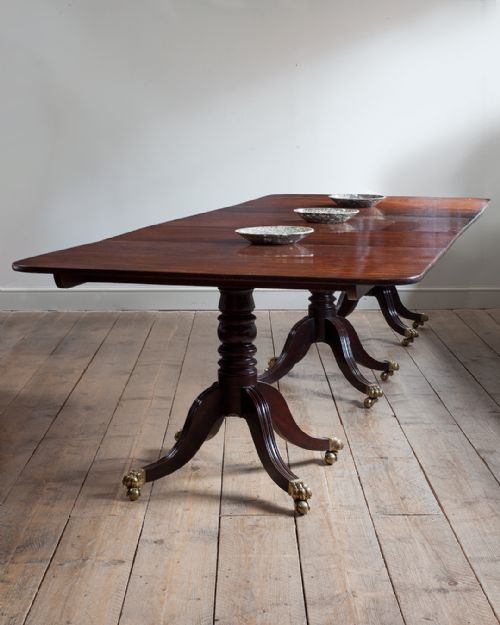
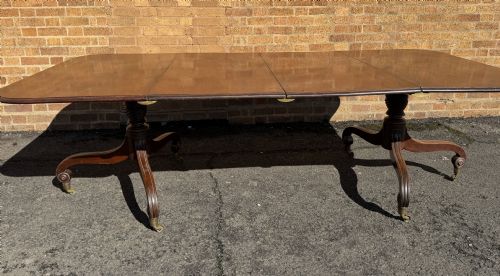
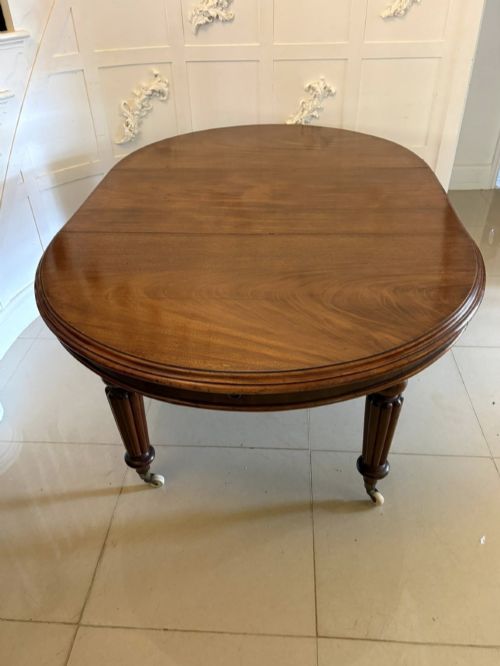
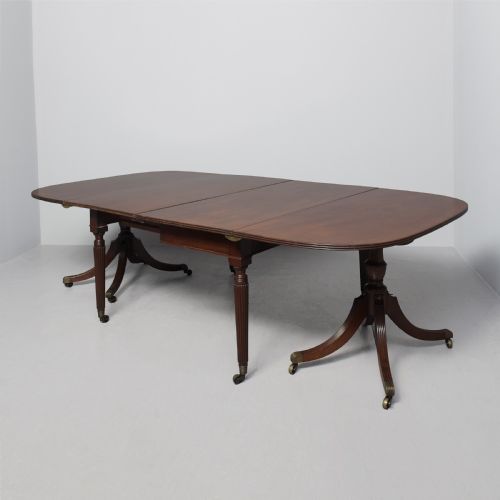
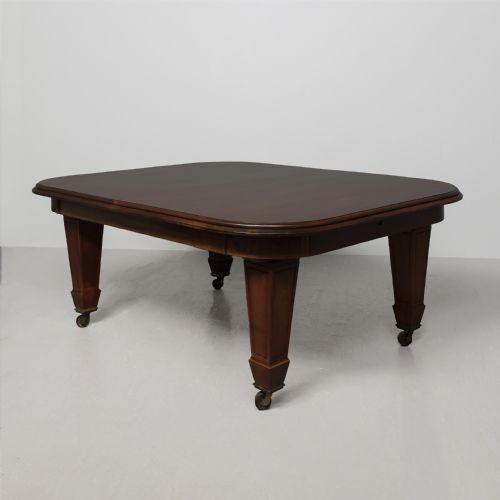
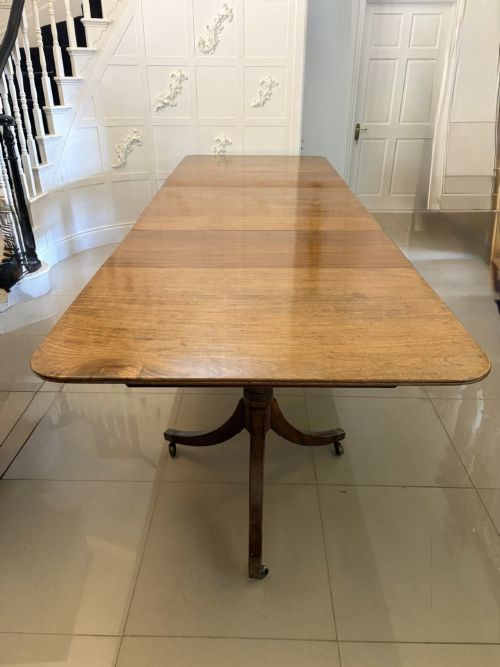
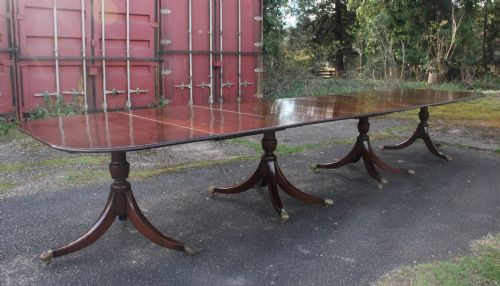
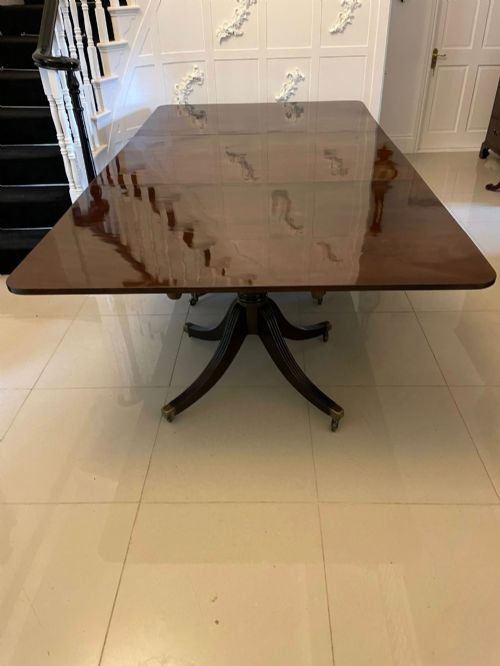
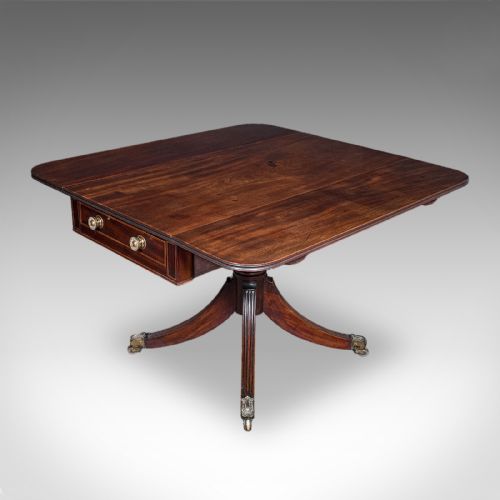
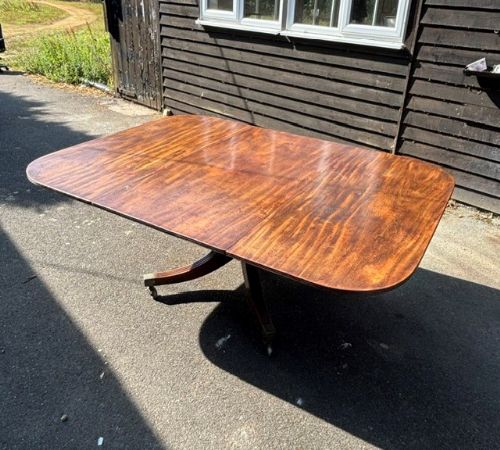
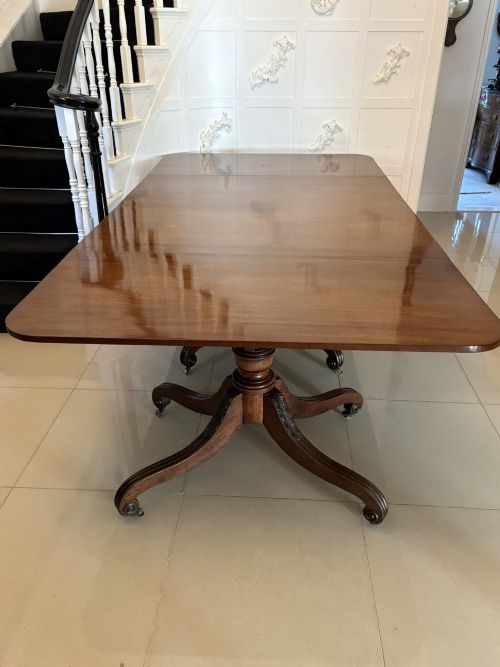
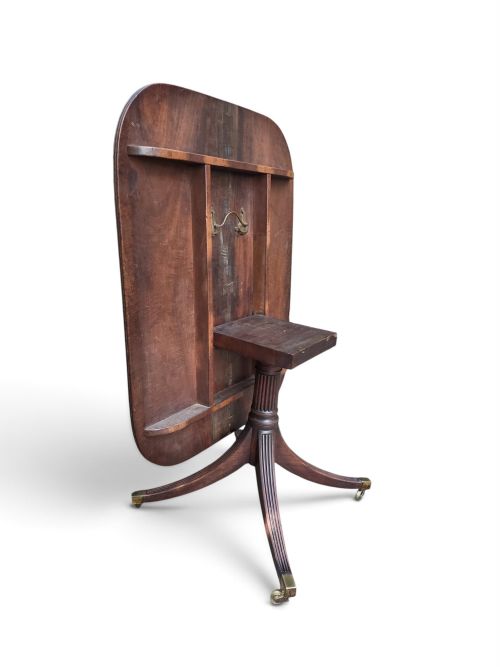
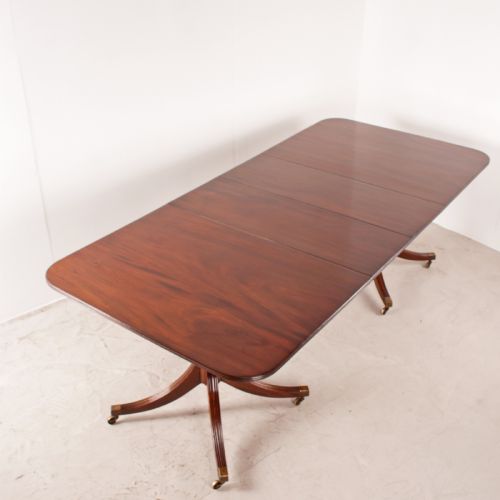
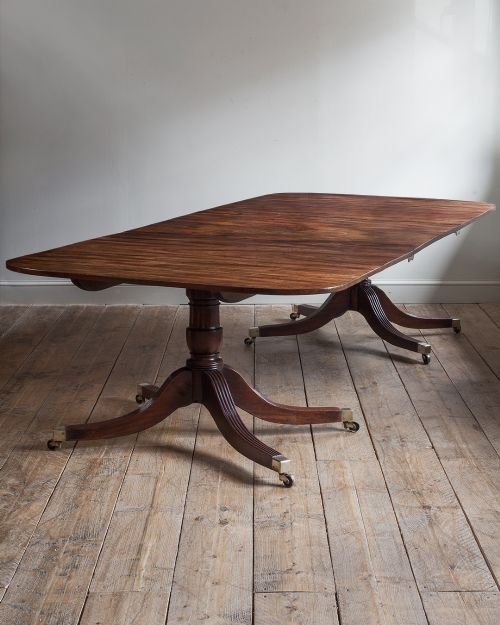
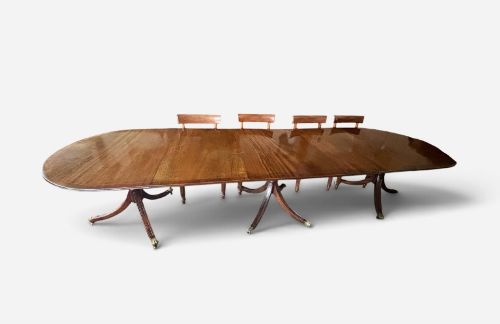
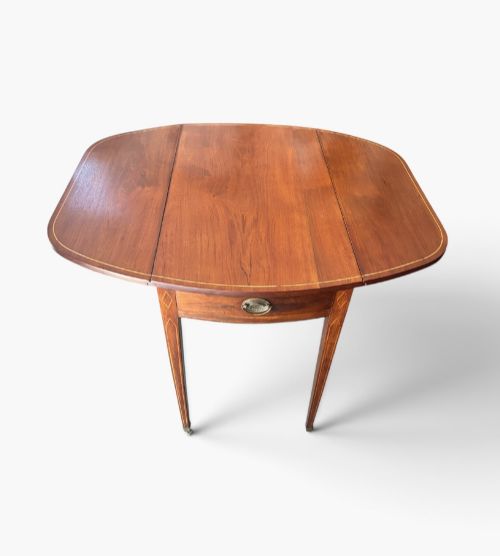
When you search for antique dining table castors, you are looking at the small metal and ceramic wheels fitted beneath the legs of large timber furniture. These components appear on substantial extending dining tables, Pembroke tables, and breakfast tables originating from the Georgian, Victorian, and Regency periods. The versions you meet most frequently on this page belong to mahogany pedestal tables designed to seat many guests.
Materials and construction
Makers utilised cast brass for the primary housings and sockets, pairing the metal with turned ceramic or solid timber wheels. Brass provided the necessary strength to bear the considerable weight of dense mahogany, walnut, and oak tabletops without bending under pressure. Boxwood and satinwood often appeared as contrasting inlay details on the tables these fittings supported.
Castings were produced using traditional sand-moulding methods, resulting in sturdy components secured by iron or brass pins. The wheels turned on internal axles designed to distribute loads evenly across floorboards and carpets. This combination of resilient metals and dense hardwoods ensured the furniture could extend and move without damaging the floor beneath.
Listings feature 19th Century, Georgian, and Victorian examples alongside later Regency Revival pieces from the 1920s.
Judgments of quality
Quality depends on the proportion between the weight of the furniture and the gauge of the metal used in the fitting. Heavier pedestal tables require thicker brass castings and robust ceramic wheels to maintain smooth movement during extension. Lighter pieces utilise simpler socket arrangements that match their more modest scale.
The integration of the fitting into the leg timber demonstrates the skill of the original cabinet maker. Superior pieces feature brass cups precisely recessed into the foot, while lesser examples rely on surface-mounted plates. Original components retain a patina and wear pattern that matches the age of the table itself.
Gillows of Lancaster·Thomas Butler of London·Whytock and Reid
The Antique Dining Table Castors Glossary
- Castor
- A swivelling wheel mounted on the bottom of a furniture leg to facilitate movement. These metal and ceramic fittings carry the weight of large dining tables across floors.
- Pedestal
- A central supporting column beneath a tabletop, frequently terminating in multiple legs fitted with wheels. This form allows maximum legroom for seated diners.
- Wind out
- A mechanical system operated by a handle that expands an extending dining table to insert additional leaves. The mechanism requires sturdy wheels beneath the pillars to glide apart smoothly.
- Pembroke
- A small table with hinged drop leaves on two opposing sides supported by folding brackets. These versatile pieces frequently incorporate smaller wheels for easy repositioning.
- Mahogany
- A dense tropical timber favoured by cabinet makers for its strength and rich grain. It serves as the primary material for the grand tables associated with these fittings.
Antique Dining Table Castors: Frequently Asked Questions
What tables use these castors?
These fittings support large dining tables, breakfast tables, and Pembroke tables from the Georgian and Victorian eras. They are particularly common on multi-pillar extending tables.
The substantial weight of mahogany and walnut furniture required these wheels to allow movement across heavy carpets and wooden floors during dinner parties.
How do I date them?
Dating relies on the metal composition, the casting technique, and the style of the socket fixing. Georgian and Regency examples typically feature heavier brass work.
Comparing the wear patterns on the wheels with the timber of the table legs helps confirm whether the fittings are original to the piece.
Are they made of brass?
Most antique examples use cast brass for the main body and socket to provide adequate strength under heavy loads. The wheels themselves are frequently ceramic or turned timber.
Iron components occasionally appear on utility pieces, while brass remains standard for formal dining furniture.
Can I replace missing ones?
Replacements require careful measurement of the leg diameter and socket depth to ensure a secure fit without splitting the antique timber. Matching the metal finish is essential for visual harmony.
Sourcing period-appropriate components maintains the integrity and historical value of the dining table.