


Antique Dining Room Cooler
An antique dining room cooler is a substantial vessel designed for chilling bottles at table, offering both architectural presence and genuine period utility.
Antique Dining Room Cooler
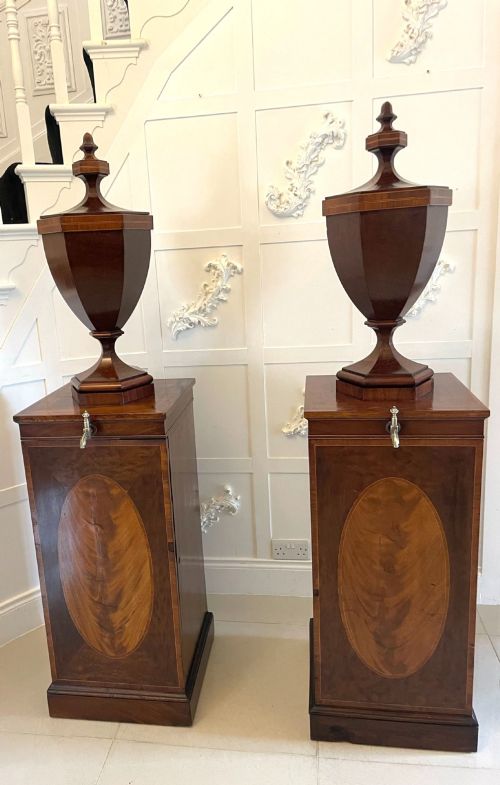
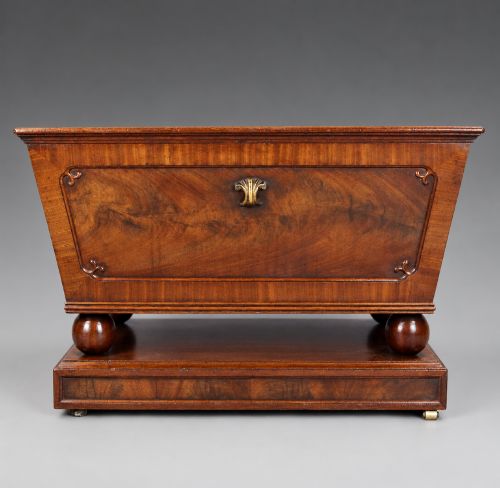
When you search for an antique dining room cooler, you encounter forms that span the Georgian, Regency, and Victorian periods, with mahogany serving as the dominant timber. The selections on this page range from classical pedestals and urns to low sarcophagus shapes and plate buckets.
You are most likely to meet Regency sarcophagus designs alongside Georgian mahogany cellarettes resting on sturdy legs or castors. These pieces originate across the eighteenth and nineteenth centuries, taking the form of wine coolers, wine coolers and cellarettes, and bottle stands.
The regional and stylistic variations include George III neoclassical details, boxwood inlay, and carved walnut or ebonised wood. Whether configured as a large open wine cooler or a fitted cellarette, each specimen reflects the dining customs of its era.
Distinctions in quality
Quality rests heavily on the choice of timber and the precision of the cabinet work, particularly in the figure of the mahogany and the crispness of any carved moulding. Superior examples display thoughtful proportions, such as well-balanced serpentine shapes and harmonious neoclassical proportions.
The integrity of the interior lining and the retention of original mounts, handles, and castors elevate a piece significantly. Pieces that maintain their original pedestals, cupboards, or fitted bottle partitions demonstrate higher preservation standards.
One extraordinary nineteenth-century cooler doubles as an indoor garden trough, proving that antique wine vessels enjoy remarkably versatile retirements.
The Antique Dining Room Cooler Glossary
- Cellarette
- A lockable container used to store bottles of wine beneath the sideboard or beside the dining table. They frequently feature internal divisions for individual bottles.
- Sarcophagus shaped
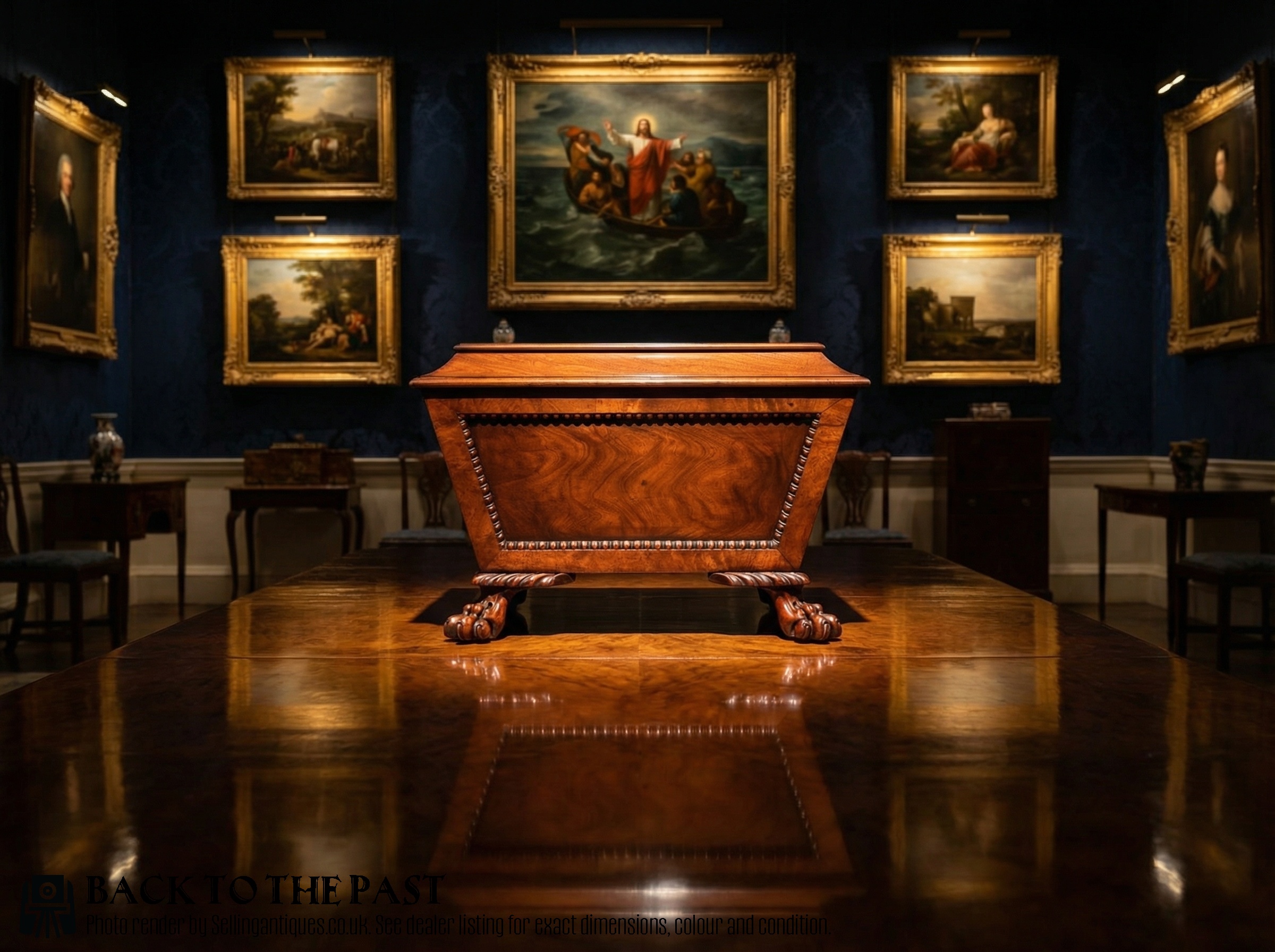
- A monumental casket form with a rounded or steeply sloped lid, popular during the Regency period for large wine coolers. This shape draws directly on classical architectural motifs.
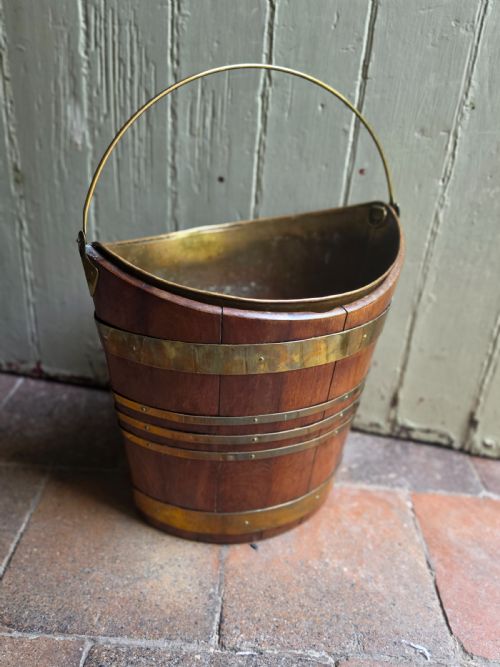
- Plate bucket
- A deep cylindrical wooden vessel fitted with brass bands, originally utilised for holding plates or carrying bottles. Examples often incorporate a central vertical handle.
- Flame mahogany
- A decorative veneer cut from the branch junction of the mahogany tree, creating a distinctive flickering flame pattern. Cabinet makers reserved this timber for primary display surfaces.
- Boxwood inlay
- Contrasting pale wood inserted into shallow channels carved into the dark mahogany surface. This technique creates geometric borders and delicate neoclassical motifs.
Antique Dining Room Cooler: Frequently Asked Questions
What is a wine cooler?
A wine cooler is a dedicated dining room receptacle designed to hold bottles and ice during meals. They provide convenient access to chilled wine before refrigeration existed.
These pieces sit directly on the floor or on dedicated pedestals, often positioned near the sideboard. Their heavy timber construction and metal linings kept temperatures low throughout long dining sessions.
How do I use a cellarette?
A cellarette functions today as a statement storage piece or a sophisticated drinks cabinet in a dining room or study. Their internal compartments suit the organisation of modern bottles.
While original metal linings permitted direct ice contact, contemporary owners often utilise them dry to protect old timber from moisture. They serve effectively as decorative focal points that conceal modern items.
How do I identify a Regency cooler?
Regency coolers frequently adopt the sarcophagus shape with bold paw feet, heavy brass lion-mask ring handles, and carved classical details. They date from the early nineteenth century and project a heavy, architectural aesthetic.
Mahogany and flame mahogany dominate this period, sometimes accented with ebonised wood or brass inlay. Their robust proportions reflect the grand scale of Regency dining arrangements.
What is the difference between a cellarette and a wine urn?
A cellarette is a low, box-like container resting on feet or castors, designed to sit discreetly under a sideboard. Wine urns are taller, vase-shaped vessels that stand upon dedicated pedestals.
Urns often appear as matched pairs flanking a central serving table in grand Georgian dining rooms. Cellarettes operate as single, freestanding units containing interior bottle dividers.