

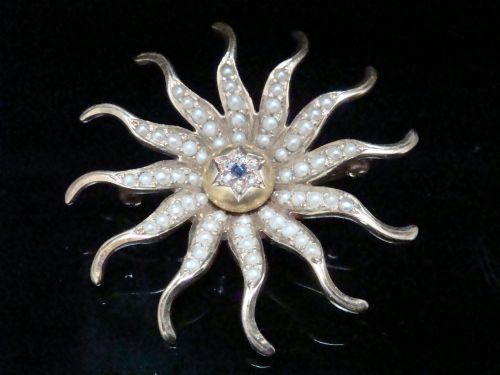


Antique Diamond Starburst Pin
An antique diamond starburst pin brings celestial brilliance to lapels and collars, catching candlelight with old-cut stones.
Antique Diamond Starburst Pin
When you search for an antique diamond starburst pin, you uncover Victorian and Edwardian jewels designed to resemble exploding stars or comets in the night sky. These pieces range from substantial multi-carat conversions to delicate stick pins, capturing the romantic astronomical fascination of the nineteenth century.
You are most likely to meet silver-topped gold brooches from the Victorian era alongside slender Edwardian bar pins. The makers constructed these items to function as both brooches and pendants, offering versatile ways to wear the central diamond cluster.
The materials span from bright old European cut diamonds mounted in silver to warm yellow gold settings interspersed with rubies, opals, or carbuncle garnets. Each specimen reflects the shifting aesthetic tastes between the eighteen eighties and nineteen tens.
Materials and construction methods
Artisans of the nineteenth century set sparkling old-cut diamonds into silver mounted over gold backs, maximising the white brilliance of the stones while preventing tarnish on clothing. This traditional technique relies on foil backs and closed or open settings typical of Victorian workshops.
The structural framework utilises fourteen-carat gold, fifteen-carat gold, or nine-carat yellow gold, providing the necessary strength to support radiating diamond rays. Gemstones such as rubies and garnets occasionally accent the centre of the burst.
Conversion pieces demonstrate how jewellers adapted brooches into dual-purpose pendants by adding hidden loops. Every element, from the hand-cut facets to the secure pin stems, shows meticulous hand-tooling.
Antique Diamond Starburst Pin Retail Price Guide 2026
Typical asking prices for diamond starburst pin among the pieces listed under this phrase on Sellingantiques today, from the lower quarter to the upper quarter. They describe what is for sale here now, not the wider market.
Listings feature Victorian and Edwardian periods, utilising materials such as silver, diamond, gold, ruby, opal, and garnet.
Factors that distinguish the finest examples
The quality of an antique diamond starburst pin rests upon the symmetry of the radiating points and the matching grade of the old-cut diamonds. Superior pieces feature well-matched stones with high clarity and lively fire that fill the entire star face.
Metalwork refinement separates ordinary items from exceptional ones, particularly where the silver-topped gold work shows delicate claw settings and invisible joins. Intricate gallery work on the reverse indicates a higher tier of craftsmanship.
The presence of secondary gemstones, such as untreated rubies or large central opals, adds complexity that elevates the artistic merit of the jewel.
The Antique Diamond Starburst Pin Glossary
- Old European Cut
- A round diamond shape popular in the nineteenth century featuring a small table, heavy crown, and large culet. This cut produces distinctive broad flashes of light under low illumination.
- Silver-Topped Gold
- A composite manufacturing method where a thin layer of silver faces the front of a gold mount. This technique allowed jewellers to use white metal for diamond settings while retaining the structural strength of gold.
- Carbuncle Garnet
- A cabochon-cut red garnet with a smooth, rounded top rather than facets. Victorians prized these deep red stones for their rich, glowing colour.
- Convertible Brooch
- A piece of jewellery engineered with detachable bails or loops so it transforms seamlessly between a brooch and a pendant. This versatility was highly prized by period wearers.
- Stick Pin
- A long, slender pin topped with a decorative motif, originally used to secure cravats, ties, or lapels. They showcase miniature versions of larger starburst designs.
Antique Diamond Starburst Pin: Frequently Asked Questions
How were starburst pins worn originally?
Victorian and Edwardian wearers pinned these ornaments directly to high lace collars, velvet bodices, or heavy winter coats. Many designs doubled as pendants when suspended from gold chains.
Their versatility made them suitable for both daytime promenade attire and glittering evening galas.
How do I date a starburst pin?
Dating relies on examining the metal alloys, stone cuts, and construction techniques used by the maker. Victorian pieces often combine silver-topped gold with chunky old European cut diamonds.
Edwardian examples lean toward lighter gold bar settings and finer, airier stone arrangements circa nineteen ten.
Are these pins safe for daily wear?
While durable, antique starburst pins require gentle handling due to their delicate silver-topped settings and nineteenth-century pin mechanisms. Regular checks by a jeweller ensure the stones remain secure in their old claws.
Storing them in fitted boxes protects the radiating rays from bending.