


Antique Diamond Lavaliere
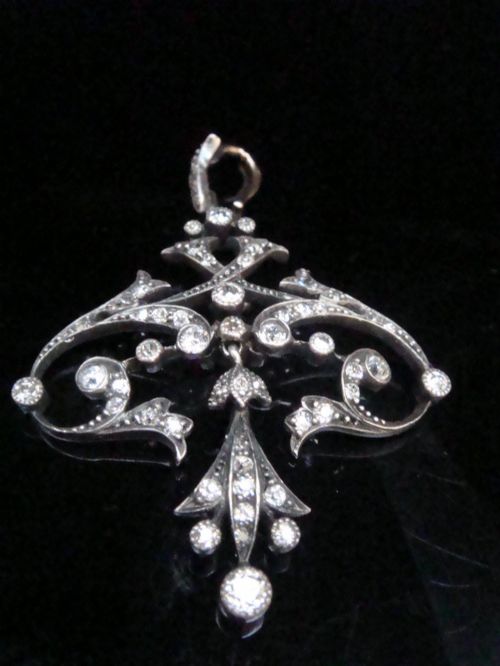
An antique diamond lavaliere hangs from a delicate chain with suspended drops, offering the quintessential elegance of Edwardian and Victorian jewellery.
Antique Diamond Lavaliere
An antique diamond lavaliere represents a distinct style of pendant necklace characterised by dangling stones or pearls suspended below a central motif. When you search for this phrase, you encounter pieces primarily from the Edwardian and Victorian eras, alongside occasional Art Deco and 1930s examples.
The most common versions on this page combine diamonds with pearls, amethyst, or aquamarine, set in platinum, yellow gold, or silver-topped gold. These necklaces frequently feature distinctive drop configurations that sway with movement.
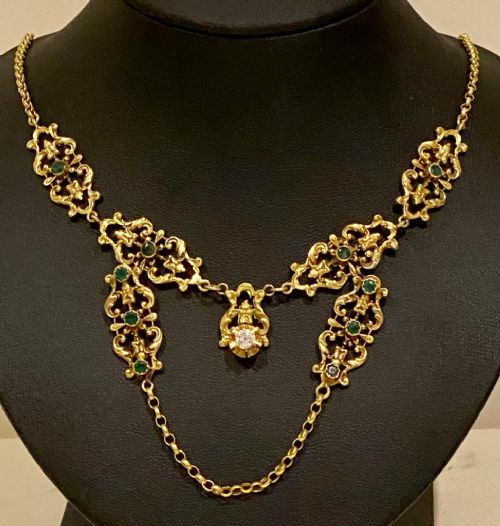
The designs range from flowing Art Nouveau curves to geometric Art Deco lines and symmetrical Victorian swag drops. Each object type functions as both a pendant and a necklace, sometimes accompanied by fitted boxes or detachable brooch fittings.
How they were made
The construction of these pieces relies heavily on platinum, silver, and various carats of gold, including 15ct and 18ct, combined to showcase the stones effectively. Platinum emerged during the Edwardian period to allow delicate, lace-like metalwork without sacrificing structural strength.
Goldsmiths set diamonds alongside seed pearls, natural pearls, and coloured gemstones such as emerald, sapphire, and demantoid garnet using traditional hand-working techniques. Many mountings incorporate intricate pierced work and millegrain edges to frame the gemstones.
Artisans often integrated multi-part constructions, enabling pendants to double as brooches or featuring articulated drops that required precise hinge and jump ring assembly.
Several pieces come tucked inside their original fitted boxes, preserving the exact moment they were first given away over a century ago.
What varies in quality
The distinction between the finest pieces and simpler work rests on the intricacy of the metalwork and the integration of the stones. Superior examples display master platinum fabrication with hand-pierced openwork that resembles lace.
Stone selection dictates the upper tier of the range, where matched natural pearls and well-cut diamonds command attention. The harmony between the central gem, such as moonstone or aquamarine, and the surrounding diamond accents defines the aesthetic success of the piece.
Original fitted boxes and convertible mechanisms, such as detachable brooch fittings, elevate the desirability and demonstrate high-status commission work from periods like the Edwardian era.
EDUARD FOEHR
The Antique Diamond Lavaliere Glossary
- Lavaliere
- A pendant necklace featuring one or more drops hanging below a main setting. This style gained popularity during the late nineteenth and early twentieth centuries.
- Millegrain
- A decorative jewellery technique involving a line of tiny beaded metal beads along the edge of a setting. It softens the appearance of platinum or white gold.
- Swag
- A decorative chain, garland, or necklace arrangement that hangs in a double curve between two points. Victorian designs often utilise this motif for drop necklaces.
- Old cut
- A diamond facet style popular before the development of the modern brilliant cut in the early twentieth century. These stones feature smaller tables and higher crowns.
Antique Diamond Lavaliere: Frequently Asked Questions
What is an antique diamond lavaliere?
An antique diamond lavaliere is a drop pendant necklace originating from periods like the Victorian and Edwardian eras. These pieces typically feature articulated sections that suspend stones or pearls below a central mounting.
They were designed to catch the light during evening wear, moving gracefully against the wearer's neck. The style bridges classic pendant designs and elaborate theatrical neckwear of the early twentieth century.
How do I date an antique lavaliere?
Dating relies on the materials, gemstone cuts, and stylistic motifs present in the construction. Edwardian pieces often utilise platinum and millegrain decoration, while Victorian versions favour yellow gold and old cut diamonds.
Art Deco and 1930s examples introduce geometric rigidity and white gold settings. Examining the clasp, box, and construction techniques provides further chronological clues.
Can a lavaliere be worn as a brooch?
Some antique lavalieres feature convertible fittings that allow the pendant section to detach from the chain. This engineering enables the owner to wear the central component as a brooch.
Evidence shows that fitted boxes sometimes accommodated both the chain and pin fittings. This versatility was common in high-end Edwardian jewellery production.
What stones accompany diamonds in these necklaces?
Natural pearls, seed pearls, and amethysts frequently accompany diamonds in these designs. Other stones seen in the evidence include aquamarine, demantoid garnet, sapphire, emerald, and moonstone.
These coloured gems provide focal points that contrast with the sparkle of platinum or white gold settings. The choice of secondary stone often reflects the specific aesthetic movement of the manufacturing period.