



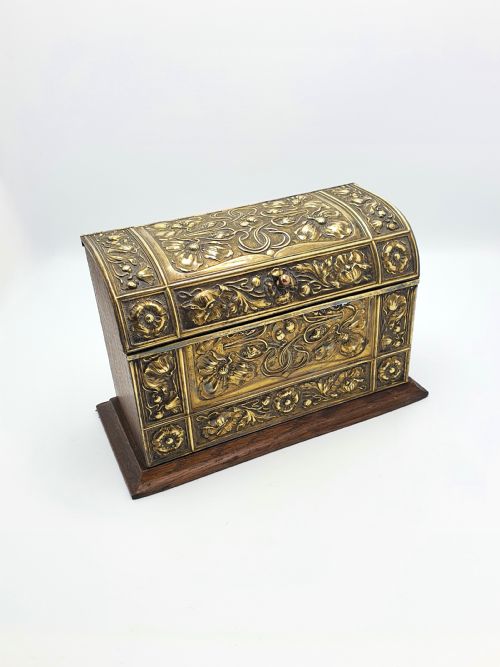


Antique Desktop Trinket Casket
An antique desktop trinket casket keeps small desk articles safe, combining nineteenth-century utility with decorative craftsmanship.
Antique Desktop Trinket Casket
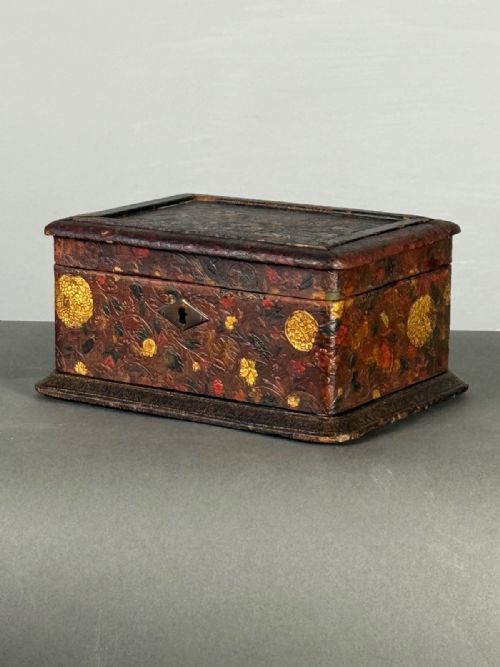
An antique desktop trinket casket serves as a container for keeping small personal items, stationery, letters, or jewellery tidy upon a writing surface. These pieces range from simple document holders to elaborate caskets featuring fitted interiors and drop-front doors.
The selection centres heavily upon nineteenth-century examples, predominantly from the Victorian and Edwardian eras, alongside pieces reflecting Art Deco and Arts and Crafts movements. Common forms include stationery boxes, glove boxes, cigar boxes, and dedicated jewellery caskets designed for the desk.
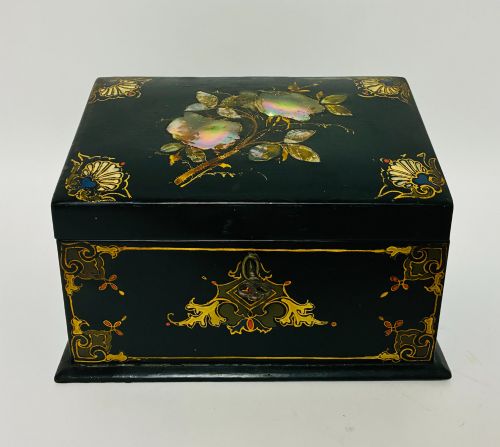
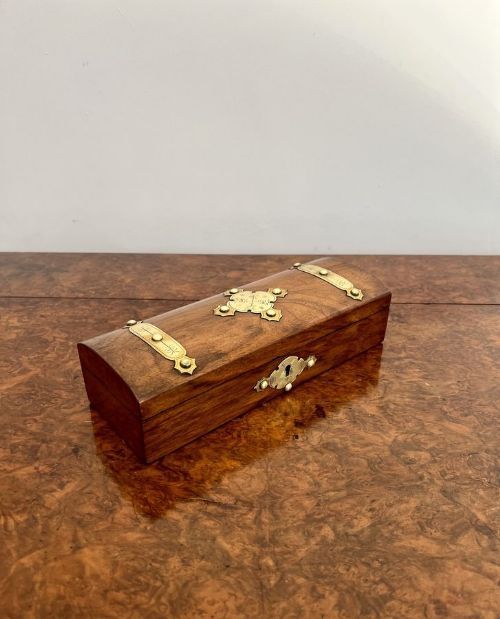
Materials span traditional hardwoods such as burr walnut, rosewood, and fruitwood, paired with decorative mediums like papier-mâché, lacquer, and tooled leather. Metal mountings in brass or silver plate frequently accent these desk accessories, showing diverse stylistic influences from Regency to Asian Export.
Materials and construction
Cabinetmakers constructed these caskets using solid timbers or applied veneers like burr walnut and fruitwood over a stable wood base, often incorporating marquetry or mother-of-pearl inlay. Papier-mâché examples relied on layered paper pulp treated with lacquer, hand-painted decoration, or gold leaf.
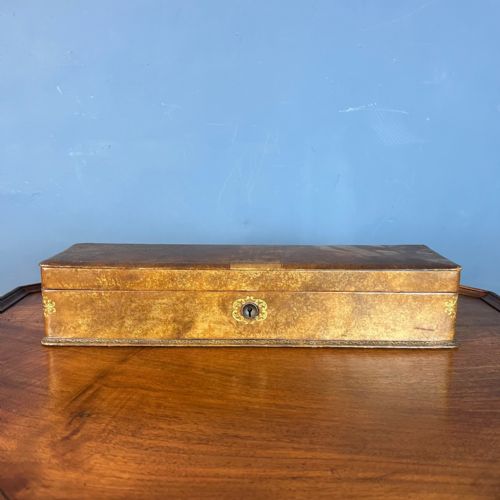
Fittings and mounts typically involved cast brass, solid silver, or silver plate, secured with small pins or screws to reinforce corners and support hinged lids. Leather and paper-covered boxes utilised tooling techniques to impress decorative borders into the surface material.
Desktop box forms recorded here include stationery holders, glove boxes, cigar storage, and jewellery caskets.
Quality variations
Quality reveals itself in the precision of the joinery and the selection of figured wood veneers, where symmetrical burr walnut or detailed marquetry indicates superior workshop output. The sophistication of surface decoration, such as hand-painting on papier-mâché or intricate pokerwork, separates standard items from finer productions.
Internal appointments, including fitted trays, bevelled glass doors, and working brass locks with matching keys, distinguish higher-grade examples. Maker attribution also plays a role, with signed pieces or works from recognised makers commanding greater interest through documented craftsmanship.
Susse Freres Paris·Mappin & Webb·Jennens & Bettridge
The Antique Desktop Trinket Casket Glossary
- Burr walnut
- A highly figured wood grain obtained from the wart-like growths on walnut trees, prized for decorative veneer work on Victorian boxes.
- Papier-mâché
- A composite material made from paper pulp or reinforced paper sheets mixed with adhesive, moulded and lacquered to create smooth box surfaces.
- Pokerwork
- A decorative technique using a heated metal point to burn designs into wood or leather surfaces, seen on Arts and Crafts pieces.
- Marquetry
- The art of applying small pieces of wood veneer to a structure to form decorative patterns and pictorial designs.
- Glove box
- A long, narrow desk box historically sized to store pairs of gloves, frequently lined with silk or velvet.
Antique Desktop Trinket Casket: Frequently Asked Questions
What is an antique desktop trinket casket used for?
These boxes served to store personal valuables, letters, and small accessories on writing desks or dressing tables during the nineteenth and early twentieth centuries.
Today, they function well for holding modern trinkets, keys, or stationery while adding period character to a workspace.
How do I identify a Victorian casket?
Victorian examples frequently display materials like burr walnut, rosewood with mother-of-pearl inlay, or black lacquered papier-mâché with hand-painted details. Construction methods often include brass banding and fitted internal trays typical of mid to late nineteenth-century cabinetmaking.
Stylistic cues also point to the era, spanning ornate Gothic revival mounts to simpler Arts and Crafts pokerwork designs.
Are these caskets made of solid wood?
Many caskets utilise wood veneers, such as burr walnut or fruitwood, applied over a secondary timber base to create decorative exterior patterns. Solid hardwoods also appear in certain regional pieces like Dutch Colonial styles.
Internal partitions and framing elements are typically built from secondary timbers to provide structural stability.
How should I care for a leather covered box?
Toized and leather-covered boxes require protection from direct sunlight and excessive humidity to prevent the material from drying out or cracking. Gentle dusting with a dry microfibre cloth keeps the surface clean without risking moisture damage to old adhesives.
Leather dressings should be used sparingly and only if the hide feels particularly dry, avoiding painted or gilded sections entirely.