



Antique Desk Stationery Case
An antique desk stationery case keeps papers and writing tools in order, bringing character and practical desk organisation to a room.
Antique Desk Stationery Case
An antique desk stationery case gathers letters, notes and writing paraphernalia into a dedicated tabletop home. The pieces found here span the Regency, Victorian and Edwardian eras, reaching into the early twentieth century.
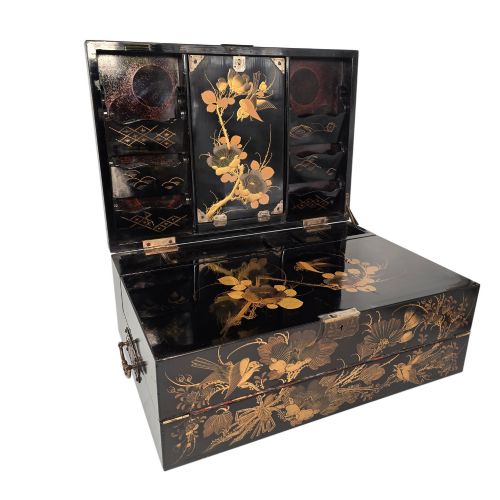
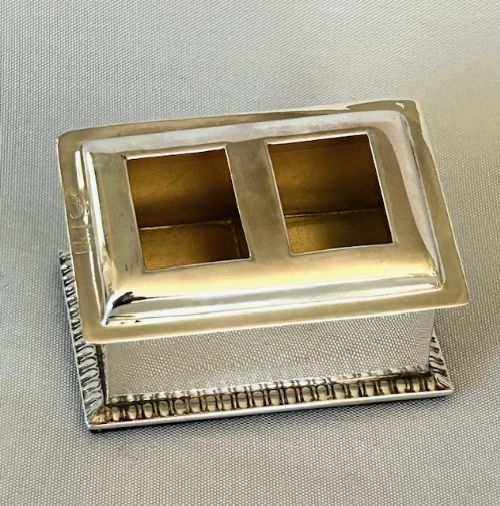
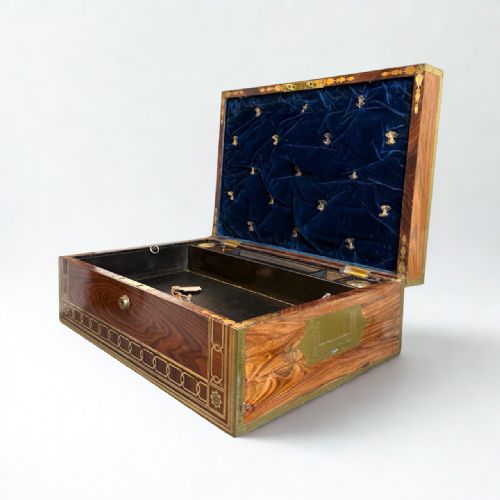
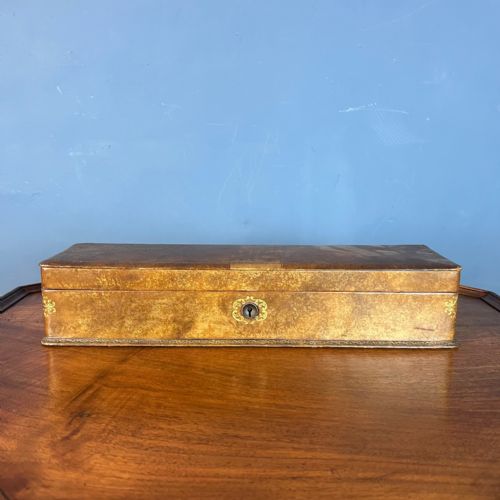
Forms range from brass-bound document boxes and correspondence cases to blotter folios, double stamp boxes and compact telegram folders. Mahogany, rosewood, coromandel and leather provide the primary structures for these desktop items.
Origin and maker variations appear across English, Scottish, Chinese and Anglo-Indian workshops. Buyers meet tabletop letter cases alongside folding writing boxes adapted for travel or domestic study.
How they were made
Cabinet makers utilised dense hardwoods such as mahogany, walnut, ebony and rosewood, often applying brass banding, corner mounts and escutcheons for structural strength. Fine veneers met solid timbers to create durable boxes designed for daily desk use.
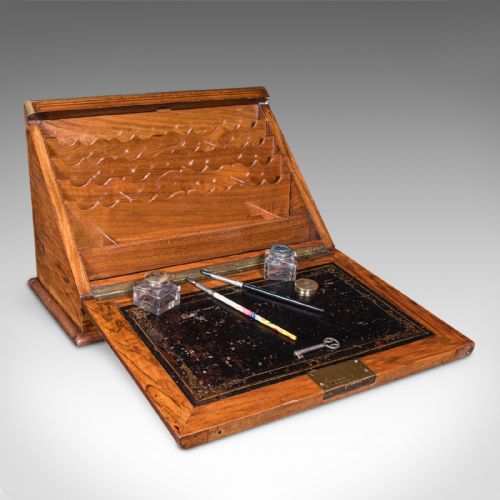
Leather bindings and tooled finishes appeared on folding writing boxes and blotter folios, paired with silver and gold mounts in select pieces. Interior fittings involved shaped wooden partitions, velvet linings and dedicated compartments for inkwells and pens.
Antique Desk Stationery Case Retail Price Guide 2026
Typical asking prices for desk stationery case among the pieces listed under this phrase on Sellingantiques today, from the lower quarter to the upper quarter. They describe what is for sale here now, not the wider market.
Naval architects and officers required specialised desk tidies and travelling correspondence boxes to keep ink from spilling during rough sea voyages.
What varies in quality
The choice of timber and the precision of the joinery set the baseline for an antique desk stationery case. Finely figured grains, neat brass inlay and robust internal partitions distinguish better examples from simpler utility boxes.
Original hardware, working locks and intact interior leather or velvet elevate a piece. Maker signatures or stamps add documentary depth, whereas replacement fittings or heavy timber shrinkage alter the original harmony.
Cartier·W & J Milne·P&F Shafer
The Antique Desk Stationery Case Glossary
- Escutcheon
- A protective metal plate surrounding a keyhole on a box or case. It is typically formed from brass and occasionally engraved.
- Blotter folio
- A book-like desk accessory designed to hold blotting paper for absorbing excess ink from handwritten letters. Leather and silver plating frequently form the exterior.
- Stationery case
- A tabletop cabinet or box structured with upright slots and compartments for organising writing paper and envelopes. Examples range from open letter racks to lidded boxes.
Antique Desk Stationery Case: Frequently Asked Questions
What is a stationery case used for?
A stationery case holds letters, envelopes and notelets upright on a desk for quick access. Interiors typically feature stepped wooden partitions or dividers.
They kept writing paper organised before the era of mass-produced envelopes and modern office storage. Today they serve a similar role for personal correspondence and stamps.
How do I tell Regency boxes from Victorian ones?
Regency boxes often display crisp brass inlay, geometric stringing and rosewood or mahogany veneers dating from the early nineteenth century. Proportions tend to follow neoclassical lines.
Victorian pieces frequently incorporate more robust brass corner mounts, coromandel timber and complex internal lifting mechanisms. Stamped maker marks inside the box often confirm the later nineteenth-century timeline.
Where were these cases placed?
These cases sat upon library tables, Davenport desks and writing bureaus in drawing rooms and studies. They stood ready for daily letter writing.
Travellers also carried compact leather or wood variants in carriages and officers' quarters. Portable folding designs allowed correspondence to continue away from home.
How do I care for an antique wood box?
Keep wooden cases away from direct sunlight and sudden temperature changes to protect the veneer and internal joints. Natural wax polish helps maintain the finish.
Avoid excessive moisture on leather-bound or velvet-lined interiors. Gentle dusting preserves the brass mounts and wood grain over time.