


Antique Desk Slope Casket
These antique desk slope caskets are portable writing cases and stationery boxes designed to keep correspondence and valuables secure on the move or in the study.
Antique Desk Slope Casket
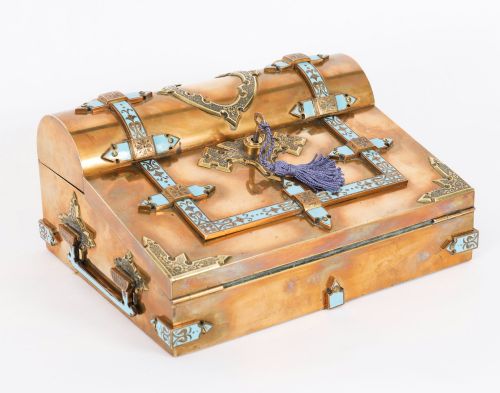
An antique desk slope casket represents a portable writing box, stationery box, or document chest designed for the desk or travelling. The examples on this page span the Georgian, Regency, and Victorian eras, alongside 19th-century interpretations from French, Ceylonese, and Anglo-Indian workshops.
Most pieces take the form of stationery boxes and desk boxes intended to organise correspondence, writing materials, and small valuables. Forms range from brass-bound oak campaign boxes to elaborate French marquetry caskets and bone-inlaid receptacles.
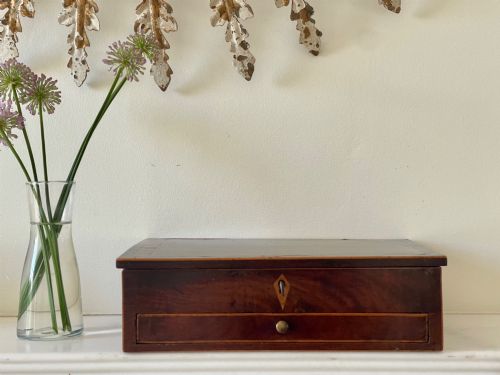
Buyers encounter a variety of timber choices and regional styles, including rosewood, flame mahogany, walnut, and satinwood. These containers reflect the domestic and travelling habits of past centuries, combining practical storage with decorative presence.
Materials and construction
Cabinet makers utilised dense hardwoods such as rosewood, flame mahogany, oak, and walnut to construct the carcasing of each desk slope casket. Many pieces incorporate decorative techniques including wood inlay, marquetry, Tunbridge ware, and carved bone to embellish the exterior surfaces.
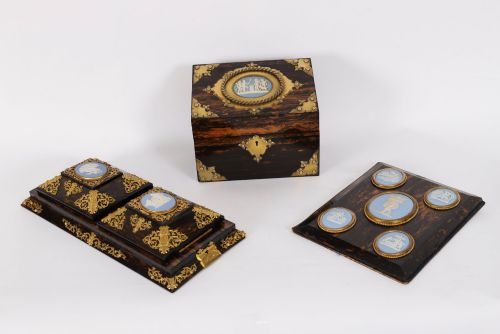
Metal fittings such as brass hinges, corner mounts, or ormolu mounts provide both structural reinforcement and decorative contrast against the dark timber grains. Interior compartments often feature fitted sections for stationery, pens, and inkwells, sometimes accompanied by hand-painted porcelain panels or velvet-lined surfaces.
One Victorian stationery box manages to squeeze hand-painted porcelain and burr walnut into a single desk accessory.
What separates the finer examples
The distinction between standard and superior pieces rests on the choice of timber and the precision of the decorative work. Figured woods like flame mahogany and burr walnut, combined with meticulous marquetry or bone inlay, elevate a utilitarian box into a piece of fine cabinet-making.
Integration of secondary materials such as ormolu mounts, hand-painted porcelain panels, and intricate Tunbridge ware patterning demonstrates advanced craftsmanship. The retention of original fitted interiors and working locks further separates ordinary containers from exceptional collector pieces.
The Antique Desk Slope Casket Glossary
- Stationery box
- A desk accessory designed specifically to hold writing paper, envelopes, and correspondence upright or flat. These containers typically feature tiered or compartmentalised interiors.
- Tunbridge ware
- A form of decorative woodwork characterised by tiny mosaic tiles assembled from different coloured woods to form geometric or pictorial scenes. This technique appears on Victorian desk boxes.
- Campaign box
- Portable furniture and storage designed for military officers or travellers on the move. These pieces frequently feature recessed brass handles and reinforced brass corners.
- Marquetry
- The art of applying decorative veneer pieces to a structure to form intricate patterns or pictures. French caskets often employ this method alongside ormolu mounts.
- Flame mahogany
- A decorative veneer cut from timber where the grain creates a distinctive undulating, flame-like pattern. It was widely favoured by Georgian and Regency cabinet makers.
Antique Desk Slope Casket: Frequently Asked Questions
What is an antique desk slope casket?
An antique desk slope casket is a portable wooden container built to hold writing materials, documents, and letters. These pieces range from simple oak storage boxes to elaborate rosewood and marquetry caskets.
Cabinet makers designed them for use on a fixed library table or to travel securely during the Georgian and Victorian eras.
How were these boxes used?
Owners used these boxes to store writing paper, envelopes, inkwells, and important personal documents in an era before modern filing systems. The hinged lids and internal compartments kept correspondence organised and private.
Many examples feature sloping lids that doubled as a firm writing surface when opened.
How do I date an antique desk box?
Dating relies on observing the timber species, construction methods, and stylistic cues present in the piece. Georgian and Regency pieces often showcase flame mahogany and rosewood with minimal brass binding, while Victorian examples introduce varied decorative work like Tunbridge ware or porcelain panels.
Hardware styles and interior layouts also shift noticeably across the 18th and 19th centuries.
How do I care for wooden desk boxes?
Care involves keeping wooden caskets away from direct sunlight and sudden changes in temperature to prevent the timber and veneers from splitting. Regular dusting with a soft, dry cloth preserves the polished surface.
Applying a light, appropriate wax occasionally helps maintain the lustre of rosewood, mahogany, or walnut.