



Antique Desk Garniture
Antique desk garniture sets bring sculptural presence and timekeeping together, offering matching centrepieces and side ornaments that unify a study or mantelpiece.
Antique Desk Garniture
An antique desk garniture typically comprises a central clock accompanied by matching side ornaments, forming a coordinated display set. These pieces originate across the nineteenth and early twentieth centuries, spanning Victorian, Art Deco and Louis XVI revival styles.
Buyers most frequently encounter three-piece sets featuring a mantel clock paired with candelabras, urns or sculptural figures. The materials range from classical marble and bronze to striking geometric marble and enamel designs characteristic of later periods.
The forms serve both decorative and functional purposes, designed to sit commandingly on a mantelpiece or large desk. French makers dominate the selection, bringing cast bronze, ormolu and carved stone together into unified decorative schemes.
Materials and construction methods
The construction relies heavily on combinations of cast metal and heavy stone, utilising marble bases paired with bronze, ormolu, or spelter mounts. Foundry work involved precise casting and chiselling of metal components before fire-gilding or patination.
Clock movements required skilled mechanical assembly, housed within architectural marble or cast metal cases alongside enamel dials. Carved wooden examples also appear, demonstrating traditional cabinet-making and hand-carving techniques.
Finishes combined polished natural stones with applied metalwork, enamel detailing and sculptural bronzes. These diverse materials were joined with threaded pins and screws, creating robust architectural assemblies designed to endure.
Antique Desk Garniture Retail Price Guide 2026
Typical asking prices for desk garniture among the pieces listed under this phrase on Sellingantiques today, from the lower quarter to the upper quarter. They describe what is for sale here now, not the wider market.
Indicators of superior craftsmanship
Quality reveals itself in the crispness of the bronze chasing and the weight and selection of the marble or stone cases. Superior sets display finely articulated sculptural details and cohesive styling across all three matching pieces rather than mismatched components.
The refinement of the clock movement and the quality of the enamel dial distinguish higher-grade pieces from standard production items. Heavier, well-cast mounts and signed movements indicate workshops of greater distinction.
The harmony of the design partnership between the central clock and its flanking ornaments dictates overall visual success. Better examples maintain consistent patination, precise stone cutting and integrated stylistic themes throughout the garniture.
Sega·Michel Decoux·Raingo Fres Paris·Ferdinand Berthoud·Japy Freres
The Antique Desk Garniture Glossary
- Garniture
- A set of matching decorative objects designed to be displayed together as a unified centrepiece and matching side ornaments. They typically include a clock flanked by urns, candelabras or sculptural figures.
- Ormolu
- Gilt bronze produced by applying a finely ground high-carat gold and mercury amalgam to a bronze base and heating it to drive off the mercury. This technique creates a rich, durable golden surface finish.
- Spelter
- A zinc-based alloy commonly utilised as a less expensive substitute for bronze in nineteenth-century casting. It is frequently painted or bronzed to simulate more costly metals.
- Candelabra
- A branched candlestick designed to hold multiple tapers, frequently found as the matching sidepieces in a garniture set. They echo the materials and decorative motifs of the central clock.
- Japy Freres
- A prominent French clockmaking firm renowned for producing robust movements and complete clock sets during the nineteenth century. Their works often bear stamped factory markers on the movement backplates.
Antique Desk Garniture: Frequently Asked Questions
What is an antique desk garniture?
An antique desk garniture is a matching set consisting of a clock and companion side ornaments such as urns, bronzes or candelabras. These sets were designed to create a balanced, symmetrical display on a large desk, sideboard or mantelpiece.
The components share materials, motifs and stylistic details, reflecting the aesthetic tastes of periods ranging from the mid-nineteenth century through the Art Deco era.
How do I care for marble and bronze garnitures?
Care for marble and bronze garnitures requires gentle dusting with a soft, dry cloth to prevent accumulation in crevices and chased details. Avoid harsh chemical cleaners, abrasives and excessive moisture, which can damage patinated metal surfaces and natural stone.
Keep the pieces away from direct sunlight and strong heat sources to protect delicate enamel dials and prevent thermal stress on older materials.
How were these clock sets used historically?
Historically, these sets served both a practical timekeeping function and a high-status decorative role in formal rooms and private studies. The central clock kept the household or office on schedule while the flanking pieces balanced the visual weight of the mantel or desk surface.
They demonstrated the owner's taste and affluence through costly materials like ormolu, marble and cast bronze, often matching the overarching interior style of the room.
How can I tell different periods apart?
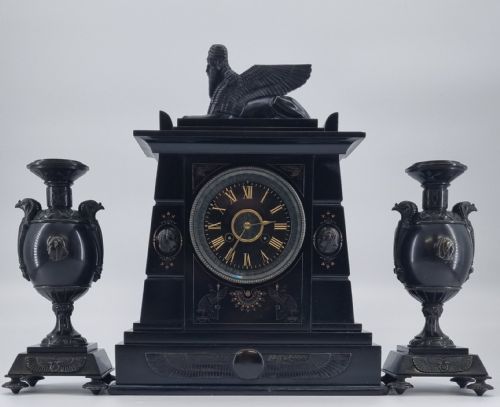
Periods are identified by examining the stylistic vocabulary, material choices and manufacturing techniques employed in the set. Victorian and mid-nineteenth-century examples often lean towards classical revivals like Egyptian or Louis XVI styles utilising heavy marble and cast bronze.
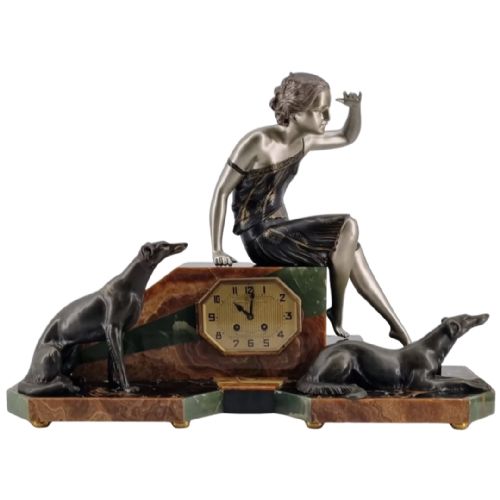
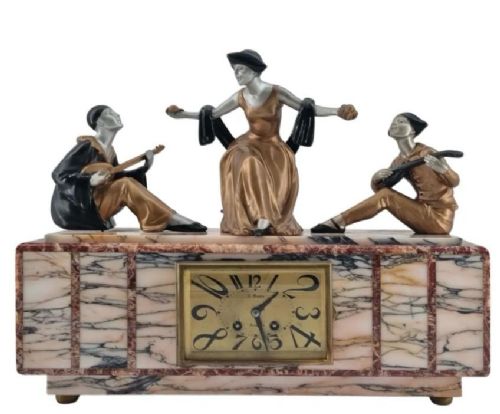
Later pieces from the 1920s and 1930s transition into Art Deco forms, featuring streamlined geometry, figural sculptures of animals or dancers, and distinctive block marble cases.