
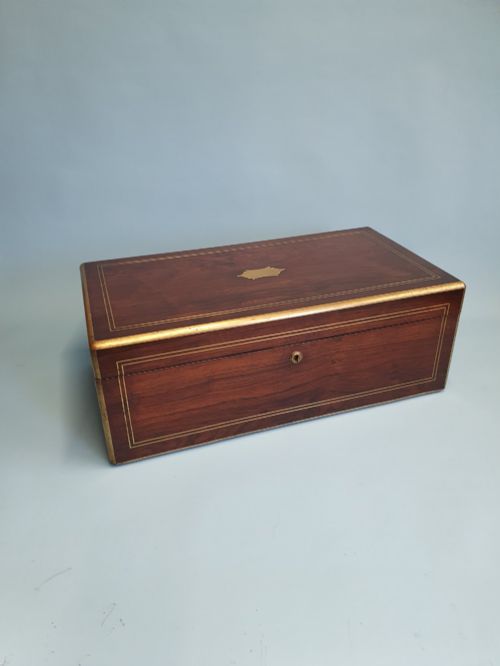


Antique Desk Correspondence Box
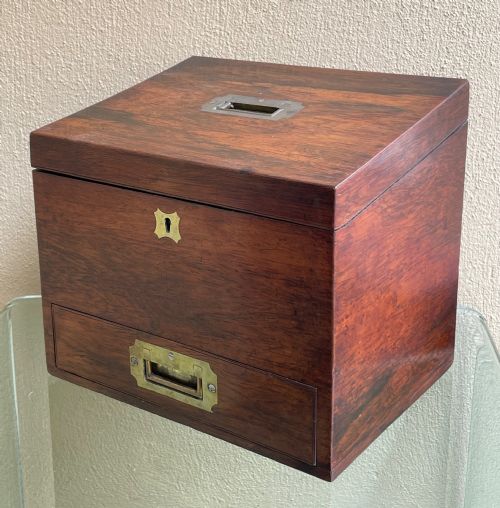
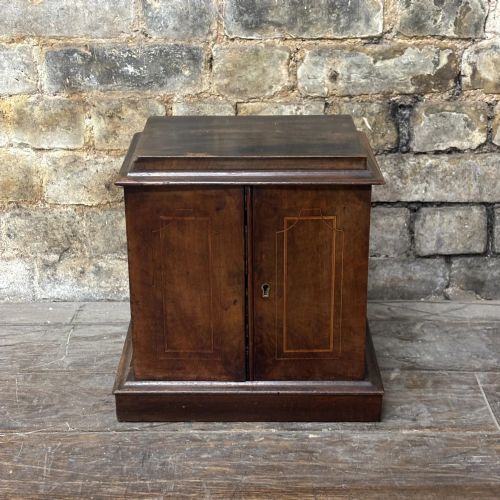
An antique desk correspondence box keeps letters, paper and pens together on a writing desk.
Antique Desk Correspondence Box
When you search for an antique desk correspondence box, you encounter a variety of forms designed to hold stationery, letters, and writing implements neatly on a desk. The pieces listed span several periods, from the Georgian era through the Victorian and Edwardian periods into the early twentieth century.
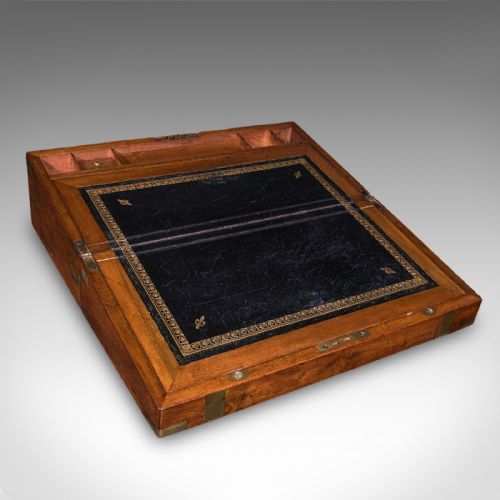
Stationery boxes, writing slopes, letter boxes, and desk cabinets dominate the selection. Many items combine a correspondence box with a writing slope or incorporate fall fronts, book rests, and internal compartments for organised storage.
Origins range widely, including English, French, Scottish, Irish, Japanese, Anglo Indian, and Ceylon pieces. Materials vary from domestic hardwoods to exotic timbers and imported decorative finishes.
Materials and construction
Cabinetmakers utilised robust timbers such as mahogany, oak, walnut, and rosewood, alongside decorative veneers like burr walnut, coromandel, and satinwood. Exotic woods and specialist items feature ebony, Japanese lacquer, and Scottish leather.
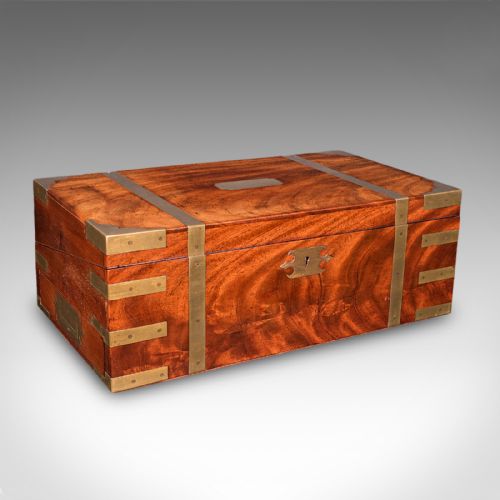
Metal mounts in brass, ormolu, and cut steel reinforce corners, secure lids, and provide structural hardware. Interiors often incorporate bone details, secret drawers, and fitted compartments tailored for specific writing tasks.
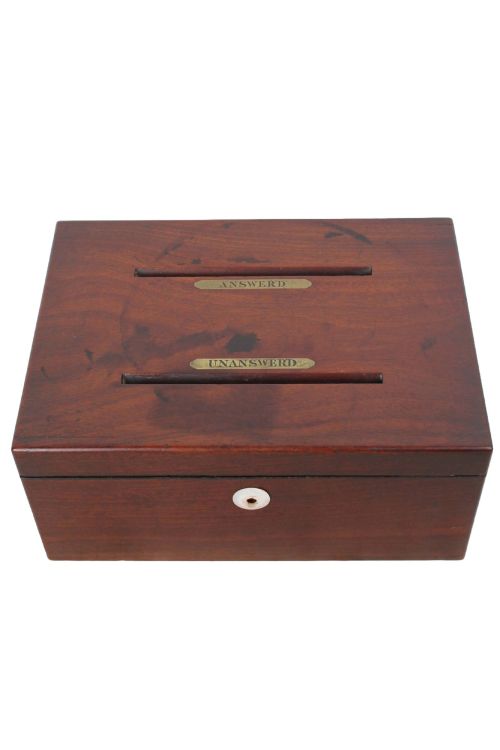
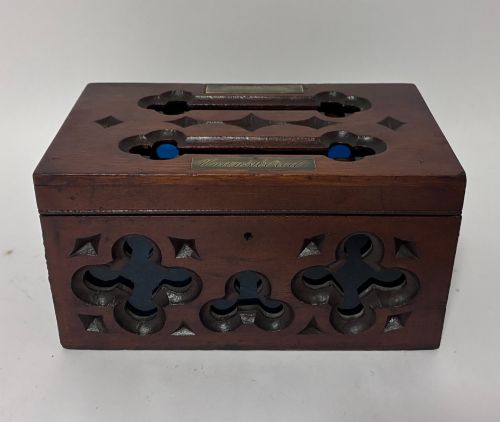
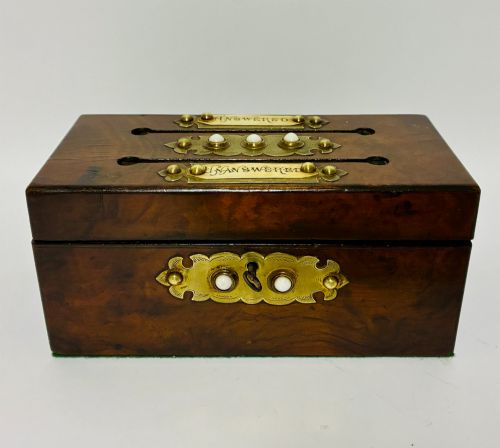
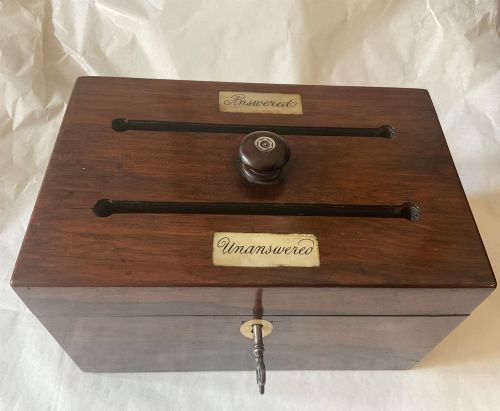
Certain Victorian boxes feature clever answered and unanswered letter slots to keep a tidy desk.
Indicators of quality
The standard of workmanship shows in the selection of timber figures, such as burr walnut and rosewood, and the precision of the joinery. Finer examples display meticulous attention to detail in brass mountings, inlaid marquetry, and fitted interiors.
Makers known for exceptional production demonstrate superior execution in folding mechanisms, secret compartments, and specialised letter sorting sections, distinguishing standard utility pieces from high workshop output.
William Austin·Edmund Nye·W & J Milne
The Antique Desk Correspondence Box Glossary
- Writing slope
- A desk box featuring a sloping lid that opens to reveal a writing surface and internal storage for paper and pens. These pieces fold flat for transport or compact desk storage.
- Stationery box
- A desktop cabinet designed to hold writing paper, envelopes, and correspondence upright in tiered compartments. Fall front versions open forward to grant easy access to the contents.
- Campaign box
- Portable furniture built for travel, typically fitted with brass corners, flush carrying handles, and sturdy locks. Officers and travellers utilised these robust boxes on journeys.
- Tunbridge Ware
- Woodwork decorated with mosaic tesserae forming minute geometric or pictorial patterns. Makers in Tunbridge Wells applied small wood squares to surface veneers.
- Coromandel
- A dense, heavily grained timber imported from Asia, valued for rich dark brown colouring and contrasting black streaks. Cabinetmakers utilised it for luxury nineteenth-century boxes.
Antique Desk Correspondence Box: Frequently Asked Questions
What is a correspondence box?
A correspondence box is a desk accessory built to hold letters, stationery, and writing implements in an organised manner. Makers designed them with slots, tiers, or compartments for daily writing needs.
Victorian and Georgian examples often incorporate fall fronts, slanted lids, or locking mechanisms to keep private papers secure.
How do I use one today?
These boxes function effectively on modern desks for storing mail, notebooks, pens, and notepaper. The fitted compartments suit modern stationery organisation.
Larger cabinets hold incoming letters, while slope combinations provide a firm surface for writing notes.
What woods are most common?
Mahogany, oak, walnut, and rosewood appear frequently across English and continental pieces. Cabinetmakers selected these hardwoods for durability and attractive grain patterns.
Exotic materials like coromandel, satinwood, and burr walnut denote finer decorative work.
How do I identify the period?
Construction methods, hardware, and timber choices help distinguish periods like Regency, Victorian, and Edwardian. Georgian pieces often feature simpler rosewood or mahogany carcases.
Victorian boxes frequently employ heavier brass mounts, coromandel veneer, and complex stationery dividers.