




Antique Deep Bench
An antique deep bench provides generous seating and low support, combining sturdy timber frames with deep upholstery for functional utility.
Antique Deep Bench
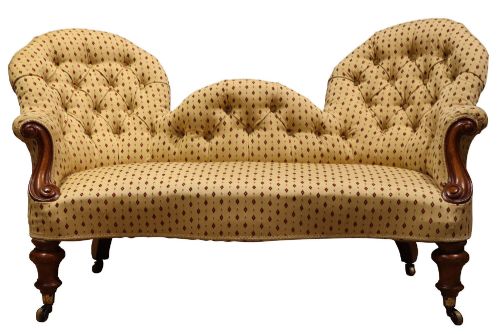
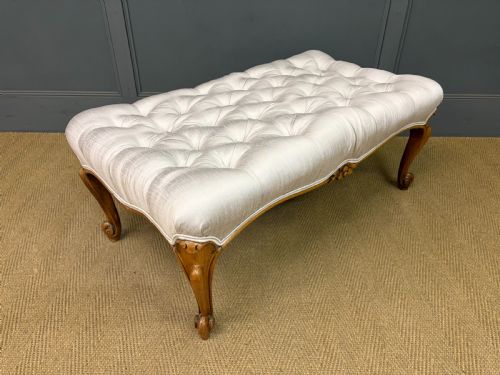
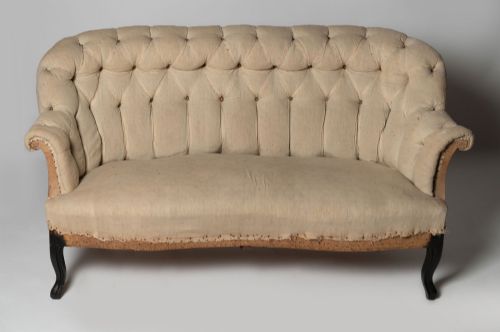
An antique deep bench encompasses low seating forms including large footstools, ottomans, club fenders, and window seats originating from the Regency, Victorian, and Edwardian eras. These pieces bridge the gap between traditional wooden benches and upholstered seating, offering substantial proportions suited to generous rooms.
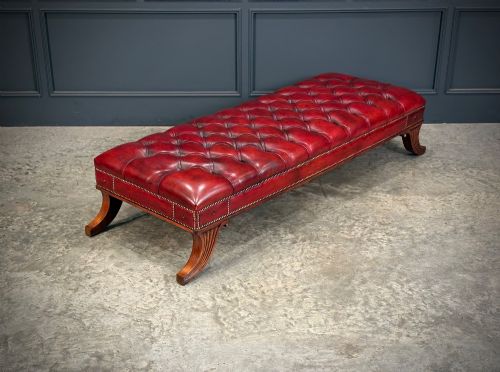
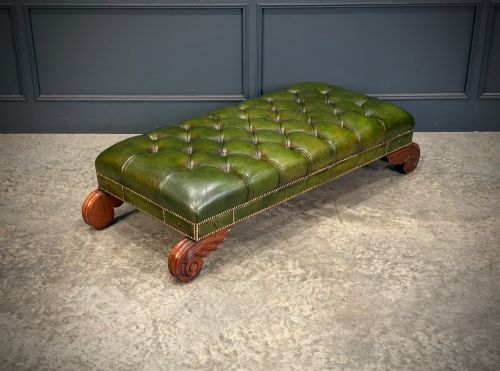
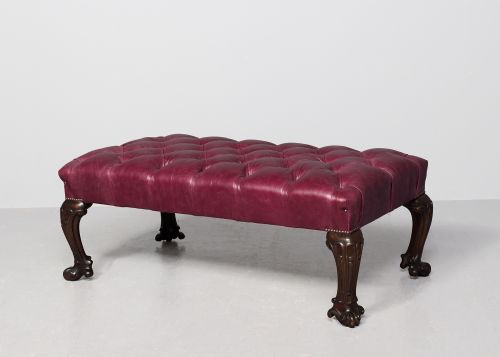
The versions most frequently met on this page include buttoned leather footstools, long mahogany stools with brass studding, and country-house ottomans dating from the nineteenth century. These forms rely on substantial depths and low frames, often supported on castors or turned wooden legs.
Makers such as James Shoolbred produced specific variations within these forms, alongside unlabelled country-house pieces in mahogany, pine, and rosewood. Their utility ranges from hallway seating to window placements and companion pieces for large sofas.
How they were made
Frames are constructed from dense hardwoods like mahogany and rosewood, alongside pine for utilitarian or country-house forms. Joinery methods include traditional pegging and framing to support substantial top weights.
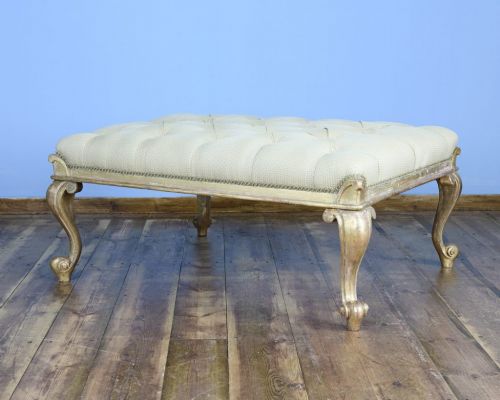
Upholstery relies on traditional stuffing techniques finished with buttoning in leather, damask, or fabric, secured with brass-studded borders. Leather surfaces are hand-dyed or left in natural tones, while timber elements receive polish or parcel gilding.
Antique Deep Bench Retail Price Guide 2026
Typical asking prices for deep bench among the pieces listed under this phrase on Sellingantiques today, from the lower quarter to the upper quarter. They describe what is for sale here now, not the wider market.
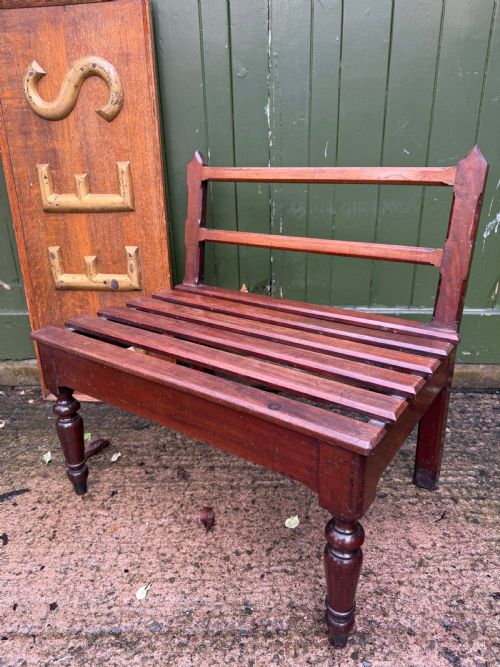
Some nineteenth-century deep benches served dual duty as luggage stands for heavy trunks at the foot of grand beds.
What varies in quality
The distinction between top-tier examples and simpler forms rests on timber selection and joinery scale, such as grand mahogany frames versus basic pine construction. Proportion and scale dictate the visual balance of a deep bench in a room.
Quality also manifests in the execution of buttoning and the choice of covering material, where hand-dyed leather and damask upholstery demonstrate higher workshop ambition than standard fabric. Original brass castors and parcel gilt accents further elevate a piece.
James Shoolbred
The Antique Deep Bench Glossary
- Buttoned
- An upholstery technique where depressions are formed in the padding by pulling twine or thread through to the frame, often secured with leather or fabric buttons. This method keeps the internal stuffing firmly distributed.
- Ottoman
- A low, upholstered seat or footstool without a back or arms, often featuring internal storage or built on a large scale for country houses. Regency and Victorian examples frequently utilise buttoned leather.
- Club Fender
- A low-seated hearth surround featuring upholstered top rails, traditionally placed around a fireplace. They combine brass framework with leather seating.
- Parcel Gilt
- A decorative treatment where specific carved details or raised areas of a wooden frame are partially gilded with gold leaf. This technique highlights particular mouldings against a dark timber background.
- Luggage Stand
- A low bench-like support with a raised rear upstand, designed for resting trunks or cases at the foot of a bed. Deep proportioned examples double as low seating.
Antique Deep Bench: Frequently Asked Questions
What defines an antique deep bench?
An antique deep bench is typically a low, substantial seat or footstool originating from the nineteenth century, characterised by generous proportions and upholstered surfaces.
These pieces include buttoned leather ottomans, window seats, and long mahogany stools designed for country houses and formal rooms.
Where were these benches used historically?
Historically, deep benches and large ottomans were placed in grand hallways, at the foot of large beds, or beneath windows in drawing rooms.
Their substantial depth and low height provided versatile seating or luggage support in large domestic spaces.
How do I care for leather upholstery?
Leather-upholstered benches require regular dusting with a dry cloth and occasional application of traditional leather balm to prevent drying.
Keep these pieces away from direct heat sources and strong sunlight to preserve the original finish.
How can I tell a Victorian bench from a Regency one?
Regency benches often display neoclassical proportions, simpler turned legs, and restrained brass detailing reflecting earlier nineteenth-century design.
Victorian examples frequently introduce deeper buttoning, heavier proportions, and functional additions like castors.