
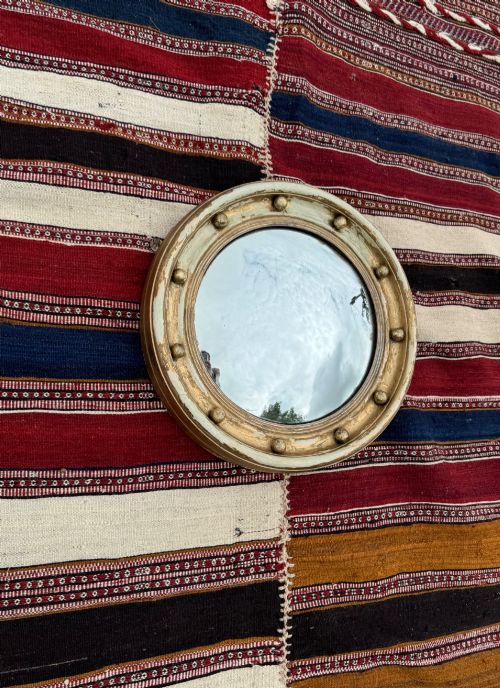


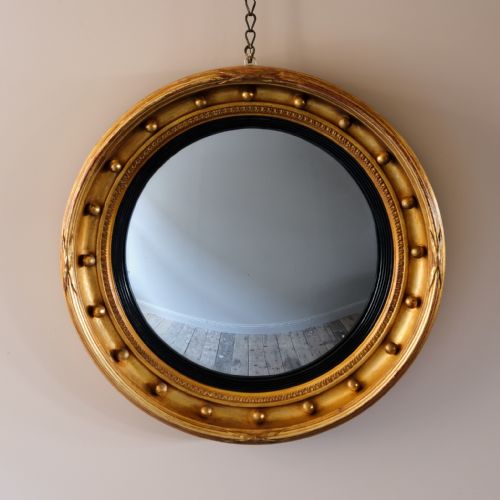


Antique Decorative Circular Mirror
These antique decorative circular mirror examples span the nineteenth century to the early twentieth century, offering convex plates and carved frames that transform a room's light.
Antique Decorative Circular Mirror
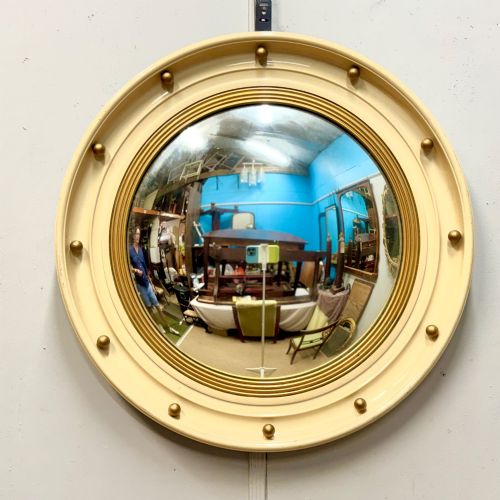
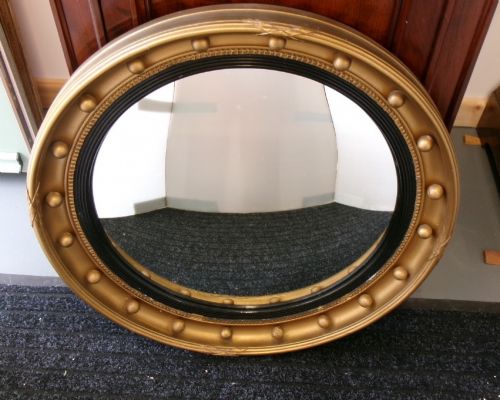
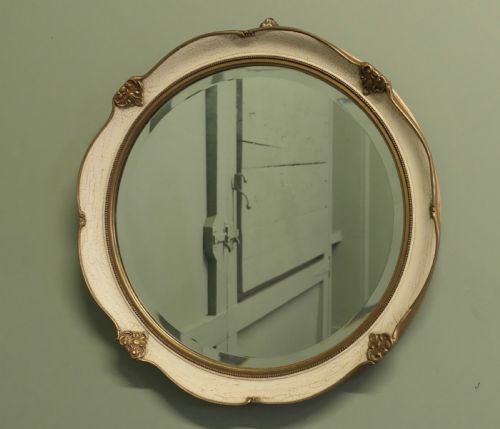
An antique decorative circular mirror brings round geometry and reflective depth to interiors, appearing frequently in nineteenth century and early twentieth century forms. Buyers encounter Victorian convex porthole mirrors, Edwardian round gilt pieces, and French art deco etched designs across these listings.
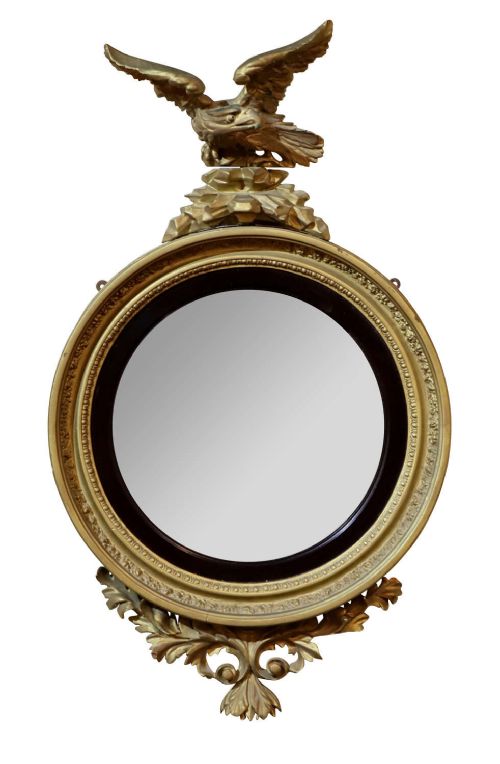
The selection ranges from Regency convex giltwood designs featuring eagle surmounts to cast iron examples from Coalbrookdale and oak framed Gothic styles. Wall mirrors dominate the offerings, providing both functional reflection and distinct decorative presence.
Origins stretch across English and French workshops, utilising periods such as Victorian, Edwardian, and Regency. Each piece combines circular framing with period specific ornamentation, from simple ebonised wood to elaborate gesso and gilt finishes.
How They Were Made
Maker's methods rely heavily on carved wood and moulded gesso finished in gilt, along with ebonised wood and cast iron. Frames are constructed from oak, giltwood, or brass, housing silvered glass and bevel edged mirror plates.
Convex mirror plates provide the characteristic curved reflection seen in many nineteenth century pieces, while others utilise flat glass with etched decoration. Coalbrookdale examples demonstrate intricate cast iron production featuring moulded mottos.
Periods represented span from the nineteenth century, including Victorian and Edwardian eras, up to nineteen twenty art deco.
What Varies in Quality
Quality rests in the crispness of the frame carving, whether in giltwood, gesso, or cast brass, alongside the depth and clarity of the mirror plate. Finer examples retain their original gilding and integrated crests, such as carved eagle surmounts.
The condition of the glass plate itself distinguishes pieces, with foxed mirror plates offering age while pristine bevel edges show precise craftsmanship. The integrity of the foundational wood or metal framing dictates longevity and structural strength.
The Antique Decorative Circular Mirror Glossary
- Convex mirror
- A round mirror with a curved outward-bulging surface that creates a wide-angle reflection of the room.
- Giltwood
- Timber that has been coated with gold leaf or a gold-coloured substance for a decorative metallic finish.
- Gesso
- A plaster-like mixture applied to wood frames to create a smooth surface for subsequent gilding or carving.
- Foxed mirror plate
- Glass showing dark spots or discoloration caused by the degradation of the silver backing over time.
- Bevel edge
- A glass edge cut and polished at an angle to catch and refract light distinctively.
Antique Decorative Circular Mirror: Frequently Asked Questions
How do I hang a heavy circular mirror?
Hanging a heavy piece requires locating secure wall studs or utilising appropriate heavy-duty wall anchors rated for the weight of cast iron or giltwood frames. Professional installation ensures the mounting bracket supports the central load safely.
Round frames distribute weight evenly, but the hanging wire or integrated fixing must match the substantial materials.
What periods do these mirrors come from?
The pieces span the nineteenth century through to the early twentieth century, encompassing Victorian, Edwardian, and Regency eras. Art deco examples from the nineteen twenties also appear.
Each period brings distinct stylistic markers, from Gothic oak framing to ornate gilded convex designs.
How should I clean an antique mirror plate?
Cleaning requires a soft microfiber cloth and a mild glass cleaner applied sparingly to the cloth rather than directly onto the glass. This prevents moisture from seeping behind the plate and damaging the silver backing or foxing.
Avoid harsh chemicals that might degrade aged gesso or giltwood surrounding the frame.