




Antique Decorative Candelabra
Antique decorative candelabra bring undeniable presence to a room, offering both sculptural form and the warm illumination of multiple branching lights.
Antique Decorative Candelabra
When you search for antique decorative candelabra, you encounter multi-branch lighting fixtures designed to sit upon tables, mantelpieces, or walls. The pieces listed span periods from the nineteenth century into the early twentieth century, with French designs appearing frequently alongside Regency and Art Nouveau examples.
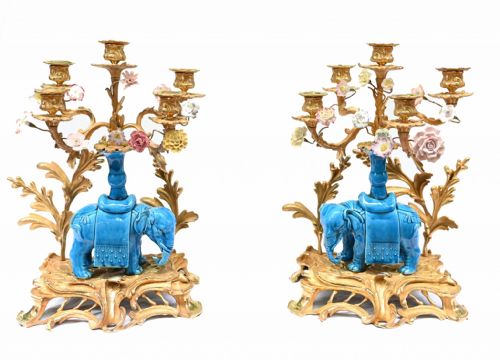
The objects take several distinct forms, including traditional candelabras with multiple arms, converted table lamps, wall sconces, and occasionally clock garnitures. Ormolu, gilt bronze, and marble feature prominently among the materials, often enriched with porcelain figures, cloisonné, or cut glass drops.
Pairs dominate the selection, offering symmetry for mantelpieces and sideboards. Styles draw heavily on Rococo Revival, Neoclassical, and French Empire aesthetics, reflecting the decorative tastes of nineteenth-century interiors.
Materials and construction methods
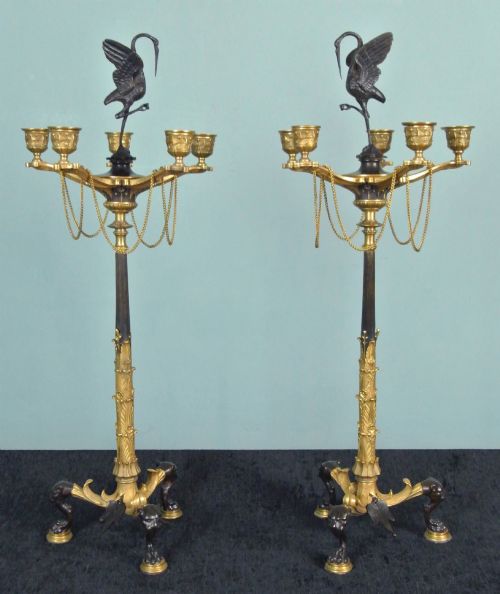
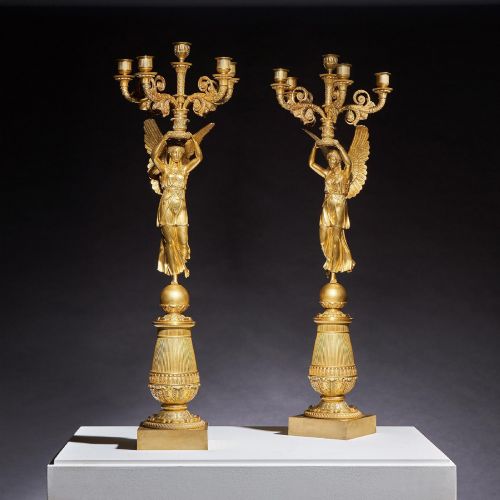
The construction of these pieces relies on metal casting and fine chasing, particularly in the handling of ormolu, gilt bronze, and brass. Founders and metalworkers combined patinated and gilded surfaces to create visual depth across the branching arms and figurative stems.
Many examples incorporate carved marble, onyx, or porcelain elements, requiring precise fitting between metal mounts and stone or ceramic bodies. Glass drops, cloisonné enamel, and gilt wood further demonstrate the diverse craft traditions employed during the nineteenth century.
Antique Decorative Candelabra Retail Price Guide 2026
Typical asking prices for decorative candelabra among the pieces listed under this phrase on Sellingantiques today, from the lower quarter to the upper quarter. They describe what is for sale here now, not the wider market.
Listings feature nineteen-century pieces predominantly, spanning styles from Rococo Revival and Neoclassical to Art Nouveau and French Empire.
Assessing quality in antique candelabra
Quality reveals itself in the crispness of the casting and the depth of the gilding or ormolu work. Finer pieces display sharp chiselling on bronze elements and secure, well-integrated joints between the various stone, porcelain, and metal components.
The prestige of the maker or foundry also distinguishes the range, with documented works by established bronze-casters commanding particular attention. Additionally, the survival of matching pairs and original components without excessive replacement elevates the standing of an individual piece.
Barbedienne Bronze·Pierre Philippe Thomire·Auguste Cain·Helena Wolfsohn
The Antique Decorative Candelabra Glossary
- Ormolu
- A gilded bronze technique applied to metal mounts and decorative objects during the eighteenth and nineteenth centuries. This finish gives a rich, gold-coloured appearance to cast bronze elements.
- Gilt Bronze
- Bronze metal that has been coated with a thin layer of gold leaf or gold powder. It provides a durable and decorative surface on nineteenth-century lighting and ornaments.
- Cloisonné
- An ancient technique for decorating metal object surfaces using enamel held within thin wire compartments. French examples from the nineteenth century frequently incorporate this colourful infill.
- Garniture
- A set of matching decorative objects, typically comprising a mantel clock flanked by matching candelabras or urns. These sets were designed to display symmetrically on fireplace mantels.
Antique Decorative Candelabra: Frequently Asked Questions
How were candelabras used historically?
Historically, candelabras provided ambient lighting in dining rooms, parlours, and halls before the widespread adoption of electric lighting.
Pooled illumination from multiple candles created dramatic effects in grand interiors, often placed upon dining tables, sideboards, or flanking mantel clocks in garniture sets.
How do I live with antique candelabras?
Living with these pieces involves placing them securely on sturdy surfaces where their weight and height can be appreciated safely.
Many owners display them unlit as sculptural bronze or porcelain ornaments, while some period examples have been thoughtfully adapted to function as electric table lamps or wall sconces.
How do I tell periods apart?
Distinguishing periods relies on observing stylistic motifs, such as the flowing organic lines of Art Nouveau or the classical restraint of Neoclassical and Regency designs.
Materials and casting techniques also offer clues, with nineteenth-century French bronzes and ormolu mounts displaying distinct manufacturing traits compared to later twentieth-century electric adaptations.