

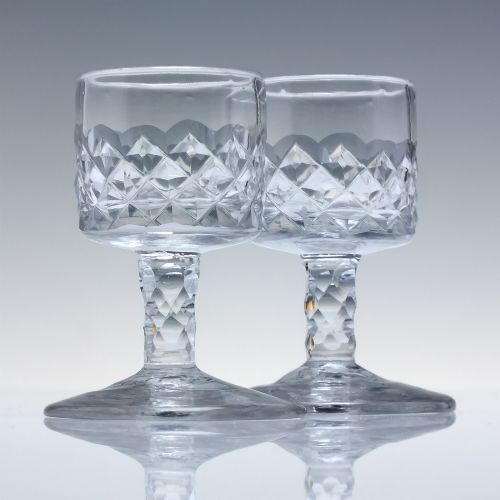
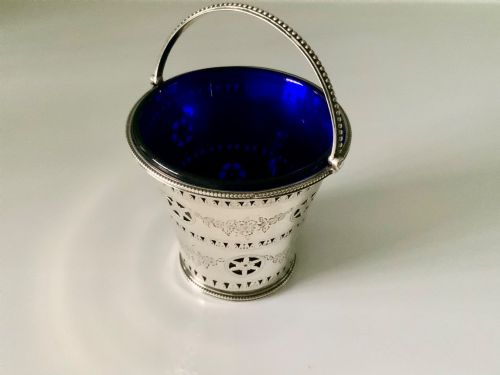
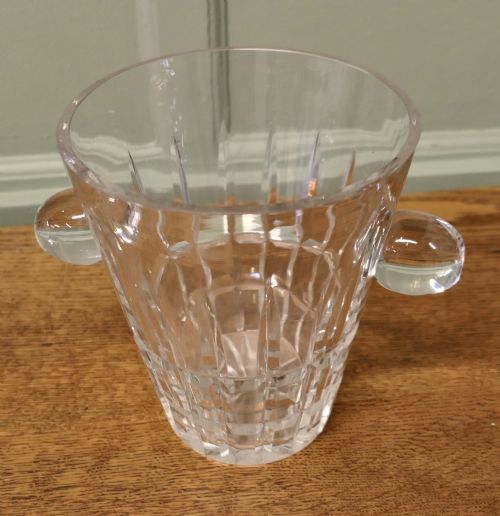
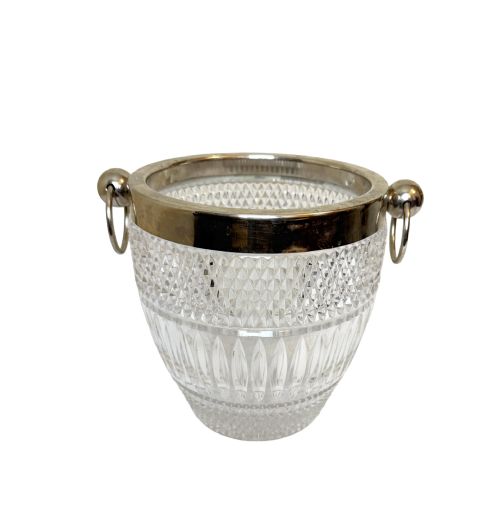

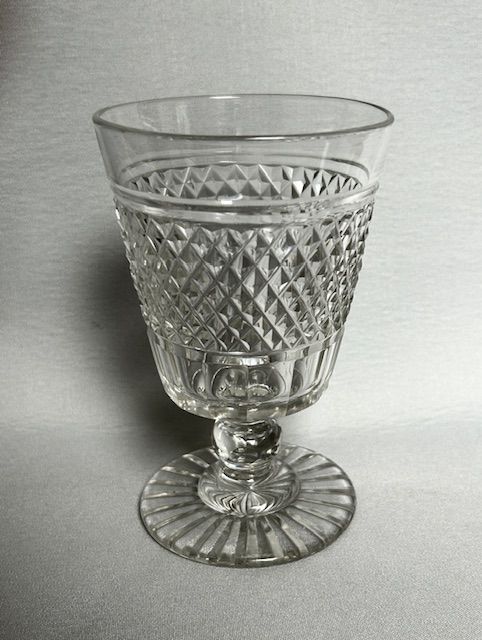


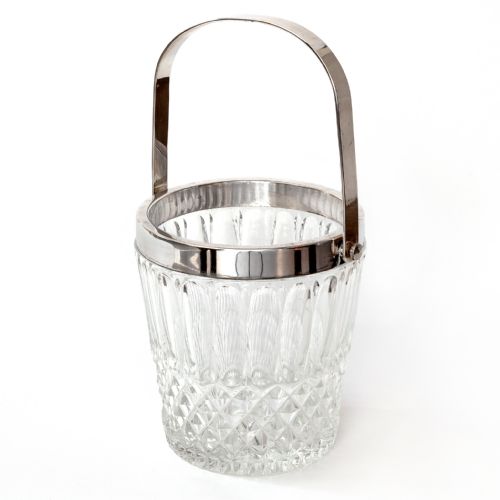


Antique Cut Glass Bucket
An antique cut glass bucket holds ice and wine with bright refraction, bringing heavy weight and sharp facets to the table.
Antique Cut Glass Bucket
An antique cut glass bucket serves as a refined vessel for chilling wine, champagne, or holding ice cubes at the table. When searching for an antique cut glass bucket, collectors encounter forms ranging from Regency rummers and wine coolers to Art Deco champagne vessels and silver-mounted biscuit barrels.
The pieces appearing on this page span the Regency era through the mid-twentieth century, including Edwardian, George V, and French Art Deco examples. Origins stretch across English and French workshops, utilising robust glass bodies paired with metal mounts.
Vessels take the form of heavy ice buckets, deep coolers, and cylindrical barrels designed for functional hospitality. Each piece reflects the social habits of its period, transitioning from formal wine cooling to domestic barware.
Materials and construction
Makers formed these pieces from heavy lead crystal, cut glass, and lead glass, often shaping them through hand-blowing techniques before applying cold-work cutting. The glass received deep geometric or hobnail cuts across the surface to catch and scatter light.
Metal components such as silver plate, silver-plate, and gilt bronze provide structural mounts, rims, handles, and swing Bails. Talon tongs and secure collars complete the construction, combining dense glass with polished metalwork.
Antique Cut Glass Bucket Retail Price Guide 2026
Typical asking prices for cut glass bucket among the pieces listed under this phrase on Sellingantiques today, from the lower quarter to the upper quarter. They describe what is for sale here now, not the wider market.
Listings feature pieces spanning the Regency period, 19th Century, and 20th-century decades up to the 1940s, including Art Deco and Edwardian examples.
Evaluating the pieces
Quality rests in the depth and crispness of the glass cutting, where sharp, clean facets demonstrate superior hand-work against softer, rounded depressions. The weight of the lead crystal or lead glass dictates the heft and stability of the vessel.
The integration of metal mounts, whether silver plate or gilt bronze, separates standard production from finer luxury goods. Heavy gauge metal fittings and well-preserved plating contribute to the overall integrity of the cooler.
The Antique Cut Glass Bucket Glossary
- Hobnail cut
- A raised, multi-faceted diamond pattern cut into the glass surface. This technique creates a bumpy texture that enhances the refractive sparkle of the material.
- Lead crystal
- Glass containing a high proportion of lead oxide, which increases the weight, clarity, and brilliance of the vessel. It allows for deeper, sharper facet cutting.
- Silver plate
- A thin layer of silver fused to a base metal foundation, commonly utilised for the rims, handles, and swing mounts of ice buckets.
- Gilt bronze
- Bronze that has been coated with a layer of gold, providing rich decorative mounts on French coolers and nineteenth-century vessels.
Antique Cut Glass Bucket: Frequently Asked Questions
What are antique cut glass buckets used for?
These vessels were originally manufactured to chill champagne, wine, and hold ice for entertaining guests at the dining table.
Today, collectors utilise them as functional barware for holding ice cubes or display them as decorative centerpieces.
How do I date an antique cut glass bucket?
Dating relies on identifying stylistic markers such as Regency hobnail patterns, Edwardian proportions, or French Art Deco geometric lines.
Examining the manufacturing techniques of the glass body and the composition of the silver-plate mounts also helps narrow the period of origin.
Are these buckets made of lead crystal?
Many of the listed pieces incorporate heavy lead crystal or lead glass to achieve substantial weight and brilliant light refraction.
Plain glass and hand-blown variations also appear across different periods and regional workshops.
How should I clean my antique ice bucket?
Careful hand washing with warm water and mild soap preserves the delicate silver-plate mounts and prevents damage to the glass.
Harsh abrasives and dishwashers should be avoided to protect the polished metal and the sharp edges of the cut facets.