
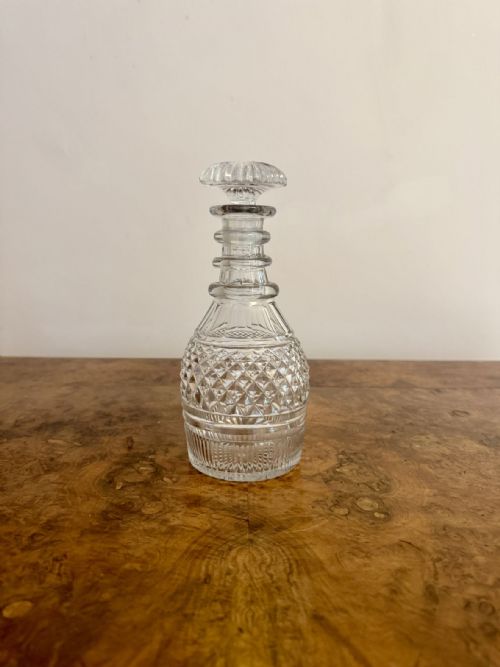
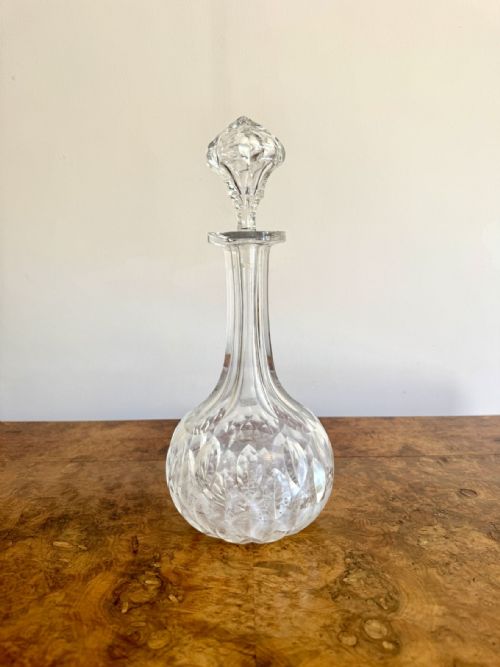
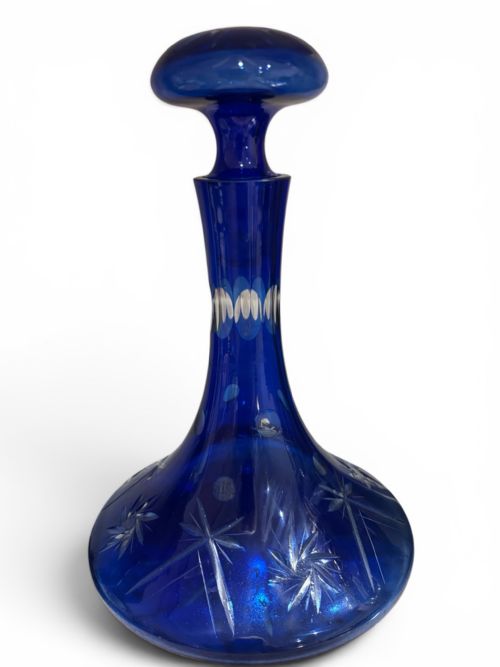

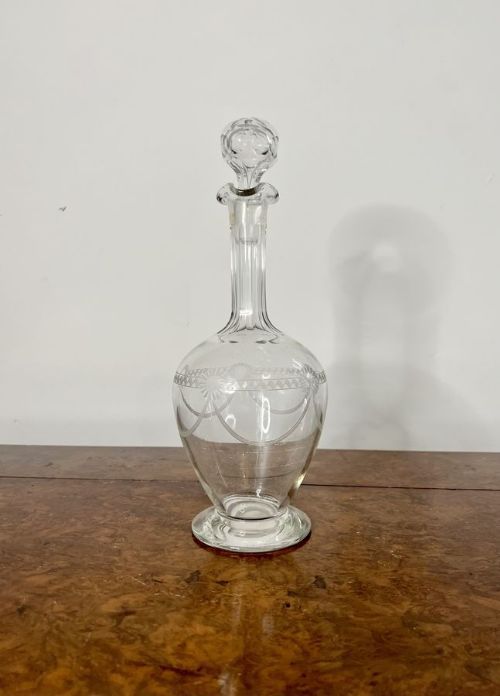


Antique Cut Crystal Stopper Bottle
These antique cut crystal stopper bottles bring genuine weight and refractive brilliance to a room, offering both practical utility and fine decorative form.
Antique Cut Crystal Stopper Bottle
When you search for an antique cut crystal stopper bottle, you enter a world of heavy table glassware and vanity vessels designed to hold spirits and scents securely. The most common form you will meet on this page is the Edwardian or Victorian decanter, often shaped as a heavy shaft and globe or a tall bell.
The selection ranges from George III and Regency pieces down through Victorian and Edwardian examples to Art Deco designs. Alongside traditional wine and spirit decanters, you will find smaller scent and perfume bottles fitted with sterling silver collars or enamel lids.
Cut glass and precious metal mounts
The pieces rely on lead crystal or clear cut glass, worked by hand to create deep facets that catch the light from every angle. Certain examples introduce colour through ruby overlay or Bohemian cobalt techniques, adding rich tones beneath the cut patterns.
Listings span periods from Georgian and Regency eras through Victorian and Edwardian times, reaching into the Art Deco period.
Clarity, weight and facet depth
The distinction between ordinary and superior pieces lies principally in the purity of the metal and the crispness of the cutting. Heavier lead crystal with deep, sharply defined facets delivers a resonant ring and superior light refraction compared to lighter, moulded glass alternatives.
Attention to proportion and the snugness of the original matching stopper further elevate a piece. Finer examples display meticulous hand-polishing within the geometric cuts rather than the smooth, dull surfaces found on lower-grade production.
Karl Palda·Hukin & Heath
The Antique Cut Crystal Stopper Bottle Glossary
- Lead crystal
- Glass containing a high proportion of lead oxide, which increases the weight, clarity, and refractive index of the material. This composition allows for deeper and sharper facet cutting.
- Ruby overlay
- A manufacturing technique where a thin layer of red glass is fused over a clear glass base before being cut through to reveal the clear crystal beneath. It creates striking contrasting patterns.
- Hallmark
- An official stamp applied to silver mounts indicating the standard of purity, the assay office, and the year of manufacture. These marks help date the vessel precisely.
- Shaft and globe
- A traditional decanter silhouette featuring a long, narrow neck rising above a rounded spherical body. This shape was particularly popular during the nineteenth century for serving wine.
Antique Cut Crystal Stopper Bottle: Frequently Asked Questions
Are stoppers usually original to the bottle?
Many surviving pieces retain their matching original stoppers, which is an important detail for collectors. You can often check originality by examining the ground glass neck and peg for matching wear patterns and numbering.
Replacement stoppers occur frequently due to accidental breakage over the decades. A correct fit should sit flush without excessive wobble.
How can I tell Victorian from Edwardian pieces?
Victorian decanters often feature heavier, more robust proportions with deep, complex hobnail or prism cutting. Engraved floral motifs and shaft-and-globe silhouettes are also typical of this era.
Edwardian examples tend to show lighter, cleaner lines with refined geometric patterns reflecting changing interior tastes. Silver mounts on Edwardian pieces frequently bear clear early twentieth-century hallmarks.
Can I use these bottles for serving wine today?
These historical vessels function perfectly well for decanting modern wines and spirits at the dinner table. Ensure the interior is entirely clean and free of old sediment before filling.
Hand wash the vessel immediately after use to prevent staining from red wine tannins. Avoid storing spirits in antique lead crystal for extremely long periods.