






Antique Curved Front Table
An antique curved front table spans the Georgian, Regency and Edwardian eras, offering rich mahogany timber and graceful sweeping lines.
Antique Curved Front Table
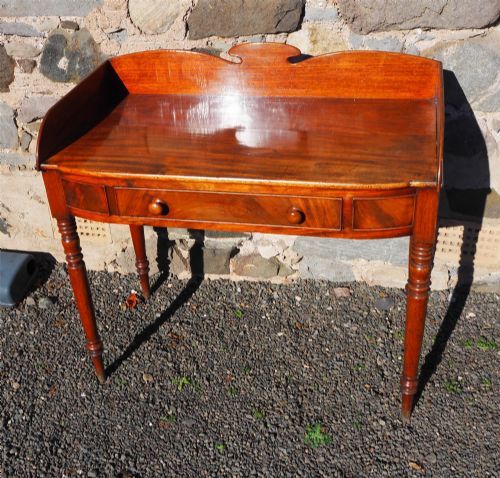
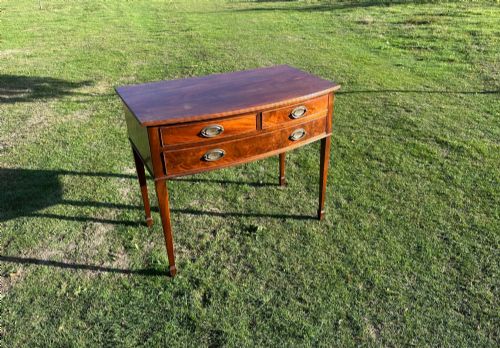
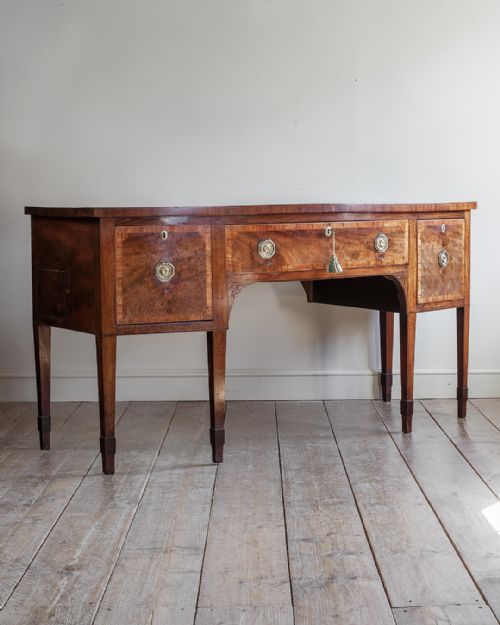
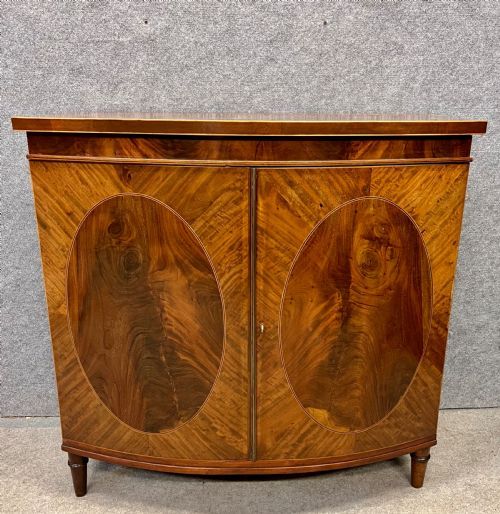
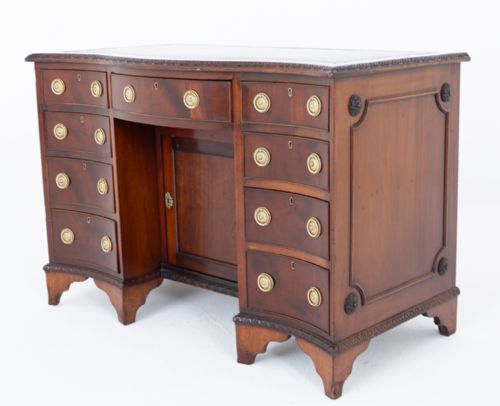
An antique curved front table encompasses several forms designed with sweeping silhouettes, including side tables, console tables, desks and sideboards. These pieces emerge primarily from the Georgian, Regency, Victorian and Edwardian periods, reflecting the shifting domestic tastes of British and European interiors.
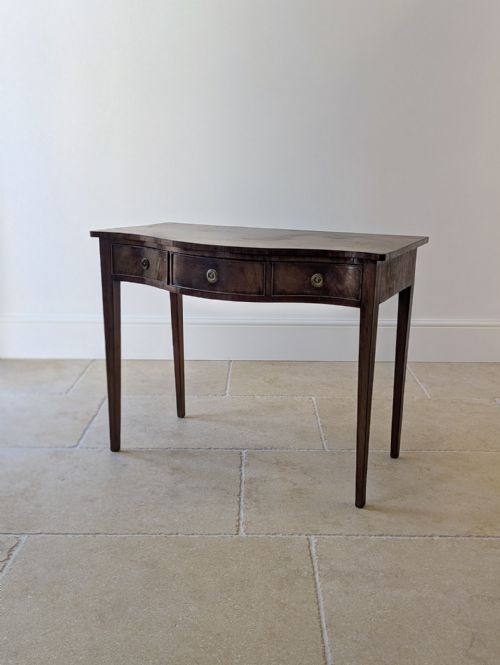
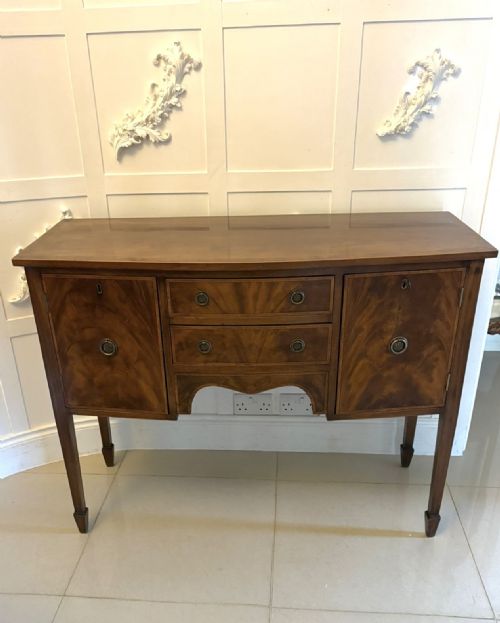
The version most commonly met on this page is the mahogany bow front or serpentine side table, alongside similar small serving pieces and desks. These tables balance practical surface space with softer, curved outlines that interrupt the rigid geometry of traditional rooms.
Originating largely from the eighteenth and nineteenth centuries, these items often display distinct regional traits, such as satinwood inlay or brass fittings. Buyers encounter everything from compact bedside cabinets to large dining room sideboards, each tailored to specific historical storage and display needs.
How they were made
Cabinet makers utilised solid mahogany and flame mahogany veneers, bending or shaping timber to create the characteristic bow and serpentine fronts. These primary woods were frequently paired with contrasting boxwood and satinwood inlay to define drawers and borders.
Construction relied on traditional joinery, incorporating dovetailed drawer boxes and carefully fitted internal structures to support the curved perimeters. Brass hardware, including handles, castors and feet, completed the assembly, securing both structural durability and refined decorative contrast.
Antique Curved Front Table Retail Price Guide 2026
Typical asking prices for curved front table among the pieces listed under this phrase on Sellingantiques today, from the lower quarter to the upper quarter. They describe what is for sale here now, not the wider market.
What varies in quality
The distinction between tiers rests upon the choice of timber and the precision of the cabinet work. Superior examples exhibit figured flame mahogany and crisp, balanced inlay rather than plain grain and hurried assembly.
Proportion and the handling of the curve dictate the visual success of the piece. Master makers achieved fluid, harmonious contours that integrate seamlessly with the carcase, whereas lesser workshops produced stiff or disjointed lines.
Maurice Adams·Collinson and Lock·Gillows
The Antique Curved Front Table Glossary
- Bow front
- A convex curved cabinet front that projects outward in an arc. This form softens the profile of sideboards, desks and chests.
- Serpentine
- A shaped front featuring a convex central section flanked by two concave curves. It requires advanced woodworking skill to execute properly.
- Demi-lune
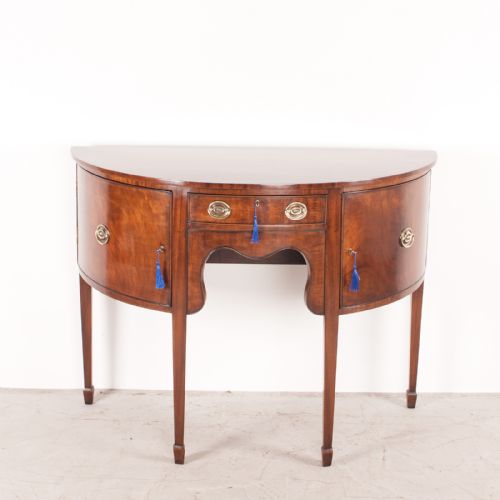
- A half-moon shape used for console tables and sideboards. These pieces fit flush against a wall while presenting a curved forward edge.
- Flame mahogany
- A distinct grain pattern resembling flickering flames, sliced from the fork of the mahogany tree. It was favoured for drawer fronts and primary panels.
- Satinwood
- A pale, hard wood utilised for contrasting stringing and decorative inlay. It creates sharp visual borders against darker mahogany carcases.
Antique Curved Front Table: Frequently Asked Questions
How do I identify a Georgian bow front?
Georgian pieces display hand-cut dovetails, solid mahogany drawer linings and subtle proportioning that differs from later mass-produced Victorian furniture.
Examine the backboards and timber grain underneath to confirm age and traditional construction methods.
Where should I place a console table?
Console and side tables suit narrow hallways, entryways or living room walls where floor space is limited. Their curved profiles prevent them from obstructing pathways while offering a useful surface for lamps.
Pair them with a wall mirror to complete a traditional room arrangement.
What is the difference between bow front and serpentine?
A bow front curves outward in a single continuous convex arc from side to side. A serpentine front incorporates three distinct curves, dipping inward at the sides and pushing outward in the centre.
Serpentine designs generally demand a higher level of cabinet making skill.
How do I care for antique mahogany timber?
Keep wooden furniture away from direct sunlight and sudden temperature shifts to prevent timber splitting or fading. Regular dusting with a soft, dry cloth preserves the original polish.
Apply a traditional beeswax polish occasionally to nourish the grain without building up heavy residues.