









Antique Crystal Chalice
These antique crystal chalice examples span Georgian, Regency and Victorian periods, offering substantial lead glass drinking vessels for display or toast.
Antique Crystal Chalice
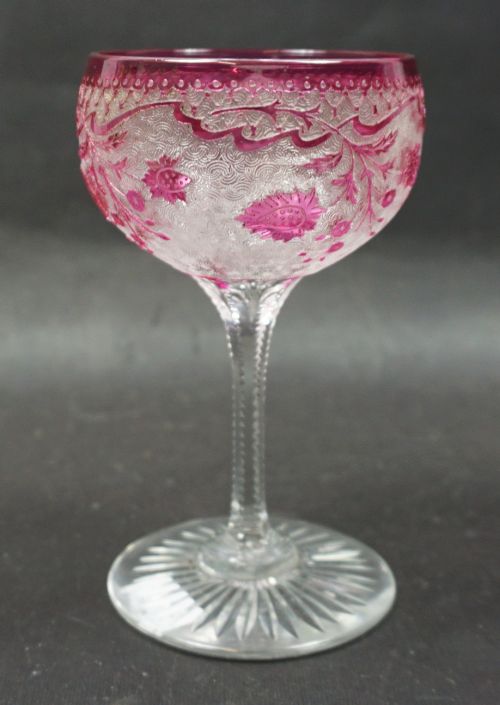
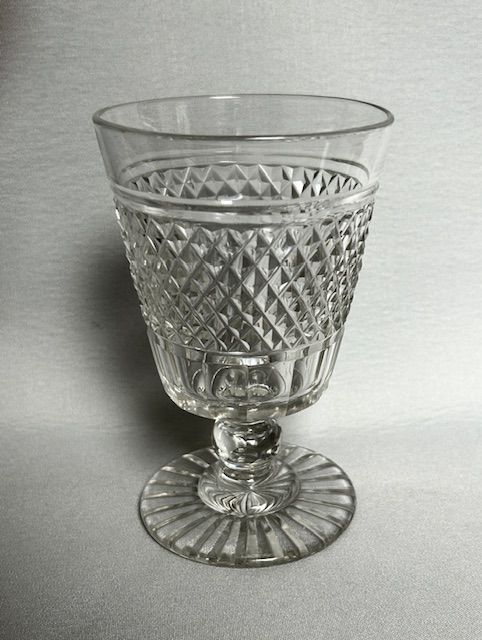
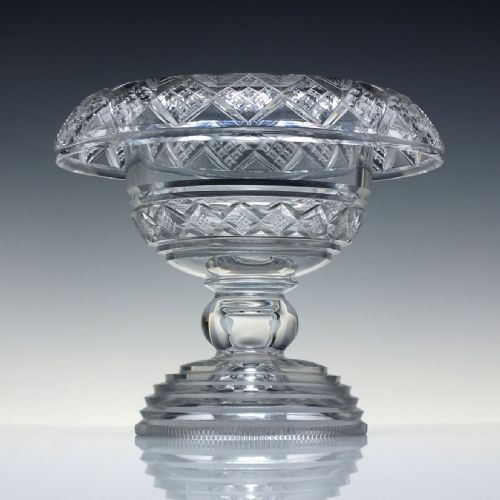
When you search for an antique crystal chalice, you encounter heavy drinking vessels, rummers, goblets and standing bowls spanning the Georgian, Regency and Victorian eras. The selection on this page centres on English lead-glass rummers alongside Bohemian engraved crystal and coloured glassware.
Forms range from small plain stem wine glasses to large ovoid bowl table rummers and centrepiece bowls. Most examples date from the eighteenth and nineteenth centuries, reflecting domestic and ceremonial drinking customs of those periods.
How they were made
Makers utilised lead crystal, flint glass and clear glass, alongside cranberry and turquoise coloured variants, shaped into heavy bowls and stems. Surface decoration relied on wheel engraving, intaglio cutting, hobnail cutting and occasional gilding.
Specialised techniques include air twist and corkscrew 2-ply twist stems formed during the hot-glass stage, followed by cold-work engraving depicting hops, barley, monograms and commemorative scenes.
Antique Crystal Chalice Retail Price Guide 2026
Typical asking prices for crystal chalice among the pieces listed under this phrase on Sellingantiques today, from the lower quarter to the upper quarter. They describe what is for sale here now, not the wider market.
One early rummer carries the engraved initials WIS alongside a sailing ship, ready for eighteenth-century toasts upon the water.
What varies in quality
Quality rests upon the clarity of the metal, the weight and balance of the vessel, and the crispness of the wheel cutting or engraving. Superior pieces exhibit brilliant refraction in the lead glass paired with deep, assured wheel work on the bowl.
The sophistication of the stem formation, whether balustroid, plain or intricate twist, distinguishes standard production from finer workshop output.
Moser Bohemian
The Antique Crystal Chalice Glossary
- Lead glass
- Glass containing lead oxide to increase weight, brilliance and softness for cutting. This material allows deeper wheel cuts without fracturing.
- Rummer
- A large drinking glass with a capacious bowl used for ale, wine or punch. These sturdy vessels frequently feature engraved hops and barley motifs.
- Intaglio
- A design carved into the glass surface so that the pattern lies beneath the outer plane. This technique creates a distinct tactile depth.
- Balustroid
- A stem form resembling an architectural baluster, characteristic of mid-eighteenth-century English drinking vessels. Collectors value the substantial feel of these stems.
- Römer
- A large German or Bohemian stemmed drinking goblet with a wide, ribbed foot and decorated bowl. Moser produced notable examples with gilding.
Antique Crystal Chalice: Frequently Asked Questions
What is a rummer?
A rummer is a large, sturdy drinking glass designed for ale, wine or punch during the Georgian and Victorian eras. These vessels typically feature deep bowls resting on short stems and heavy footrings.
Their robust construction suited communal toast-drinking and everyday dining tables before lighter glassware became standard.
How do I date an old goblet?
Dating relies on observing manufacturing characteristics such as pontil marks, metal composition, stem formation and engraving styles. Eighteenth-century pieces often display plain or twist stems and simple engraved motifs.
Nineteenth-century examples frequently incorporate heavier hobnail cutting, frosted surfaces or specific commemorative details tied to known reigns.
Were these chalices used for drinking?
Yes, many large rummers and wine glasses served functional roles at dining tables, inns and festive gatherings. Their heavy lead-glass walls provided durability for regular toasts.
Others held commemorative or Masonic significance, suggesting occasional ceremonial display rather than daily tavern use.
What is intaglio engraving?
Intaglio engraving is a technique where the design is carved directly into the surface of the glass rather than raised from it. Artisans utilised small rotating wheels to cut detailed scenes, monograms or botanical motifs.
This method produces a sunken relief that catches ambient light across the polished facets.