

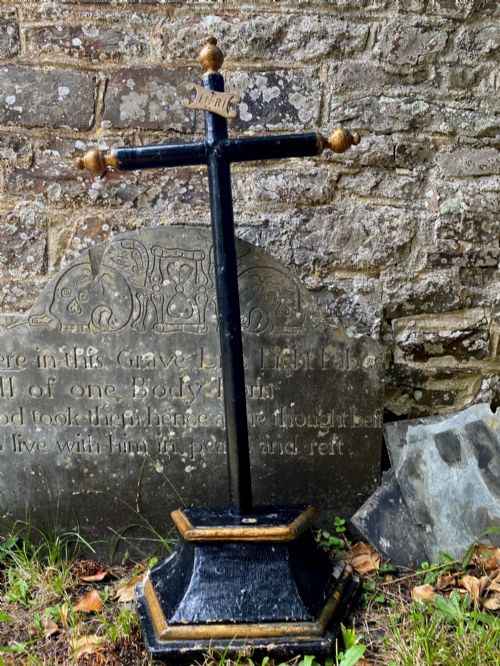
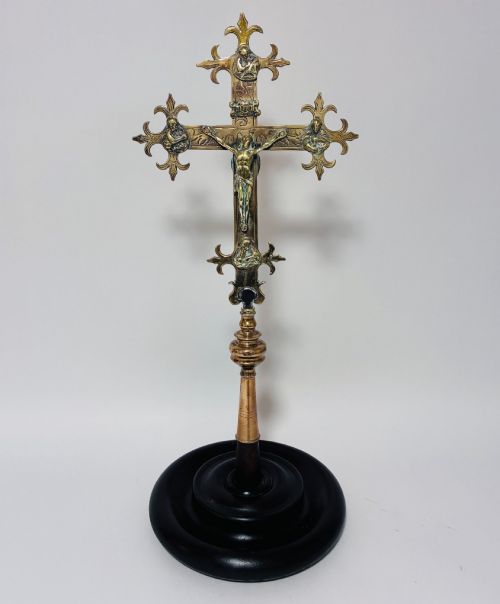
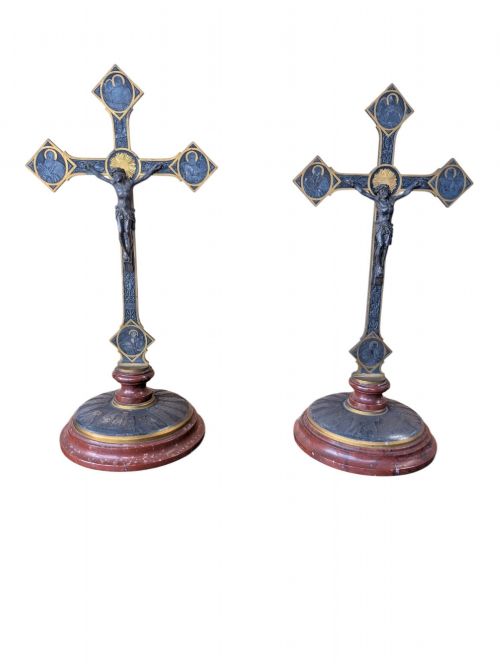


Antique Crucifix on Stand
These antique crucifix on stand pieces combine devotion and craft, offering centuries of ritual history for your home.
Antique Crucifix on Stand
An antique crucifix on stand brings centuries of devotional history into domestic or ecclesiastical spaces. These objects combine a sculptural figure of Christ with a supporting base or foot, allowing them to rest upright on altars, tables or surfaces.
You will most frequently encounter brass, bronze and various woods among these listings, spanning periods from the seventeenth century through to the twentieth. Forms range from simple processional crosses to large ebonised and giltwood statement pieces.
The stylistic influences visible in these works stretch across Georgian, Gothic Revival, French Baroque and Art Nouveau designs. Each piece reflects the aesthetic and theological preferences of its particular era.
How they were made
Maker's hands shaped these objects using traditional techniques of metal casting and timber carving. Brass and bronze components were cast and finished by hand, creating durable structural forms for the crosses.
Woodworking traditions are evident in the use of carved box wood, olive wood, ebonised timber and giltwood. Artisans often combined contrasting materials, mounting carved wooden corpus figures onto distinct wooden or metal bases.
Antique Crucifix on Stand Retail Price Guide 2026
Typical asking prices for crucifix on stand among the pieces listed under this phrase on Sellingantiques today, from the lower quarter to the upper quarter. They describe what is for sale here now, not the wider market.
Current selections span from the seventeenth century through to the nineteen-forties, utilising brass, bronze, marble and various woods.
What varies in quality
Quality rests in the precision of the carving and the fidelity of the casting work. Finer examples display meticulous detail in the facial expressions and anatomy of the corpus, alongside crisp execution of decorative motifs on the cross.
Materials also dictate the hierarchy of these objects, with substantial bronze castings, intricate box wood carvings and rich giltwood surfaces standing apart from simpler utilitarian pieces.
The Antique Crucifix on Stand Glossary
- Corpus Christi
- The figure of Christ affixed to the cross. This sculptural element often demonstrates the highest concentration of artistic skill in the piece.
- Processional cross
- A crucifix mounted on a long shaft or heavy base, originally designed to be carried in religious processions. These often have sturdy metal construction.
- Ebonised wood
- Timber treated to resemble expensive ebony. This dark finish provides a stark, dramatic contrast against giltwood or metal figures.
- Giltwood
- Wood that has been coated with a thin layer of gold leaf or powder. It catches the ambient light effectively in sacred and domestic interiors.
- Altar cross
- A devotional cross designed specifically to stand upon a church or chapel altar. They frequently display elaborate ecclesiastical styling.
Antique Crucifix on Stand: Frequently Asked Questions
How do I identify the age of an antique crucifix on stand?
Age is typically indicated by the construction techniques, material wear and stylistic markers corresponding to periods like the seventeenth, eighteenth and nineteenth centuries.
Stylistic shifts from Georgian severity through to French Baroque and Art Nouveau ornamentation provide clear chronological clues.
Where were these standing crucifixes originally displayed?
These objects served primarily in religious contexts, standing upon church altars or used during ecclesiastical processions. Many smaller examples were also made for private domestic devotion.
Their sturdy bases allowed them to be placed securely on flat surfaces for prayer and contemplation.
What is the difference between a crucifix and an altar cross?
A crucifix specifically includes the corpus, or figure of Christ, affixed to the cross. An altar cross may simply be the decorative cross itself without the central figure.
Both forms served central roles in Christian liturgy and private worship across the centuries.