

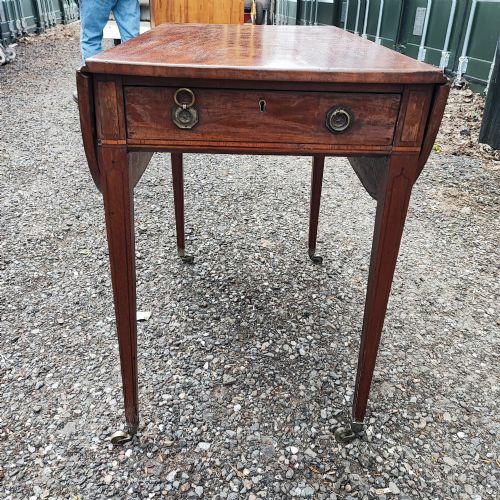
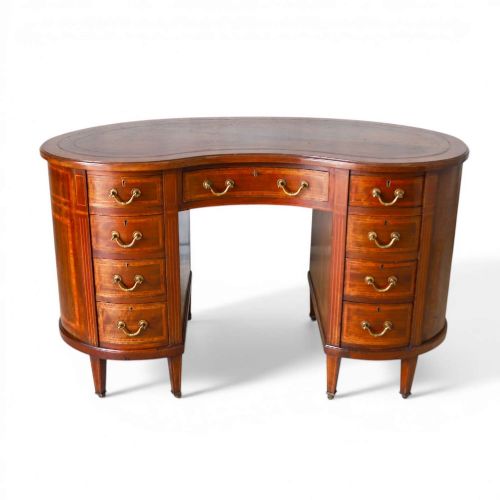
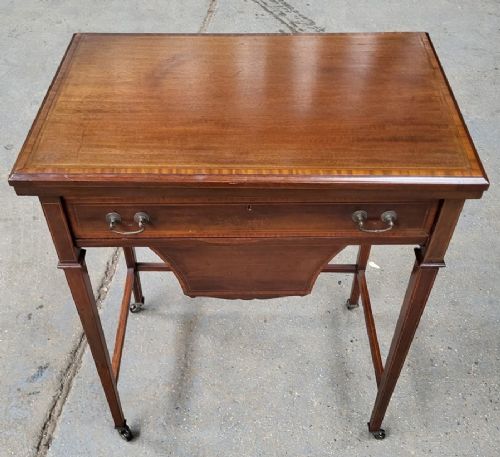
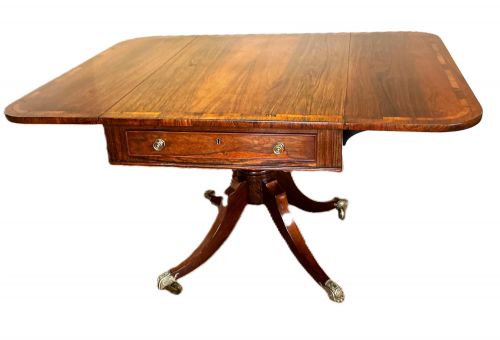


Antique Crossbanded Desk
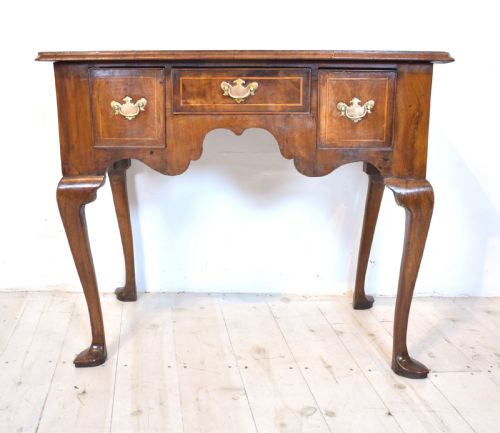
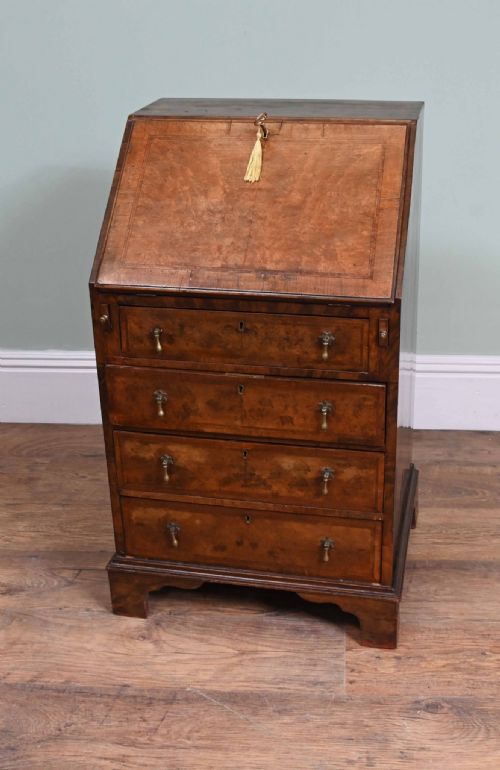
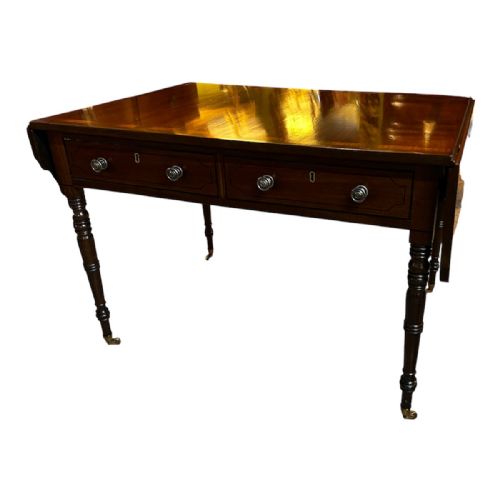
These pieces are classic examples of the antique crossbanded desk, built from figured timbers with contrasting border veneers to anchor a traditional study.
Antique Crossbanded Desk
An antique crossbanded desk is a functional writing surface framed by distinct timber borders that run perpendicularly to the grain of the primary top. Buyers looking for an antique crossbanded desk encounter various forms across this page, predominantly featuring pedestal desks, writing tables, and sloping bureaux from the Georgian and Victorian eras.
The selection ranges from compact oak and walnut examples dating back to the eighteenth century up to larger mahogany and satinwood pieces made during the Edwardian period and the early twentieth century. Desks often incorporate fitted interiors with secret drawers, original leather inserts, and brass hardware that reflect the period of manufacture.
How they were made
Cabinet makers utilised solid foundations of mahogany, oak, or walnut, applying fine veneers such as satinwood, rosewood, kingwood, and burr yew to the primary surfaces. Crossbanding required precise cutting so the grain of the border strip ran across the width of the framing edge rather than along its length.
Secondary timbers like oak and pine were selected for drawer linings and internal divisions. Traditional hand-cut dovetails join the drawer construction, while original brass drop handles or knobs secure the fittings to the drawer fronts.
The listings feature pieces spanning the 17th century through to the early 20th century, with significant representation from the Georgian, Regency, and Edwardian periods.
What varies in quality
Quality rests in the harmony of the timber selection and the precision of the veneer work around the edges. Superior pieces display carefully matched grain patterns where the crossbanding frames the central panel without mismatched joints or crude timber fillers.
Construction details also separate the standard workshop output from finer cabinet work, visible in the thickness of the oak drawer linings and the neatness of the interior pigeonholes and secret compartments.
Whytock & Reid·Willmington & Cope·Coxed & Woster
The Antique Crossbanded Desk Glossary
- Crossbanding
- A border of veneer applied to the edge of a surface where the grain runs at right angles to the main panel. This technique creates a neat framing effect around desks and tables.
- Bureau
- A sloping desk that folds down to reveal a fitted interior of small drawers and pigeonholes. It typically sits above a set of graduated drawers for storage.
- Pedestal desk
- A freestanding desk consisting of two independent pedestals of drawers supporting a wide writing surface. The top often incorporates an inset panel of tooled leather.
- Satinwood
- A lustrous hardwood yielding a golden-yellow timber that accepts fine polishing. It was favoured by cabinet makers during the Sheraton Revival period for banding and stringing.
Antique Crossbanded Desk: Frequently Asked Questions
How do I identify a Georgian desk?
Georgian desks are characterised by solid proportions, timber construction in mahogany, oak, or walnut, and restrained inlay work. They often feature hand-cut dovetails and traditional brass hardware.
Later Victorian and Edwardian interpretations frequently revived these eighteenth-century styles using satinwood or ebonised finishes, while retaining similar internal drawer configurations.
What is crossbanding?
Crossbanding is a decorative technique where a border strip of veneer is applied to the perimeter of a tabletop or drawer front. The grain of this border runs perpendicularly to the main central panel.
Cabinet makers used contrasting timbers like satinwood or rosewood to frame darker woods such as mahogany or walnut.
Are these desks suitable for daily use?
These pieces were built for writing and administrative work, making them practical for modern studies or home offices. Solid construction and durable hardwood surfaces handle routine placement of laptops and paperwork.
Preserving the original leather top or polished finish requires gentle cleaning using traditional wax rather than modern chemical solvents.
How do I care for antique veneer?
Antique veneers respond best to stable indoor humidity and protection from direct sunlight, which can fade satinwood and rosewood over time. Feeding the timber with a quality beeswax polish maintains the sheen without building up heavy residues.
Avoid placing hot cups or damp items directly onto the polished surface to prevent marking the historical finish.