



Antique Cresting Rail
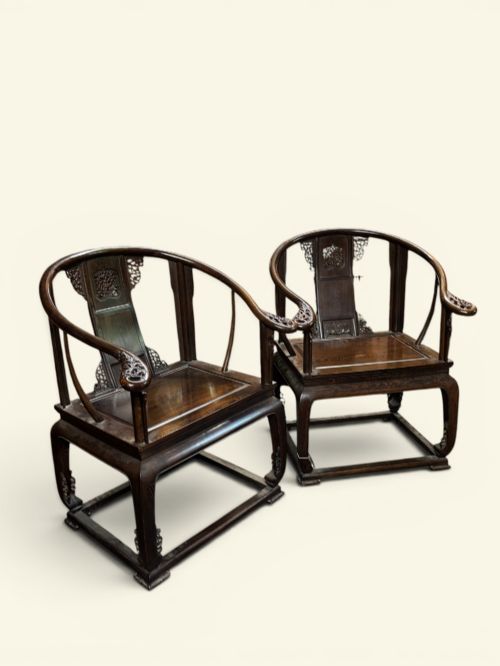
An antique cresting rail forms the decorative top horizontal member of a chair back or a timber pediment, offering a distinct focal point for period seating.
Antique Cresting Rail
An antique cresting rail belongs primarily to dining chairs, armchairs, and architectural salvage pieces spanning from the seventeenth century through the Edwardian era.
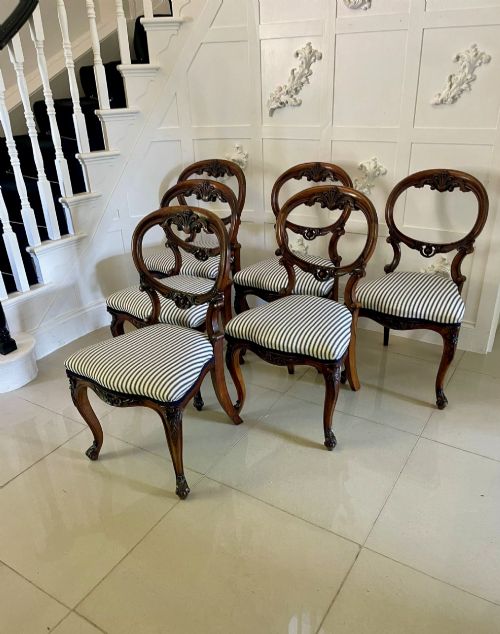
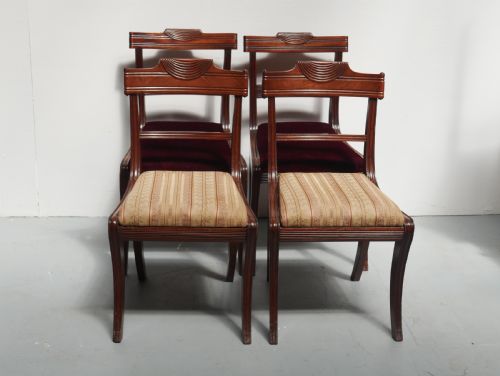
The most frequent examples on this page occur within Victorian walnut and mahogany dining chairs, alongside earlier oak backstools and Regency seating.
Buyers look for these specific top rails to evaluate the carving depth, timber figure, and stylistic coherence of antique chairs.
Materials and construction
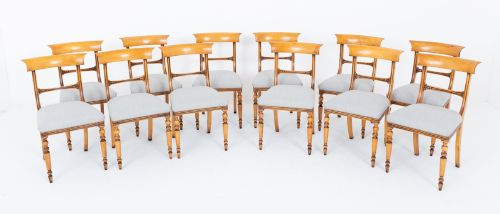
Cabinet makers constructed these elements from dense hardwoods including oak, mahogany, walnut, and satin birch, often shaping the timber with hand tools.
Carved details, piercing, and applied brass or bone button decorations appear frequently on the upper rails, paired with cane, leather, or fabric upholstery across the seat frames.
Turned oak elbow seats known as Turner's chairs offer sturdy seating for medieval enthusiasts.
Assessing quality
The standard of an antique cresting rail rests upon the crispness of the hand-carved foliage, scrolls, or architectural motifs rather than uniform machine replication.
Integrity of the timber joints where the rail meets the stiles dictates structural longevity, separating robust seating from weakened examples.
The Antique Cresting Rail Glossary
- Cresting rail
- The topmost horizontal member of a chair back, frequently decorated with carving, pierced work, or turned elements.
- Backstool
- An early form of seating without arms, constructed with a tall vertical back and a wooden or caned seat.
- Klismos chair
- An ancient Greek chair design featuring curved legs and a concave back rail that supports the sitter.
- Bergere
- An enclosed upholstered armchair with a wooden frame and exposed cane panels on the back and sides.
- Stile
- The upright vertical side post of a chair back into which the cresting rail is tenoned.
Antique Cresting Rail: Frequently Asked Questions
What is an antique cresting rail?
An antique cresting rail is the shaped, often carved horizontal wooden member running across the very top of a chair back.
These rails provide structural rigidity while serving as the primary decorative canvas for period cabinet makers.
How do I date a cresting rail?
Dating relies on identifying the underlying timber species, tool marks, and stylistic motifs such as Carolean scrolls or Regency reeding.
Comparing the joint construction and the patina of the wood against established period exemplars narrows the era of manufacture.
Which woods appear most often?
Oak predominates in seventeenth-century and revival pieces, while mahogany and walnut dominate eighteenth- and nineteenth-century formal seating.
Satin birch and exotic hardwoods also feature in specific Regency and Edwardian workshop productions.
How should I care for carved rails?
Maintenance involves applying appropriate microcrystalline wax to nourish the timber and dusting intricate carvings with a soft bristle brush.
Keeping wooden seating away from direct heat sources prevents the timber from splitting along the grain of the crest.