







Distressed Grey Cresting
Distressed grey cresting brings architectural weight and weathered painted surfaces to walls, combining antique French and English mirror and architectural frames.
Distressed Grey Cresting
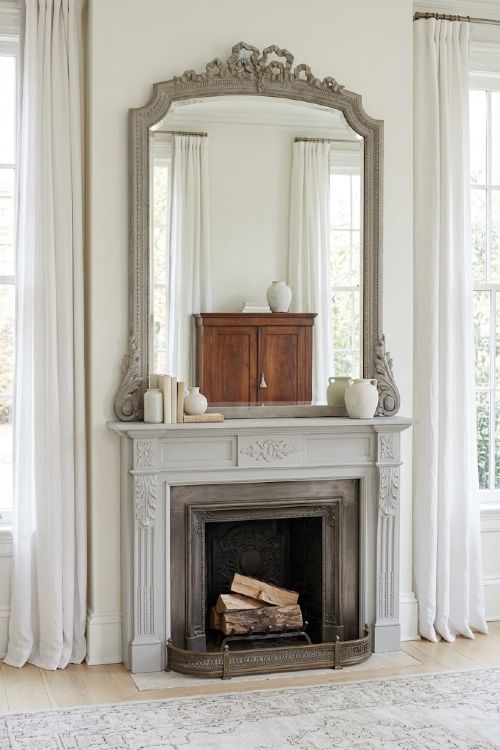
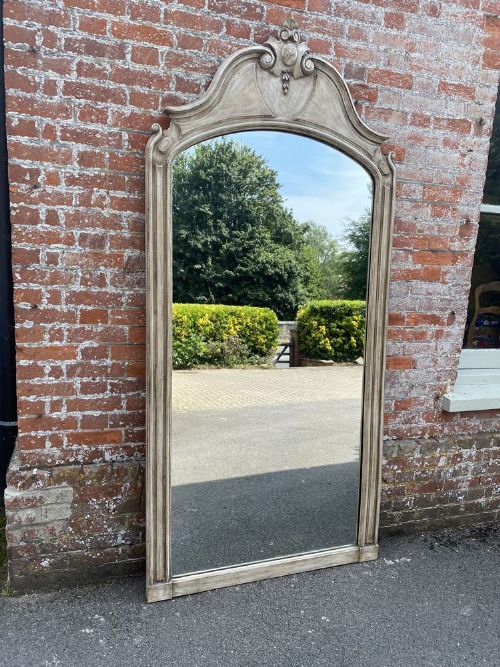
Distressed grey cresting encompasses large overmantel mirrors, wall mirrors, pelmets, and architectural reliefs dating from the nineteenth and early twentieth centuries. These pieces typically display painted or distressed painted finishes in light grey, often accompanied by carved wood and gesso structures.
The items span French and English origins, incorporating styles from Victorian and Rococo Revival to French Provincial and Louis XV. Buyers encounter arched tops, shaped frames, and cushion mirrors alongside architectural fragments like armorial panels and pelmets.
Most examples originate from the period between 1860 and 1910, reflecting the ornate decorative schemes of nineteenth-century interiors. These decorative elements serve to anchor formal rooms or provide focal points above mantelpieces.
What separates examples
The depth and execution of the carved wooden ornament determine the refinement of each piece, distinguishing hand-carved relief work from simpler mouldings. The integrity of the underlying gesso layer and the subtlety of the painted finish also influence the overall character.
Proportion and scale play significant roles in the presence of these objects, with larger overmantel frames and architectural panels demanding more complex structural joinery to support their weight.
Distressed Grey Cresting Retail Price Guide 2026
Typical asking prices for distressed grey cresting among the pieces listed under this phrase on Sellingantiques today, from the lower quarter to the upper quarter. They describe what is for sale here now, not the wider market.
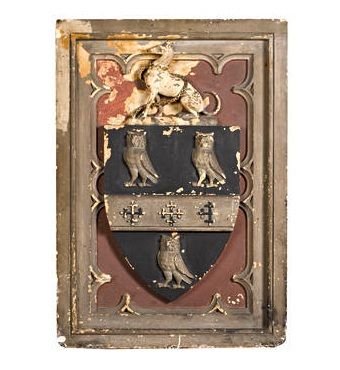
A plaster armorial panel sneaks into the collection, proving that not every piece of cresting spends its life looking into a mirror.
The Distressed Grey Cresting Glossary
- Cresting
- The decorative upper ornamentation of a mirror frame or architectural piece. It forms the prominent top section designed to draw the eye upwards.
- Gesso
- A plaster-like mixture applied to wood frames to create a smooth surface for carving or gilding. This material allows for crisp, detailed relief work.
- Overmantel mirror
- A large mirror designed specifically to hang above a fireplace mantel. These pieces often feature wide frames that dictate the scale of the chimney breast.
- Cushion mirror
- A frame profile where the outer moulding curves outward like a stuffed cushion. This style creates a pronounced three-dimensional effect on the wall.
- Pelmet
- A rigid frame placed above a window or doorway to conceal curtain fixtures. In these listings, they appear as painted wooden architectural elements.
Distressed Grey Cresting: Frequently Asked Questions
Where should I hang an overmantel mirror?
These large mirrors sit naturally above a fireplace mantel to reflect light and anchor the surrounding room. They also function effectively on principal walls in reception rooms where their scale establishes a focal point.
Ensure the wall construction and fixings can support the substantial weight of carved wood and glass assemblies before mounting.
How do I care for distressed painted finishes?
Dust the carved wood and gesso surfaces gently with a dry, soft brush to remove accumulated particles without disturbing the paint. Avoid liquid cleaners or chemical agents that might soften the historical surface.
Keep the pieces away from direct heat sources and excessive moisture to prevent the wood from moving and the gesso from cracking.
What distinguishes Louis XV style mirrors?
Louis XV style frames feature asymmetrical scrollwork, naturalistic floral motifs, and flowing, curved lines inspired by Rococo design. They tend to have organic shapes rather than strict geometric symmetry.
Craftsmen utilised carved wood and gesso to achieve these undulating contours and elaborate crestings.
Are these pieces French or English?
The listings include both French and English origins, particularly from the nineteenth century. French examples frequently showcase Rococo Revival and provincial styles, while English pieces often align with Victorian overmantel forms. Nomenclature and decorative motifs generally point to the specific regional workshop tradition.