







Antique Crest Urn
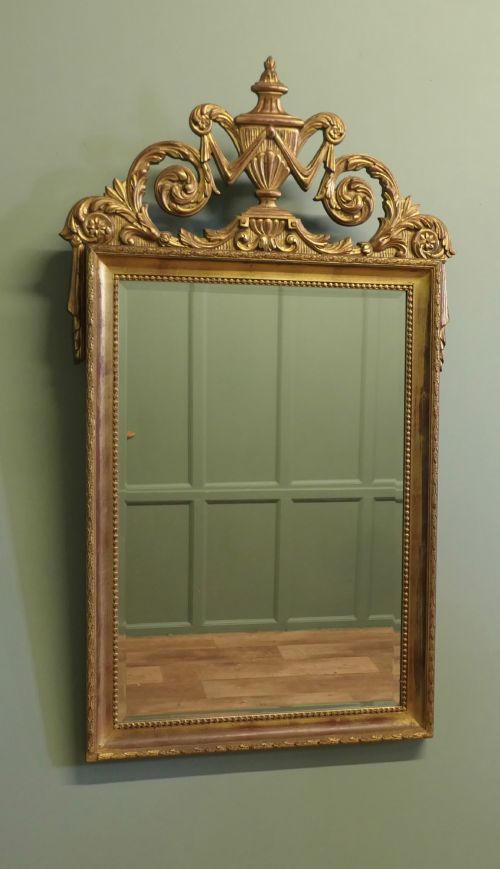
An antique crest urn brings neoclassical formality to a room, most often crowning the pediment of a giltwood wall mirror.
Antique Crest Urn
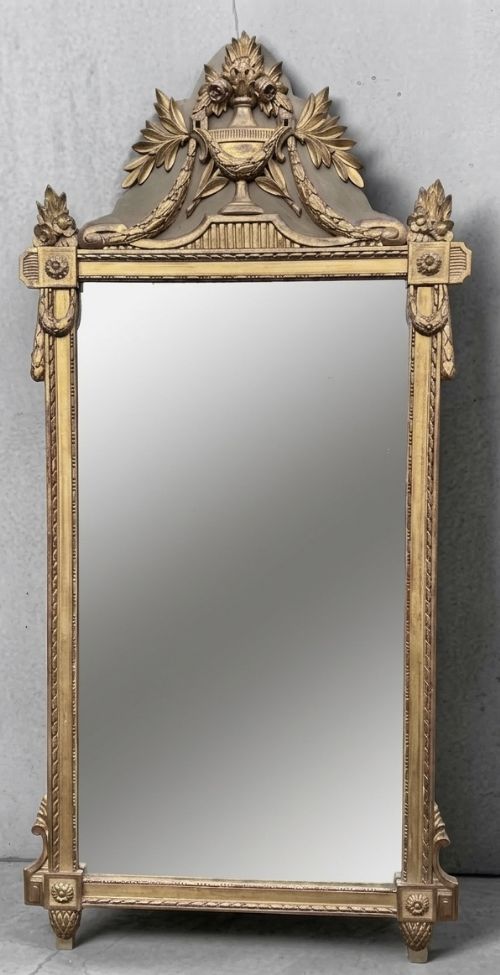
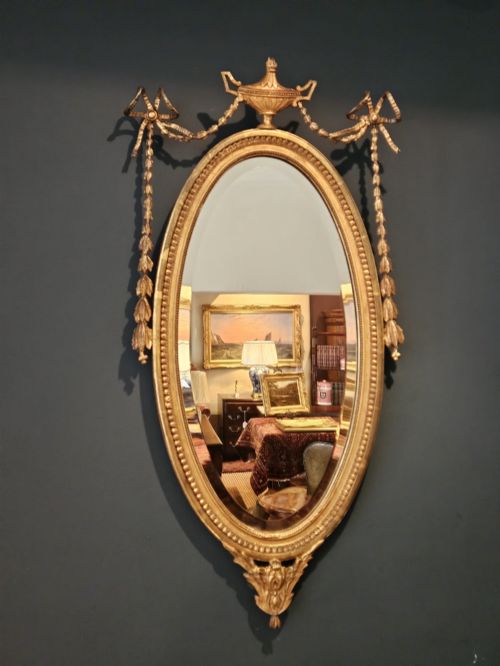
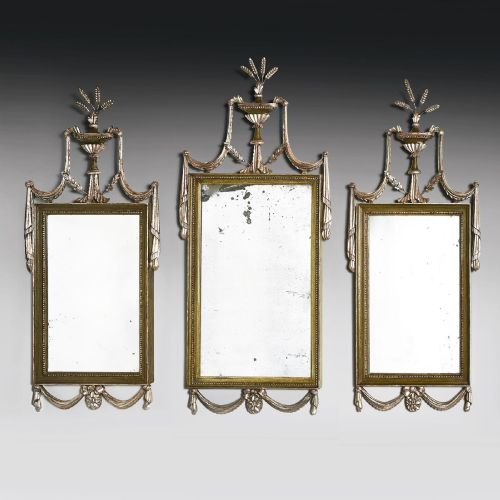
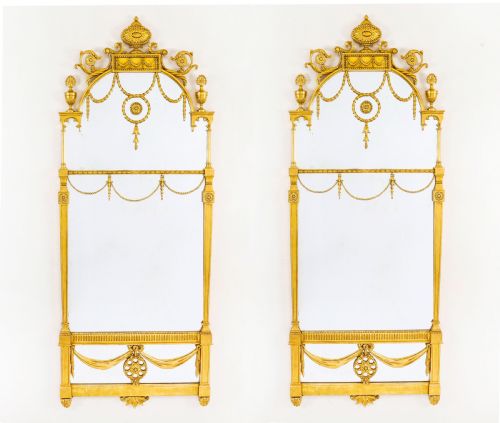
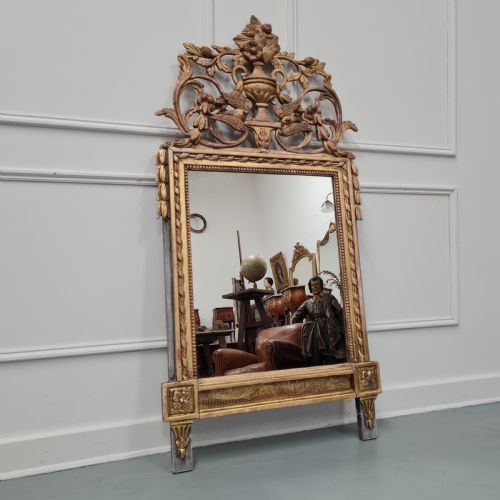
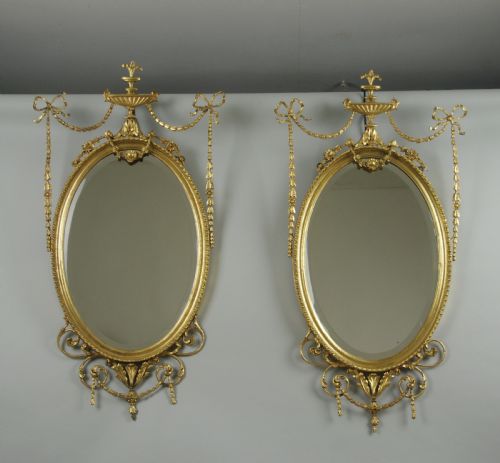
An antique crest urn most frequently appears as a decorative finial surmounting the frame of a wall mirror or overmantle mirror. These pieces span the Georgian, Victorian, and Edwardian periods, often channelling neoclassical or Adam revival tastes.
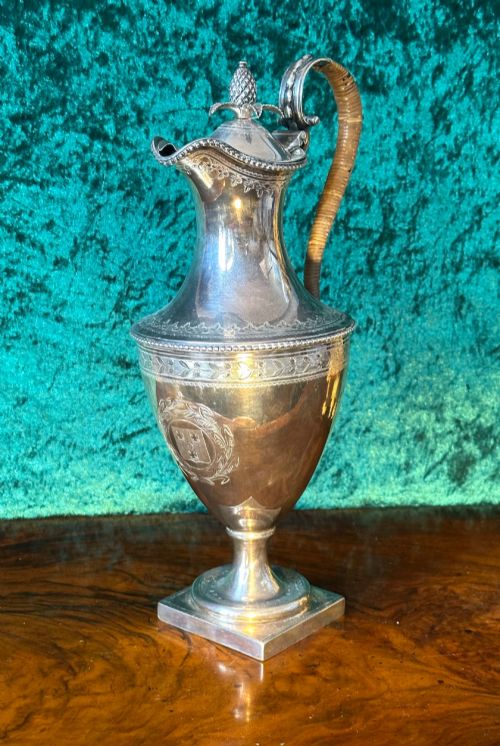
Beyond mirrors, the search encompasses items bearing heraldic crests or taking an urn form itself, including earthenware and ceramic vessels, coffee pots, wine coolers, and Japanese Satsuma vases.
The objects derive from English, French, and Japanese workshops, merging domestic furnishing with decorative arts through carved woodwork, gilt-gesso, and painted ceramics.
How they were made
Giltwood and gesso mirror frames rely on carved timber bases built up with plaster layers, smoothed, and coated with gold leaf or metallic paint. Urn pediments perched atop these frames are either carved from the same wood block or pinned securely into position.
Ceramic vessels and Satsuma vases utilise earthenware bodies finished with intricate hand-painted enamels, gilding, and applied handles often taking sculptural forms like elephants or dragons.
Metal items such as coffee pots and wine coolers employ silver plating or solid metals shaped into urn profiles, then engraved with family crests and armorial bearings.
Antique Crest Urn Retail Price Guide 2026
Typical asking prices for crest urn among the pieces listed under this phrase on Sellingantiques today, from the lower quarter to the upper quarter. They describe what is for sale here now, not the wider market.
Materials span silver-plated metal, glass, earthenware, and carved gesso across English and French decorative objects.
What varies in quality
The crispness of the carving on wooden urn finials and swags distinguishes finer pieces from softer, later castings or hurried workshop output. In mirrors, the depth of the gilding and the preservation of the original mirror glass set the standard.
For ceramics and metalware, the precision of the hand-painted enamel detail and the clarity of the engraved crest indicate the level of craftsmanship invested in the object.
Gillows Of Lancaster·Loetz Witwe·Matthew Boulton·Samson·Hotoda
The Antique Crest Urn Glossary
- Pediment
- The architectural crowning feature placed above a door, window, or mirror frame. In these listings, the pediment often takes the form of an urn with trailing swags.
- Gesso
- A plaster mixture applied to wood frames to create a smooth surface for gilding. It allows for sharp relief moulding in neoclassical designs.
- Giltwood
- Timber coated with gold leaf or paint to simulate solid gold. It defines the luminous frames typical of Adam revival pieces.
- Armorial
- Relating to heraldry and family crests. These symbols are hand-engraved on metalware or painted onto ceramics.
- Koro
- A Japanese incense burner resting on legs, often featuring lid handles and decorative crests as seen in Meiji period Satsuma wares.
Antique Crest Urn: Frequently Asked Questions
What is an urn pediment on a mirror?
An urn pediment is the decorative wooden or gesso crest mounted at the very top centre of a mirror frame. It draws the eye upward and completes the neoclassical composition.
These elements are frequently paired with floral swags and drapery carved in relief against the glass plate.
How do I date an Adam revival mirror?
Adam revival pieces generally date from the Victorian and Edwardian eras rather than the original eighteenth century. Look closely at the backboards, fixings, and the composition of the gesso to read the true age.
Revival pieces capture the light symmetry and urn motifs of Robert Adam while employing nineteenth-century construction methods.
Where were Satsuma vases made?
Satsuma wares originate from Japan, particularly during the Meiji period represented in these listings. They are characterised by cream-coloured earthenware with fine crackle glazes.
Master artists decorated these vessels with intricate enamels, thousand-figure scenes, and prominent family crests like the Shimazu mark.
How should I hang a heavy overmantle mirror?
Large overmantle mirrors require secure wall fixings anchored directly into masonry or heavy studwork to support the considerable weight of the timber, gesso, and glass.
Professional mirror installers use heavy-duty brackets beneath the frame alongside top security fixings to ensure the piece stays flush against the wall.