

Antique Creamware
These antique creamware pieces bring warm, pale tones and crisp moulded detail to a table, spanning jugs, plates, and baskets from the Georgian era onward.
Antique Creamware
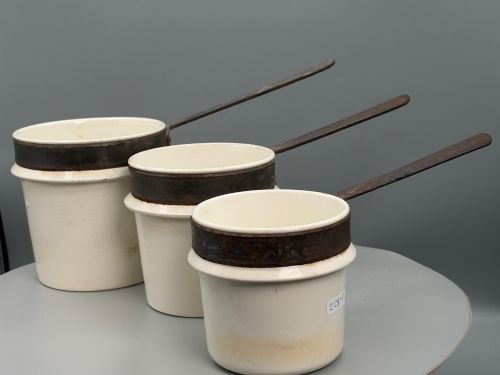
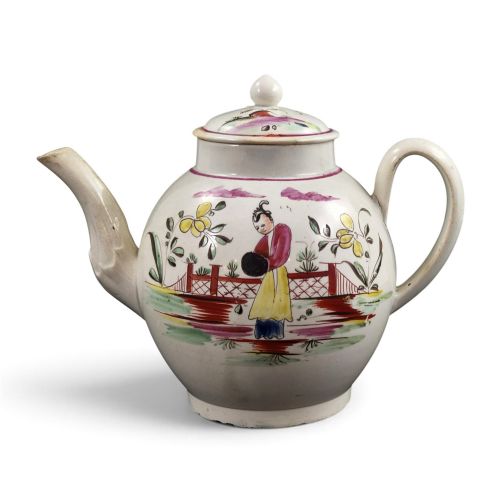
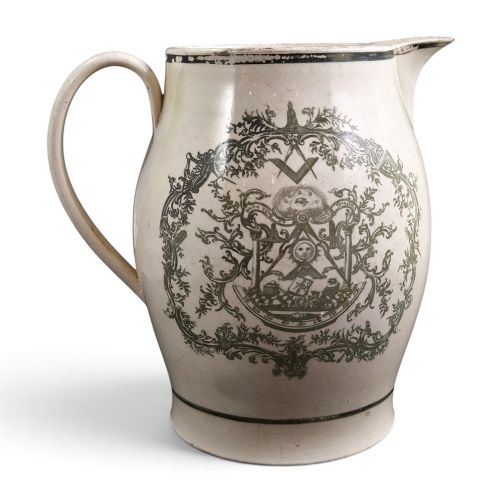
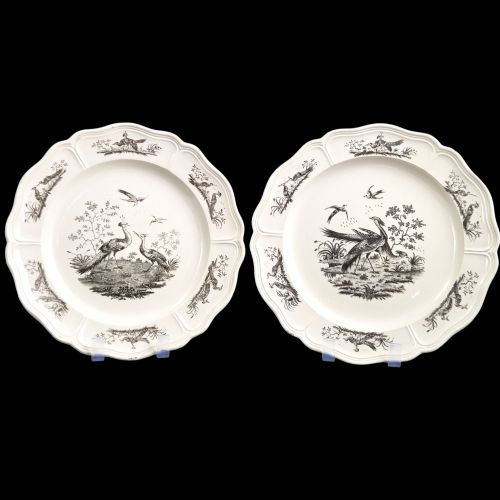
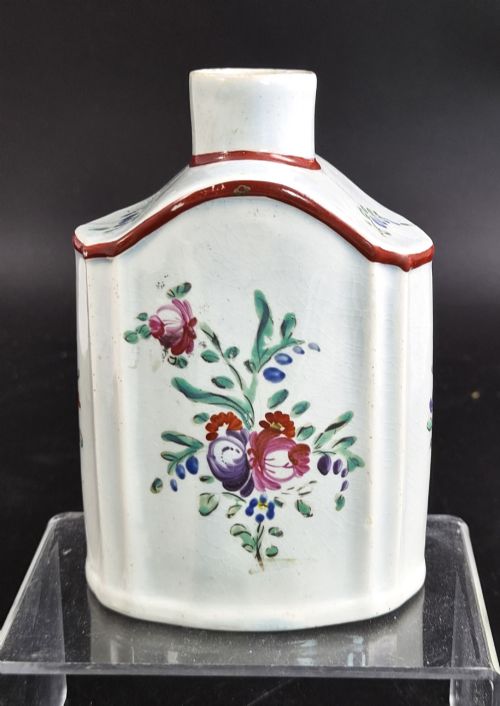
When you search for antique creamware, you encounter light earthenware bodies covered in translucent lead glaze that yields a soft, buttery tone. The selection here leans towards functional and decorative forms from the Georgian and Victorian periods, including plates, jugs, tea canisters, and jelly moulds.
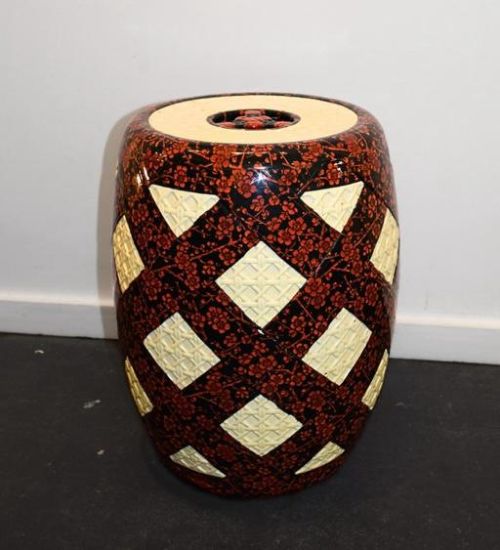
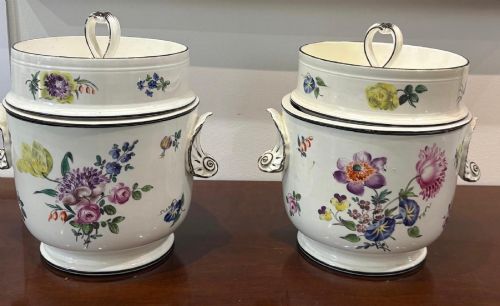
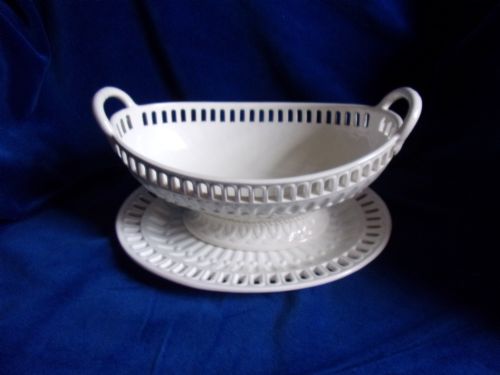
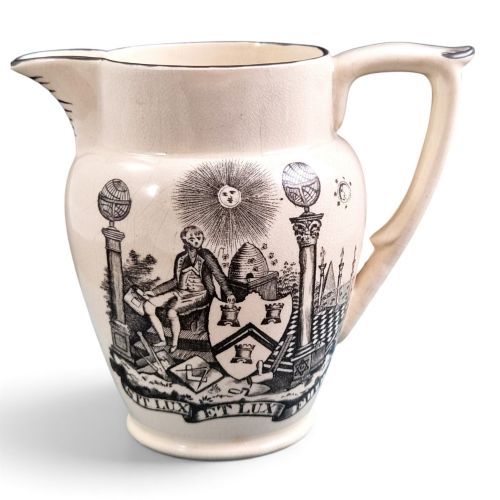
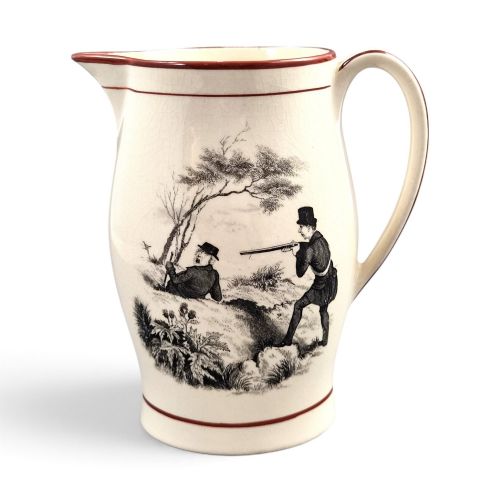
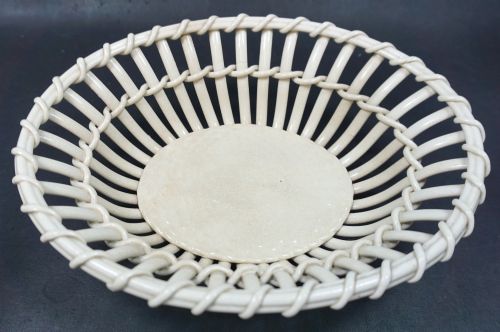
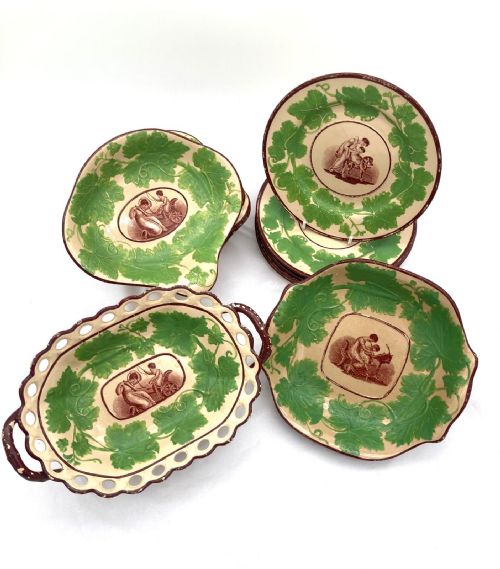
You will frequently meet table wares and serving pieces originating from Leeds Pottery, Staffordshire, and Wedgwood. These range from transfer-printed jugs and pierced baskets to robust garden seats and ice pails produced across the eighteenth and nineteenth centuries.
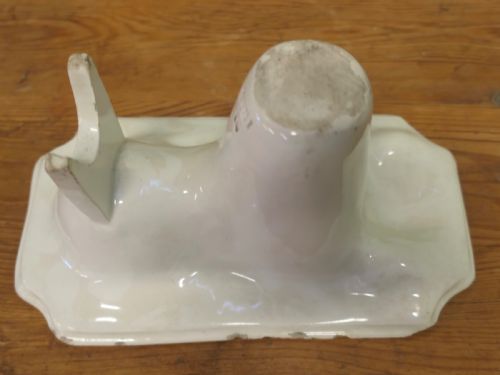
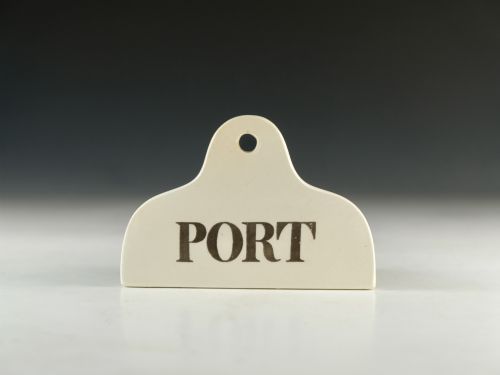
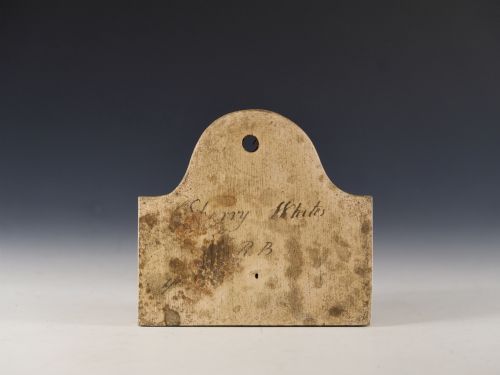
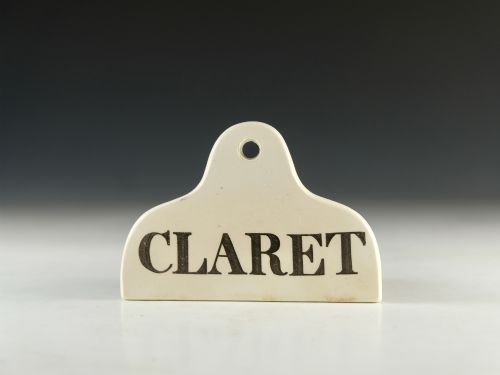
The category also encompasses specialised objects like bin labels, cheese domes, and nursery mugs that display the versatility of the material. Each piece reflects the shifting tastes of English potteries, moving from restrained neoclassical plates to heavy moulded jelly moulds.
Materials and production methods
Potters built these items using refined earthenware clay bodies that fired to a pale cream hue, providing a smooth canvas for subsequent decoration. Makers then applied a transparent lead glaze over the surface, which pooled gently in recesses to accentuate the underlying forms.
Decoration often involved hand-painted floral enamels, black or blue transfer printing, and occasional variegated lustre finishes. Pierced baskets and sculptural jelly moulds relied on intricate plaster or metal moulds to shape the wet clay before firing.
Antique Creamware Retail Price Guide 2026
Typical asking prices for creamware among the pieces listed under this phrase on Sellingantiques today, from the lower quarter to the upper quarter. They describe what is for sale here now, not the wider market.
The selection includes utilitarian wine cellar accessories alongside decorative plates, tea caddies, and jelly moulds.
Distinctions in quality
Quality rests upon the crispness of the moulding and the evenness of the pale glaze across complex forms like baskets and animal jelly moulds. Finer examples show sharp relief work and precise transfer printing without blurring or pooling.
The reputation of the pottery also shapes distinction, with documented pieces from makers like Leeds or Wedgwood holding greater clarity in their potting. Earlier eighteenth-century items often demonstrate finer wall thickness and more deliberate hand-finishing than later nineteenth-century utility wares.
Leeds Pottery·Wedgwood·Minton·Ralph Wood·Enoch Wood And Sons
The Antique Creamware Glossary
- Creamware
- A refined earthenware body developed in 18th-century England, noted for its pale yellowish glaze. It superseded heavier salt-glazed stonewares for table service.
- Pearlware
- An earthenware developed by Josiah Wedgwood featuring a bluish-tinted lead glaze that made the underlying body appear whiter. It frequently served as a base for blue and white transfer printing.
- Transfer printing
- A technique where a design is engraved on a copper plate, inked, and transferred to paper before being applied to the ceramic surface. This allowed for detailed pictorial scenes on jugs and plates.
- Lead glaze
- A vitreous coating containing lead oxide applied to earthenware to render it waterproof and glossy. It created the warm, characteristic sheen found on Georgian creamware.
Antique Creamware: Frequently Asked Questions
What is antique creamware?
Antique creamware is a light-coloured refined earthenware covered in a transparent lead glaze, produced primarily in England during the eighteenth and nineteenth centuries.
Potters used it for a vast array of domestic objects, ranging from everyday plates and jugs to elaborate dessert services and jelly moulds.
How do I date creamware?
Dating relies on stylistic clues such as neoclassical motifs, transfer-printing techniques, and specific pottery marks stamped into the base. Earlier pieces from the eighteenth century tend to have lighter walls and delicate pierced work.
By contrast, Victorian examples often include heavier moulded items like garden seats, cheese domes, and animal jelly moulds with thicker earthenware bodies.
Was creamware used daily?
Creamware was primarily designed for dining, tea service, and food preparation in middle and upper-class households. Table wares, tea canisters, and dessert services saw regular use in the dining room.
Specialised items like bin labels and ice pails also served specific utilitarian roles in the country house pantry and cellar.
How do I care for creamware?
These ceramic pieces require gentle hand washing in warm water with mild soap to protect the historic glaze and any enamel decoration. Avoid harsh scrubbing or dishwashers, which can damage the old earthenware body.
Display them away from direct heat sources and sudden temperature changes to prevent stress on the glaze.