



Antique Cream Sideboard Base
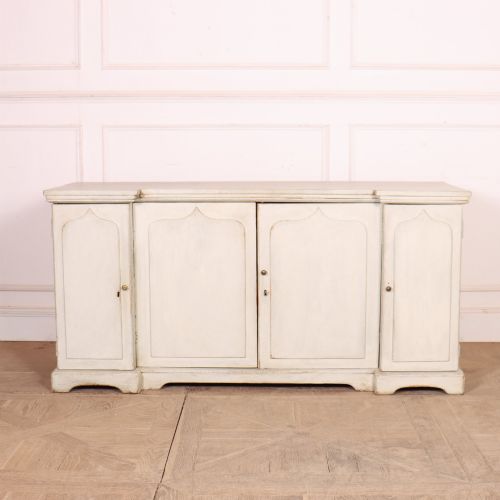
An antique cream sideboard base brings rustic character to a room, offering sturdy storage with a softly weathered painted finish.
Antique Cream Sideboard Base
When you search for an antique cream sideboard base, you are looking at substantial timber storage furniture that has received a painted finish over the centuries. These pieces function as low storage units or serving tables, often originating from English country houses or provincial workshops.
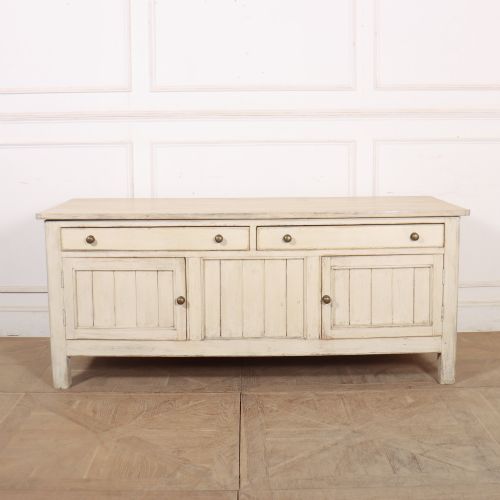
The versions you are most likely to meet on this page date from the eighteenth and nineteenth centuries, with occasional examples reaching back to the seventeenth century. They take forms such as dresser bases, potboard bases, and buffets, constructed primarily in oak, pine, or other painted woods.
Makers shaped these utilitarian items for rural kitchens and dining rooms to hold crockery and foodstuffs. Their enduring appeal lies in the combination of utilitarian proportion and the tactile charm of aged paint layers.
How they were made
Joiners and carpenters built these bases using solid timber construction techniques typical of regional furniture workshops. Oak and pine provided the structural carcass, whilst traditional methods such as pegged joints ensured long-term stability.
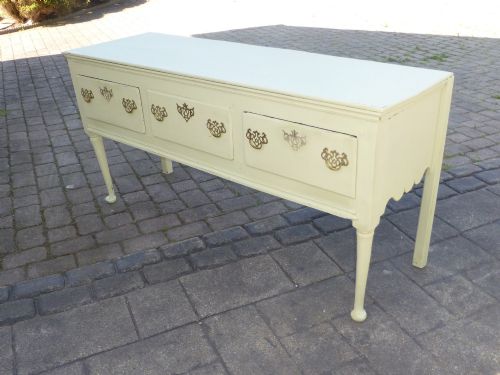
The distinctive painted finish found on these pieces developed through historical applications of decorative paint over wood. Brass hardware such as handles and escutcheons were frequently added to drawers and doors to complete the utilitarian design.
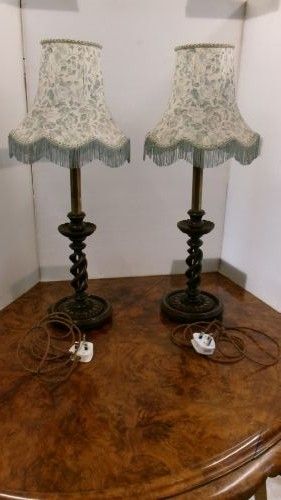
A solitary pair of table lamps with fabric shades joins the heavy oak and pine furniture on this page.
What varies in quality
The integrity of the timber framework and the authenticity of the surface finish dictate the standing of a piece within its period. Earlier seventeenth and eighteenth-century examples display robust joinery and proportions that reflect regional vernacular traditions.
Subtleties in the handling of the painted surface and the retention of original brass fittings distinguish superior examples from heavily altered items. The balance between structural wear from daily use and the survival of original form determines the character of each surviving base.
The Antique Cream Sideboard Base Glossary
- Dresser base
- A low wooden storage unit featuring drawers or cupboards, originally designed for domestic food preparation and serving. These pieces form the lower section of traditional kitchen furniture.
- Potboard
- An open slatted lower shelf incorporated into the base of a dresser for storing heavy earthenware pots and pans. This practical feature lifts storage off damp kitchen floors.
- Breakfront
- A cabinet or sideboard facade where the central section projects forward from the flanking wings. This architectural arrangement creates depth and visual interest.
- Vernacular furniture
- Domestic pieces built by regional tradesmen using local timber traditions rather than following metropolitan fashion. These items prioritise sturdy utility over academic ornament.
Antique Cream Sideboard Base: Frequently Asked Questions
What is a dresser base?
A dresser base is a heavy low furniture piece designed with drawers and cupboards for storing kitchen equipment and dining provisions. It served as a primary work surface in traditional domestic spaces.
Over time, these versatile units moved from working kitchens into dining rooms and living areas as decorative storage furniture.
How do I date an old sideboard?
Dating relies on examining the timber species, construction methods, and tool marks left by the maker during assembly. Pegged joints and hand-cut elements point towards earlier craftsmanship.
Stylistic cues such as proportions, mouldings, and the nature of the painted finish also help place a piece within its historical period.
Where were these pieces used?
These functional items originated in country houses, farmhouses, and provincial dwellings where durable storage was an absolute necessity. They stood in kitchens or dining parlours for daily domestic tasks.
Today, buyers place them in modern kitchens, hallways, and living rooms to anchor a room with historic texture.