


Antique Countryside Watercolour
When you examine an antique countryside watercolour, you hold a pastoral scene captured by hand across the nineteenth and early twentieth centuries.
Antique Countryside Watercolour
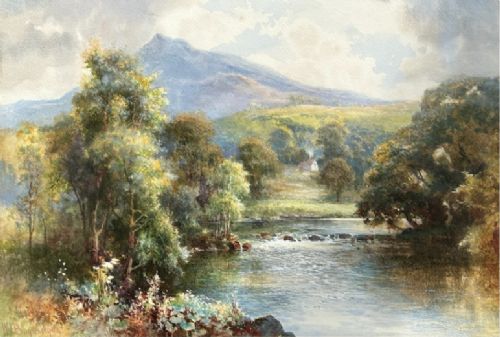
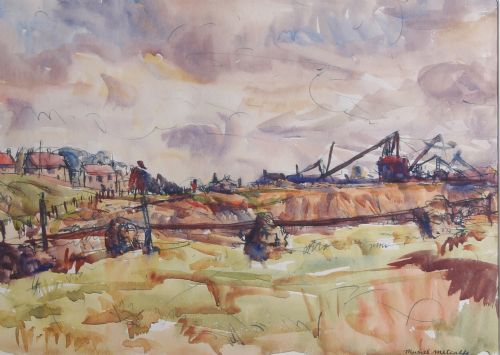
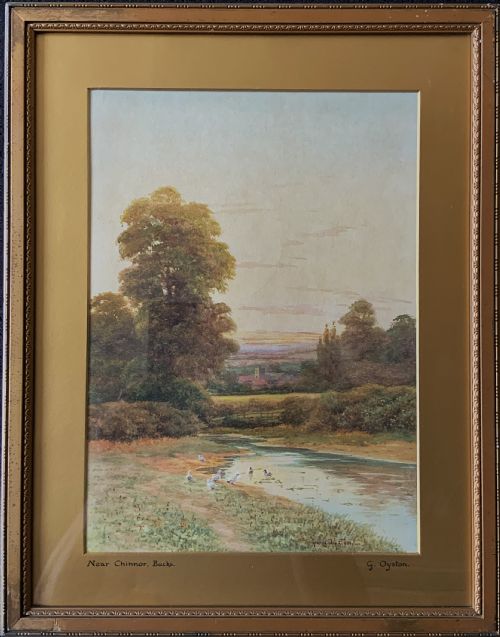
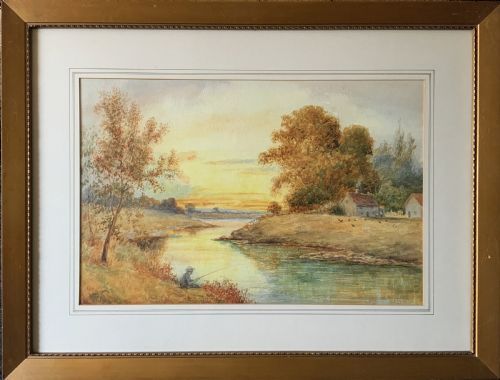
An antique countryside watercolour depicts rural scenes, rivers, farmsteads, and pastoral landscapes across Britain and beyond. The selection on this page draws heavily from Victorian and Edwardian periods, stretching into early twentieth-century British impressionism.
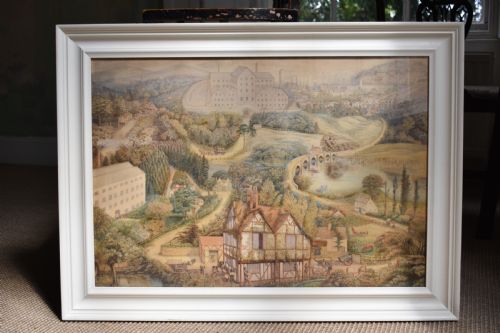
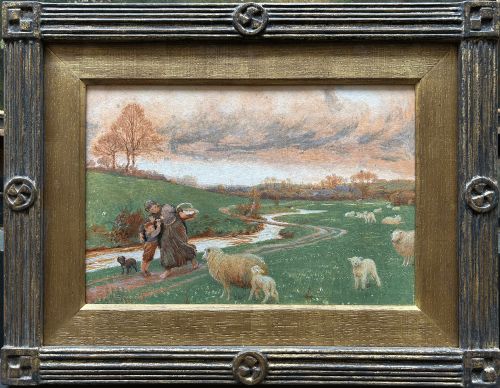
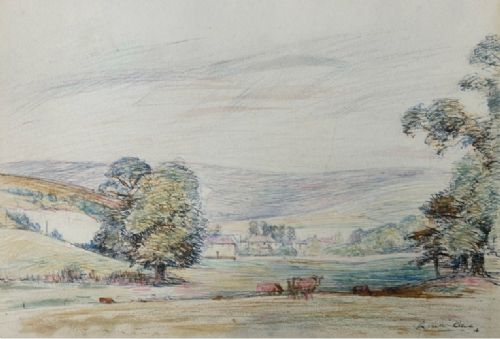
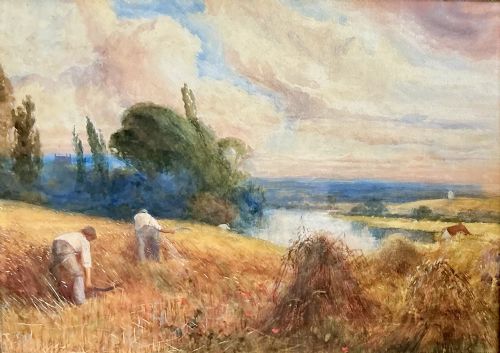
Most pieces present framed works on paper capturing specific regional views, from Yorkshire dales and Welsh rivers to Sussex downs. Common motifs include livestock, harvest scenes, cottages, and figures walking rural tracks.
These original paintings range from modest topographical studies to signed compositions by established regional artists. They offer a direct window into historical rural life and changing rural topography.
Materials and Technique
Painters applied watercolour pigment and bodycolour onto heavy paper stock, frequently supported by graphite underdrawing to map out the composition. Watercolour paint relies on water-soluble binders, allowing artists to layer translucent washes for atmospheric skies and water effects.
Many surviving examples incorporate gold leaf accents within original wooden frames protected by glass. The combination of paper support, organic pigments, and period framing defines the physical construction of these works.
Listings span the Victorian and Edwardian eras into the early twentieth century, utilising paper, watercolour pigment, and wood.
Distinctions in Quality
Quality rests upon the artist's command of light, atmosphere, and spatial depth within the landscape. Stronger examples display confident brushwork and nuanced colour blending rather than stiff, formulaic rendering of foliage and skies.
The survival of original frames, clear signatures, and well-documented provenance elevate specific works. Condition of the paper support, including minimal fading from sunlight and absence of heavy foxing, also shapes the standing of each piece.
William Joseph Boyes·Muriel Metcalfe·Frederick Walker·George Oyston·Russell Sidney Reeves·Frederick Hines·Alfred George Morgan·Edgar Woollatt·Charles Gregory·Samuel Timmins·Henry Charles Fox·Fred Lawson·Cuthbert Crossley·George Graham·Arthur Tucker·James William Booth·Frederick Septimus Lewis·William Hoggatt·Thomas Hunn·James Orrock·Robert Thorne Waite·Henry Bailey·Robert Winchester Fraser·George Arthur Fripp·Harold Lawes
The Antique Countryside Watercolour Glossary
- Watercolour pigment
- Finely ground colour particles mixed with a water-soluble binder, used to create translucent washes on paper.
- Bodycolour
- Watercolour paint mixed with a white pigment to make it opaque, adding highlights to water and clouds.
- Foxing
- Brown spots caused by chemical reactions in ageing paper, frequently found in older works.
- Provenance
- The documented history of ownership attached to an artwork, helping verify its origin and attribution.
Antique Countryside Watercolour: Frequently Asked Questions
How should I hang a watercolour?
Watercolours require careful placement away from direct sunlight to prevent the pigments from fading over time. Keep them on interior walls where temperature and humidity remain relatively stable.
Ensure the frame uses conservation-grade backing and glass to protect the paper from moisture and atmospheric pollutants.
What subjects appear most often?
Rural rivers, farming activities like haymaking, and grazing livestock dominate these historical compositions. Artists frequently recorded specific countryside views featuring cottages, country lanes, and regional landmarks.
Many works reflect a strong interest in pastoral life and the changing seasons across British counties.
How can I date a piece?
Signatures, artist biographical dates, and framing styles provide the clearest indicators of age. Victorian works often carry heavier gilt frames and distinct period handwriting on the reverse or mount.
Subject matter and clothing styles of any figures depicted also help narrow down the decade of creation.
Are these works always signed?
Many surviving examples bear the artist's signature or monogram, sometimes accompanied by a dated title on the mount or frame. Unsigned pieces still appear frequently, attributed through style, technique, or archival records.
Attributions for unsigned works rely on comparison with documented paintings from the same period.