

Antique Countryside Art
Antique countryside art brings nineteenth and early twentieth century rural life into your home through framed oil paintings and watercolours.
Antique Countryside Art
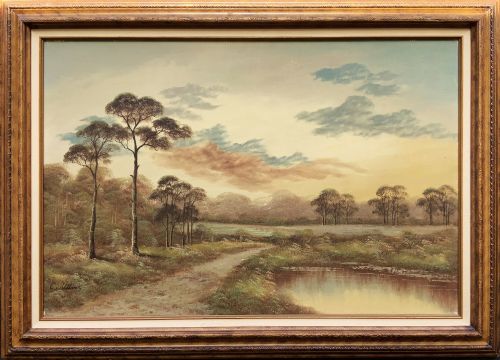
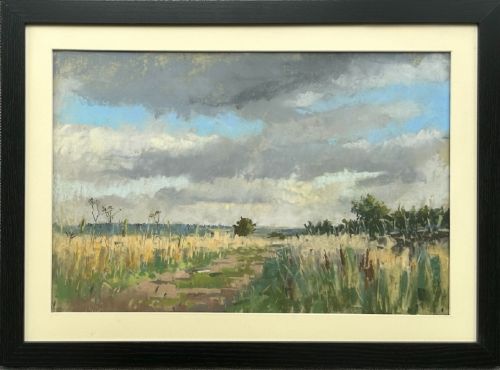
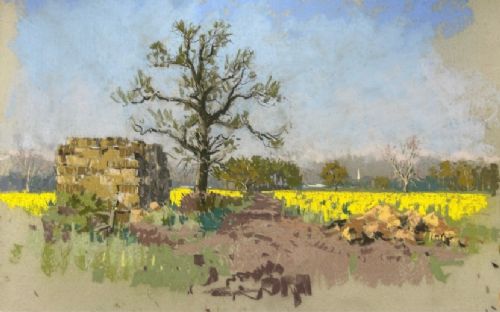
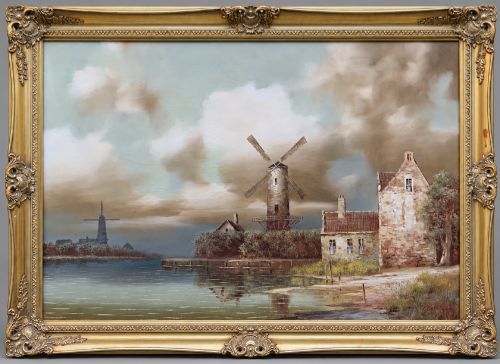
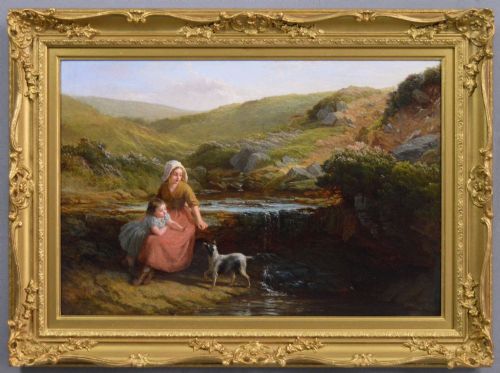
Antique countryside art encompasses framed oil paintings, watercolours and wall art depicting pastoral scenes, river landscapes and rural farmyards. When you search for antique countryside art, you encounter works spanning the nineteenth century through to the early twentieth century, including Victorian naturalism and British realism.
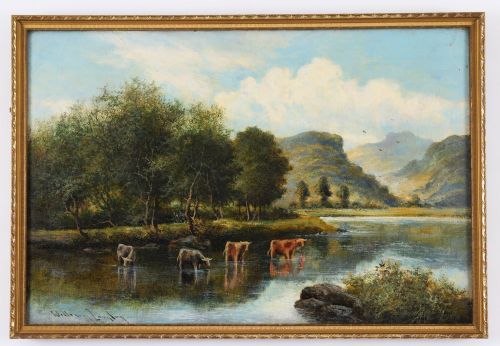
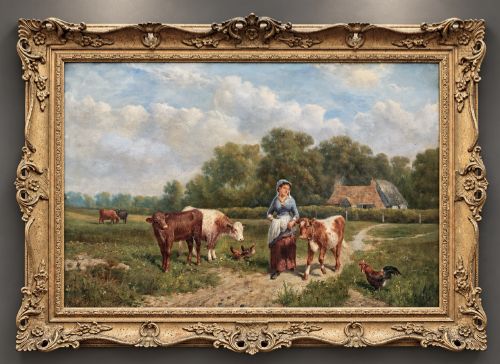
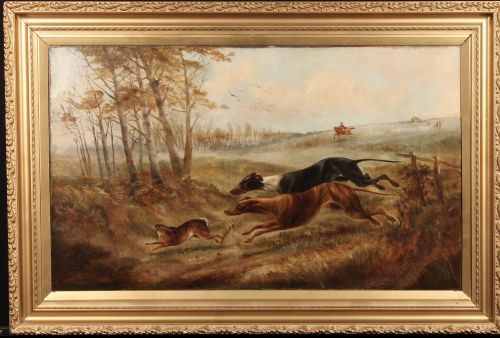
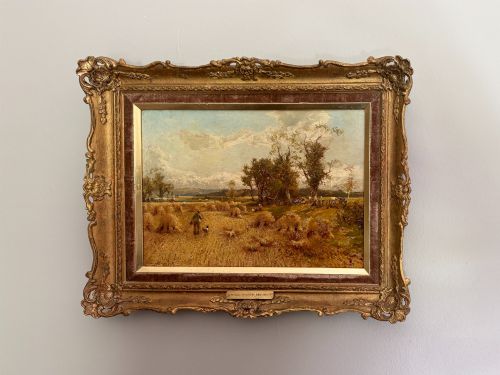
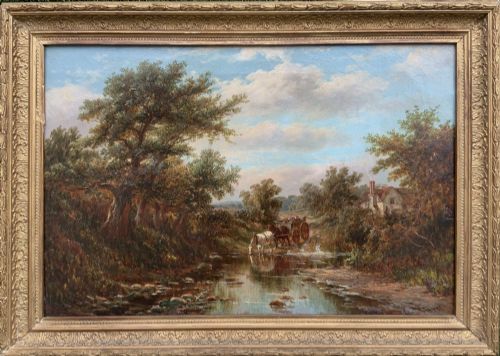
The version you are most likely to meet on this page is a nineteenth century oil painting on canvas or wood panel, often featuring cattle, rivers or figures in a rural British or European setting. These pieces capture quiet moments of agrarian life, harvest times and riverbanks painted by named artists and regional schools.
The selection extends from 1890s pastoral watercolours to large Victorian landscapes framed in gilt and gesso. Each piece records a vanished rural topography through the lens of academic observation and plein air tradition.
Materials and Technique
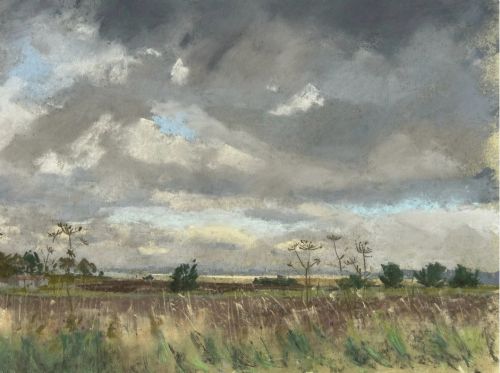
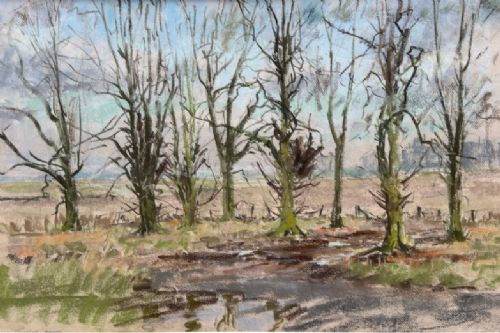
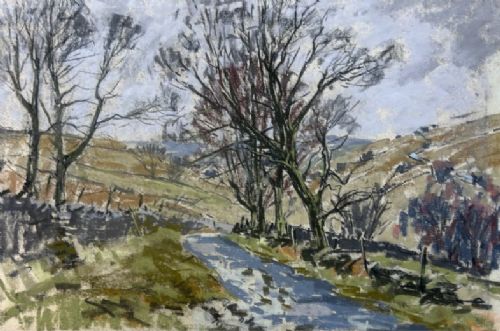
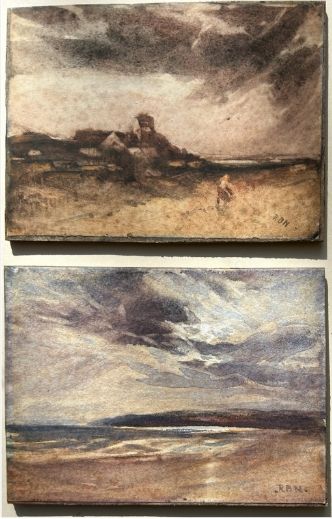
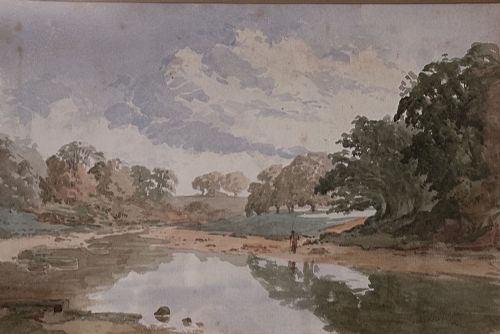
Artists painted primarily with oil paint on stretched canvas or wooden board, utilising heavy pigments to build texture in fields, trees and skies. Watercolours on paper provide a lighter alternative, capturing translucent washes of light across river valleys and hills.
Frames frequently combine wood cores with moulded gesso finished in gilt, adding structural depth and period context to the paintings. The handling of the brush ranges from tight academic realism to the looser, expressive strokes characteristic of British impressionism.
Antique Countryside Art Retail Price Guide 2026
Typical asking prices for countryside art among the pieces listed under this phrase on Sellingantiques today, from the lower quarter to the upper quarter. They describe what is for sale here now, not the wider market.
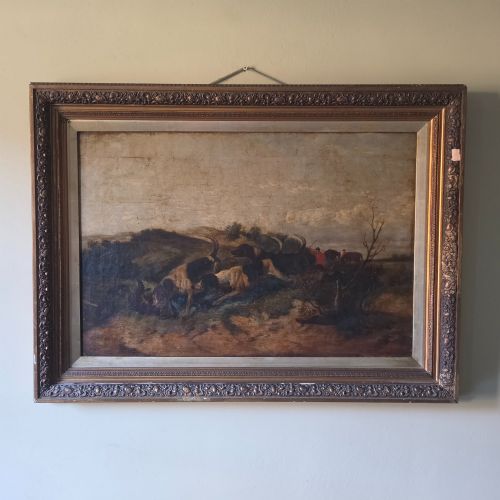
Several cows and a stray dog make regular appearances in these fields.
Distinctions in Quality
Quality rests in the artist's handling of light, atmosphere and anatomical precision in animals and figures. A superior canvas exhibits confident brushwork and balanced composition, whereas weaker works rely on formulaic repetition of foliage and dull colour palettes.
The preservation of the original paint surface and the integrity of the canvas or paper support dictate the standing of a piece. Original gilt and gesso frames that match the period of the painting elevate the overall cohesion of the work.
Robert Buchan Nisbet·James Elliot·William Langley·Samuel Joseph Clark·Edward Holmes·William Manners·E Steele·F Staple·Thomas Thomas·Edward Williams·George Armfield·William H Myers·George Graham·Frederick Marriott·Arthur Wardle·William Joseph Shayer Senior·Hendrik Willem Schweickhardt·Herbert Royle·Thomas Barker of Bath·Gabriel Mathieu·David Bates·Muriel Metcalfe·Harald Foss·Frederick Walker·Eric Brown
The Antique Countryside Art Glossary
- Gesso
- A plaster mixture applied to wooden frames as a base for moulding and gilding. It provides the decorative relief found on period frames.
- Gilt
- A thin layer of gold leaf applied to the surface of a frame or artwork. It creates a reflective border that catches natural light.
- Pastoral
- A genre of art depicting rural life, shepherds, farms and peaceful countryside scenes. It idealises the simplicity of agricultural existence.
- Watercolour
- A painting method where paint is made of pigments suspended in a water-based solution. It is typically executed on heavy paper to achieve translucent washes.
- Genre painting
- The pictorial representation of scenes from everyday life. These works depict ordinary people engaged in common activities.
Antique Countryside Art: Frequently Asked Questions
What subjects appear in these paintings?
The canvases typically display river landscapes, cattle grazing in pastures, farmyard scenes and figures walking along country paths. Artists recorded the changing seasons, from spring blossoms to winter feeding.
Many works focus on specific British topography, including the Thames Valley, the Lake District and rural Scottish landscapes.
How do I care for an oil painting?
Keep the artwork away from direct sunlight and fluctuating humidity to protect the canvas and oil pigments. Dust the surface gently with a soft, dry brush without applying pressure.
Avoid using water or chemical cleaners on the paint or the gilt frame.
Are watercolours framed differently than oils?
Watercolour paintings require glass protection and acid-free mounts to prevent the paper from yellowing or absorbing moisture. Oil paintings on canvas are left open to the air, protected only by varnish.
Both mediums rely on period wooden frames, though watercolours generally feature simpler mouldings.
How can I identify the age of a piece?
Dating relies on stylistic clues, artist signatures, framing materials and the preparation of the canvas or board. Nineteenth-century works often use coarse canvas weaves and hand-carved gesso frames.
Examine the stretcher bars and backing boards for handwritten labels, dealer stamps or exhibition tags.