


Antique Country Scene
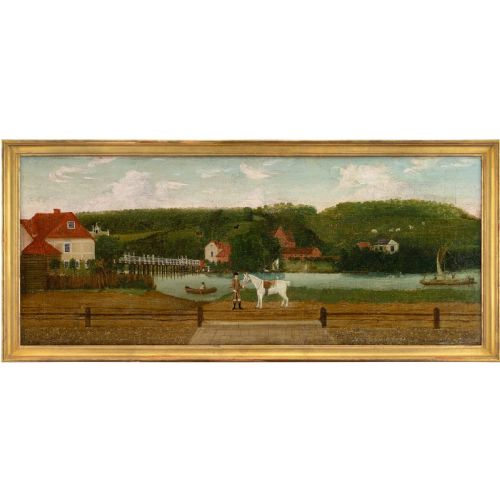
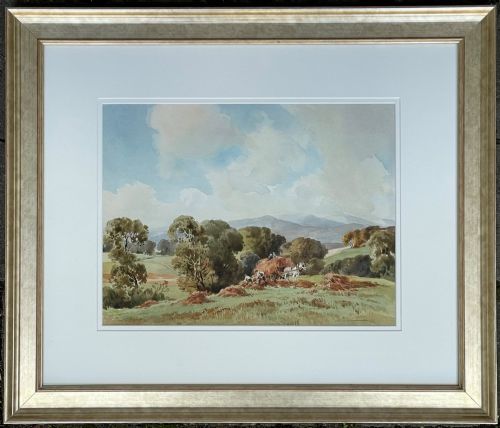
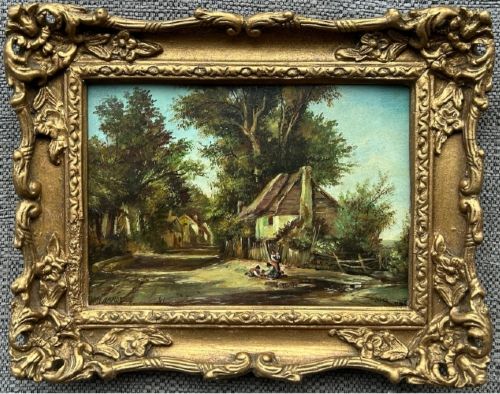
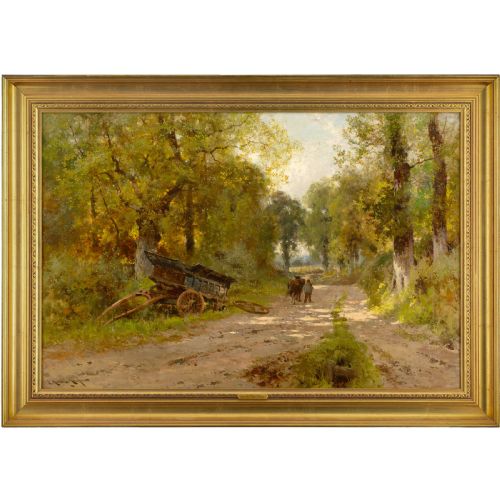
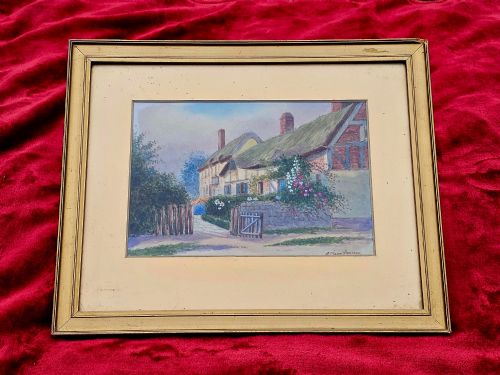
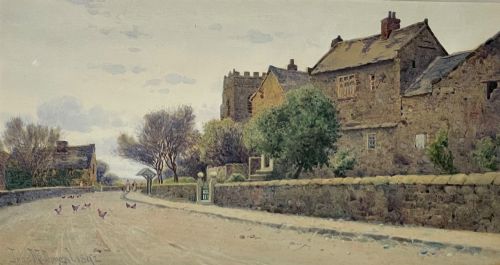
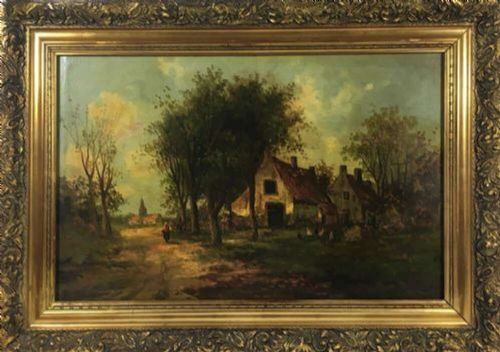
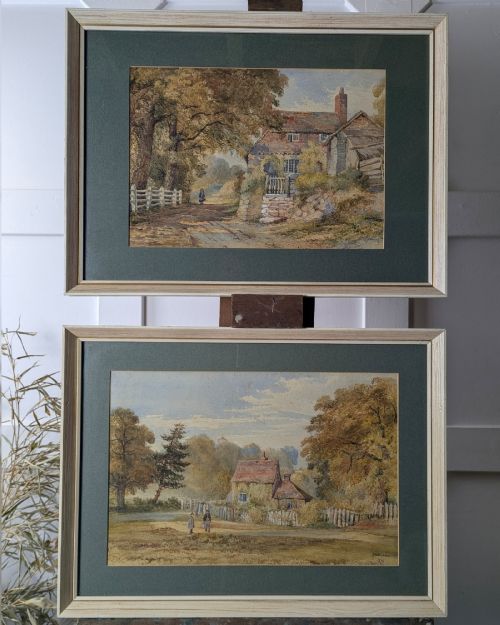
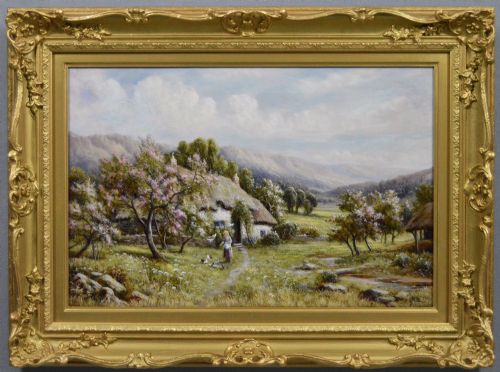
When you search for an antique country scene, you enter a world of rural cottages, farmyards, and pastoral landscapes preserved in oil and watercolour.
Antique Country Scene
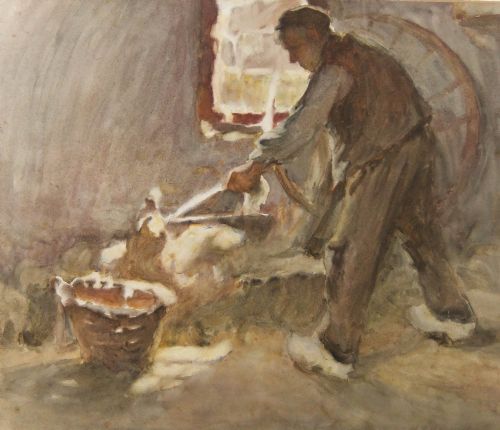
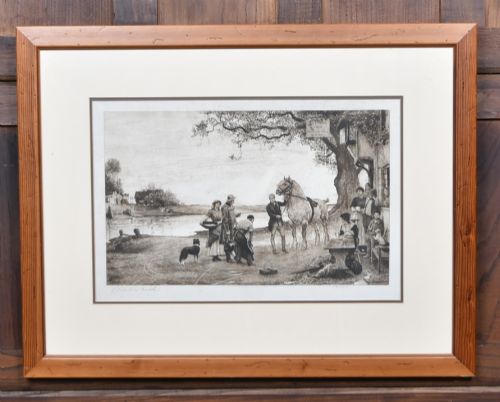
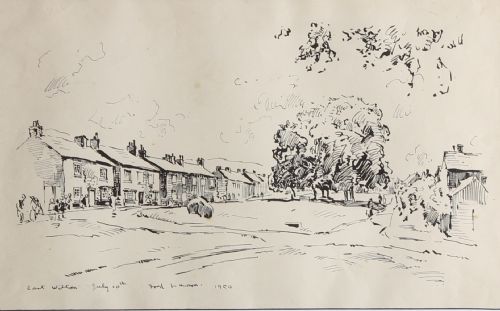
An antique country scene captures rural life, agricultural work, and pastoral landscapes through nineteenth and early twentieth-century paintings and works on paper.
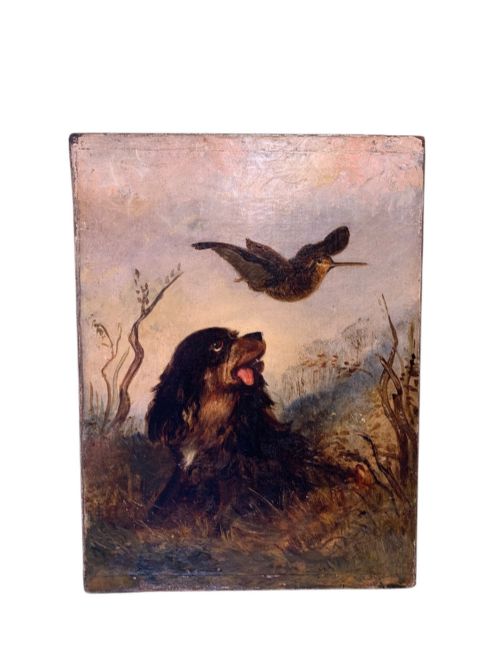
The most common examples on this page are oil paintings on canvas, panel, or board, alongside watercolours depicting English and European villages, cottages, and agricultural settings.
These works range from provincial naive folk art and detailed Victorian realism to works associated with the Barbizon School and British Impressionism.
Materials and methods
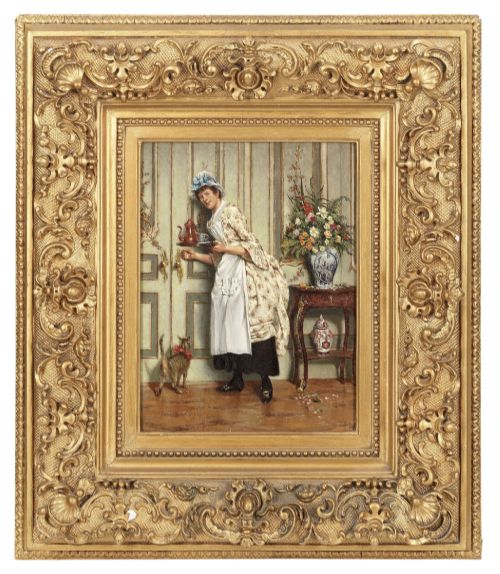
Artists painted using oil paint and watercolour on grounds of canvas, wood panel, card, or paper, often framing the finished works in period giltwood.
Support materials shifted across the decades, with wooden boards and heavy canvas yielding to lighter card and paper for watercolours by the Edwardian period.
Listings feature works on paper, card, and canvas spanning from the early eighteenth century through the Edwardian period.
What separates the tiers
Quality rests in the handling of light and atmosphere, where skilled brushwork distinguishes a lively observation of rural life from a formulaic cottage study.
The precision of detail in figures, farm animals, and architecture separates accomplished academic and realist paintings from simpler provincial or naive works.
Percy Lancaster·William Howard Hardy·John Horace Hooper·A. Marie Parsons·John McDougal·Stephen Samuel Lewin·Robert A. Nottingham·Henry Silkstone Hopwood·Robert John Hammond·Robert W. Macbeth·Howard Helmick·George Augustus Holmes·Thomas Sidney Cooper·Joseph H Barnes·Frederick Walker·Frederick James Kerr·Edgar Hunt·Herbert Royle·Johann Friedrich Voltz·T C Hofland·Henry H Parker·Thomas Walker Bretland·Miles Birkett Foster·Henry Schouten·Amy Antill
The Antique Country Scene Glossary
- Oil on Canvas
- Pigment bound in a drying oil applied to a stretched woven fabric support. This method allows for rich texture and deep colour layering.
- Watercolour
- A medium consisting of water-soluble pigments applied to paper. It produces transparent washes of colour that rely on the white of the paper for luminosity.
- Giltwood
- Wood carved and coated with a thin layer of gold leaf or metallic powder. It provides a reflective decorative border for traditional picture frames.
- Barbizon School
- A mid-nineteenth-century French movement focused on direct observation of nature and rural landscapes. Artists painted outdoors to capture realistic pastoral light.
- Impressionism
- A style emphasising loose brushwork and the depiction of light in its changing qualities. Works in this manner record fleeting visual impressions rather than minute details.
Antique Country Scene: Frequently Asked Questions
What subjects appear in these works?
These works depict rural life, including thatched cottages, farmyards with livestock, blacksmith shops, and figures working the land.
Scenes range from quiet river landscapes and woodland paths to bustling village markets and agricultural labour.
How do I date an oil painting?
Dating relies on stylistic evidence, costume details of figures, and framing materials recorded across the Victorian and Edwardian eras.
Support materials such as canvas weaves and panel types also offer clues to the period of creation.
Where were these paintings produced?
The majority originate from British and Irish schools, reflecting local country life and rural traditions.
Continental European works, particularly from French and Belgian artists, also appear through movements like the Barbizon School.
How should I frame and display them?
Many retain period giltwood frames that complement the tones of nineteenth-century oil paintings and watercolours.
Display them away from direct sunlight to protect watercolours on paper and oil pigments from fading over time.