

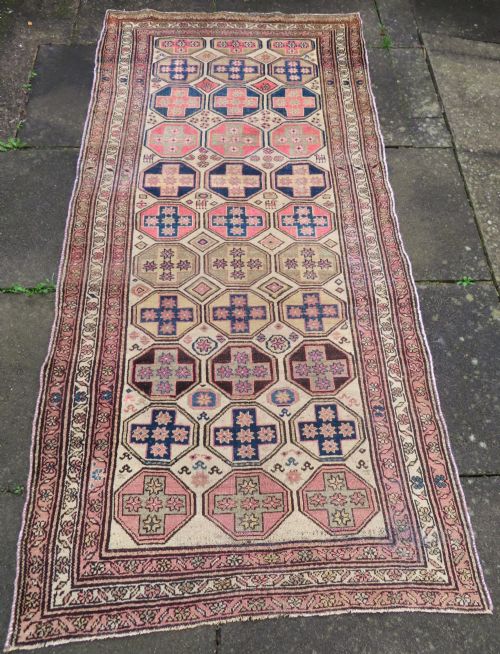
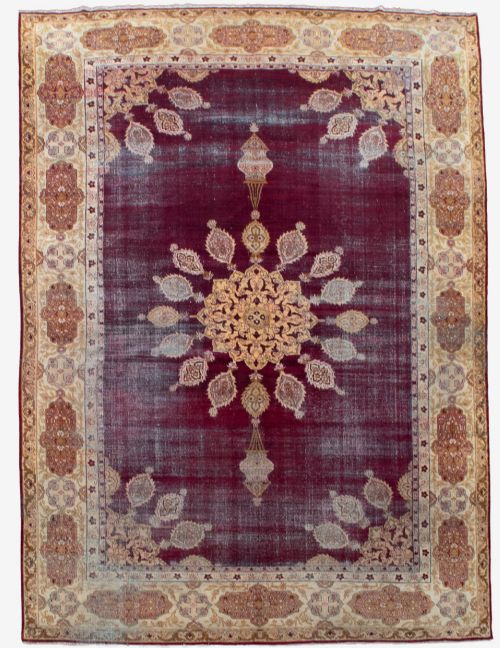
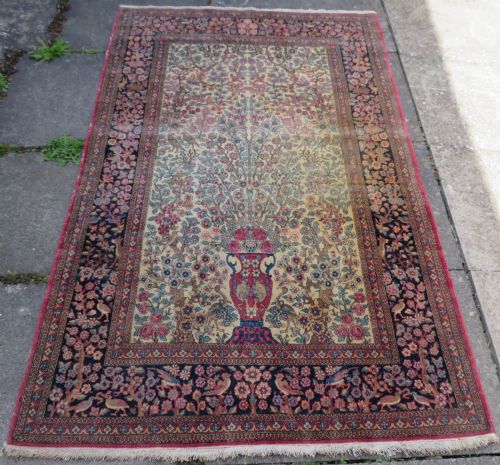
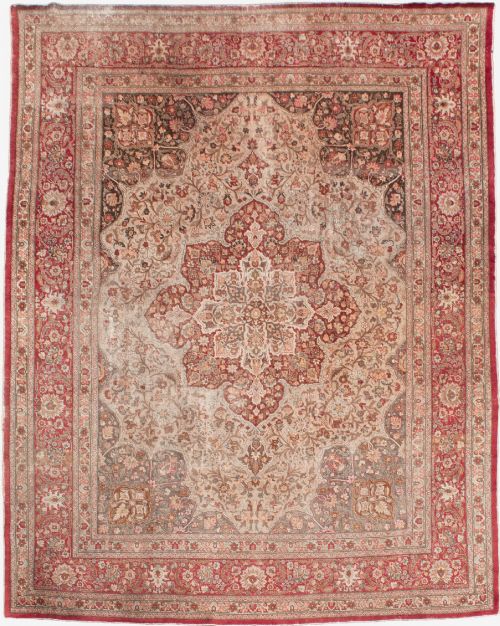
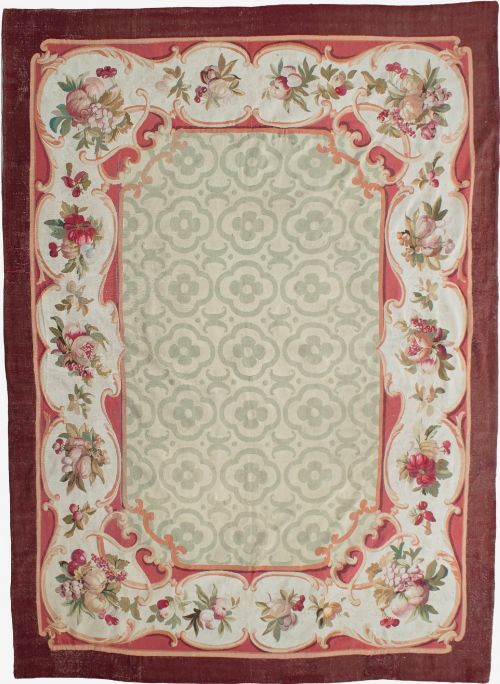


Antique Country Rug
An antique country rug grounds a grand interior with rich colour and storied texture gathered from distant weaving traditions.
Antique Country Rug
An antique country rug brings substantial scale and rustic character to a floor space, often arriving in large carpet proportions or long runner formats. When buyers search for an antique country rug, they encounter substantial room-size carpets and smaller scatter rugs designed for heavy use in manor houses and country estates.
The selection encompasses diverse regional origins, including Persian weave types like Mahal, Heriz, Tabriz, Fereghan, Isfahan, Hamadan, and Sarab. Alongside these Middle Eastern pieces appear Turkmen tribal works such as Ersari and Tekke main carpets, plus European Aubusson and French Rococo designs.
The timeline stretches from the mid nineteenth century through to the early twentieth century, spanning dates like 1850, 1880, 1890, 1900, 1910, and 1920. Many examples embrace a distinct country house look featuring worn patinas and faded grounds suited to relaxed domestic interiors.
Materials and construction
These floor coverings rely primarily on durable wool for the pile and foundation structure, often supported by cotton warps and wefts to maintain dimensional stability across large formats. The natural animal fibres take dye deeply, yielding rich colour variations that soften gracefully over decades of foot traffic.
Wood and brass occasionally appear alongside the textile works when integrated into upholstered seating items like club armchairs upholstered in kilim or Ushak carpets. Traditional hand-knotting techniques dominate the production of the rugs and carpets, binding the wool securely to the foundational grid.
Antique Country Rug Retail Price Guide 2026
Typical asking prices for country rug among the pieces listed under this phrase on Sellingantiques today, from the lower quarter to the upper quarter. They describe what is for sale here now, not the wider market.
Current listings feature materials including wool, cotton, wood, and brass across items dated from 1850 through to 1920.
Assessing quality and finish
Quality rests upon the fineness of the knot density and the precision with which intricate shrub, tree of life, or all-over geometric patterns are executed across the field. Superior examples balance scale and proportion, ensuring large carpets maintain harmonious borders relative to their central medallions or open ivory grounds.
The integrity of the wool pile and the stability of the foundation dictate longevity, while evenly balanced wear contributes to the coveted faded country house aesthetic. Finer pieces demonstrate careful dye selection and master craftsmanship that endure despite substantial surface softening.
Howard And Sons
The Antique Country Rug Glossary
- Pile
- The upright loops or cut strands of yarn that form the usable surface of a rug. It provides the soft texture underfoot and protects the structural foundation beneath.
- Warp
- The vertical threads stretched tightly on the loom before weaving begins. The horizontal weft threads and the knotted pile are built upon this sturdy skeletal framework.
- Weft
- The horizontal threads passed alternately over and under the warp threads to bind the knots in place. It secures the rows of pile across the width of the textile.
- Runner
- A long, narrow format of rug specifically proportioned for hallways, staircases, and gallery spaces. These pieces guide movement through domestic interiors.
- Mahal
- A type of nineteenth-century Persian carpet known for large-scale, open floral designs and robust wool. They were produced extensively for Western export markets.
Antique Country Rug: Frequently Asked Questions
What defines an antique country rug?
An antique country rug is typically a nineteenth or early twentieth-century floor covering featuring relaxed, softened patinas suited to historic domestic settings.
These pieces range from room-sized Persian carpets to smaller tribal runners and French weaves, all selected for their warm character and substantial textile history.
How do I care for wool carpets?
Protect antique wool textiles by avoiding direct, harsh sunlight and using appropriate underlays to prevent slippage and friction against hard floors.
Vacuum gently with suction only, avoiding rotating brush bars that can pull at aged hand-knotted pile and foundation threads.
Where were these carpets used?
Historically, large room-size carpets and runners anchored substantial rooms, halls, and libraries within large country houses and estates.
Today, they serve the same foundational purpose, bringing warmth, acoustic dampening, and rich colour to living spaces and studies.
How do I distinguish regional styles?
Regional types reveal themselves through distinct palette choices, border structures, and motif vocabulary, such as the geometric medallions of Heriz or the all-over shrub designs of Mahal.
Tribal pieces like Ersari and Tekke works display characteristic guls and octagonal motifs rooted in nomadic weaving traditions.