
Antique Country Pastoral Art
Antique country pastoral art captures agrarian life through nineteenth-century oils and watercolours depicting cattle, harvest fields, and rural paths.
Antique Country Pastoral Art
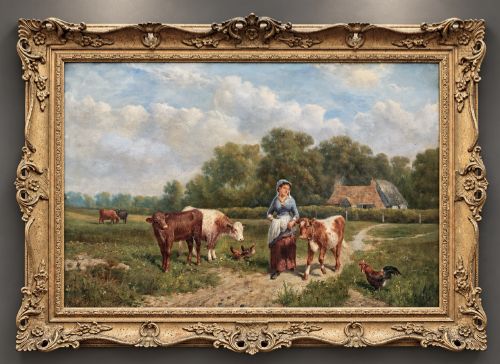
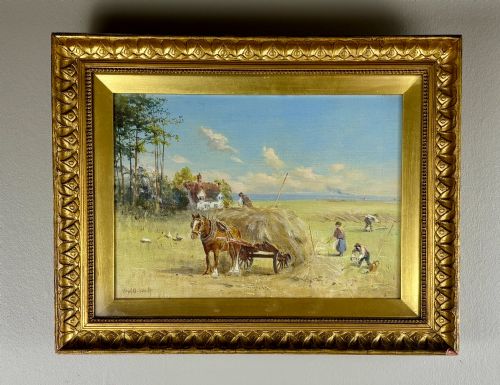
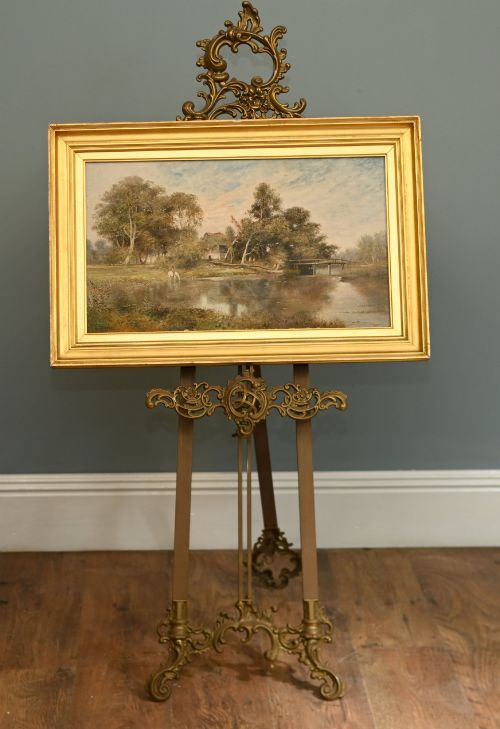
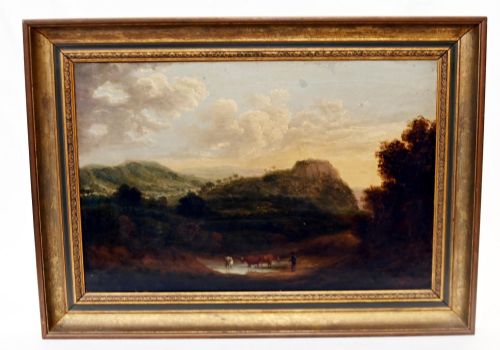
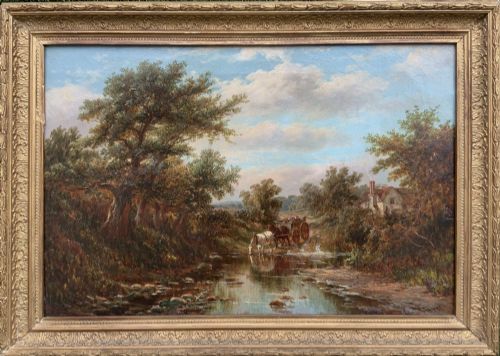
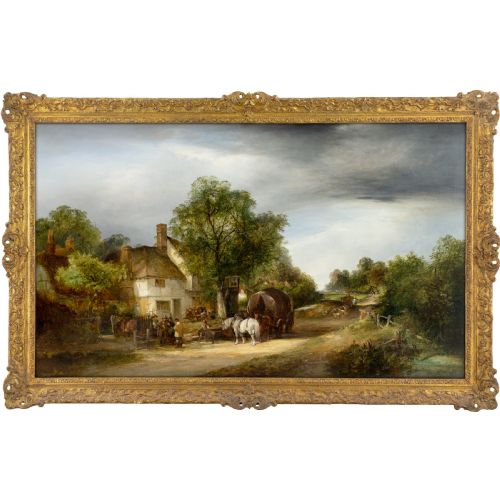
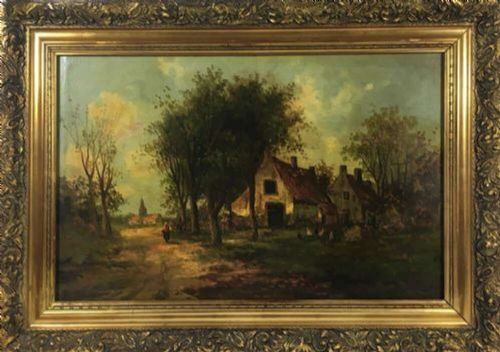
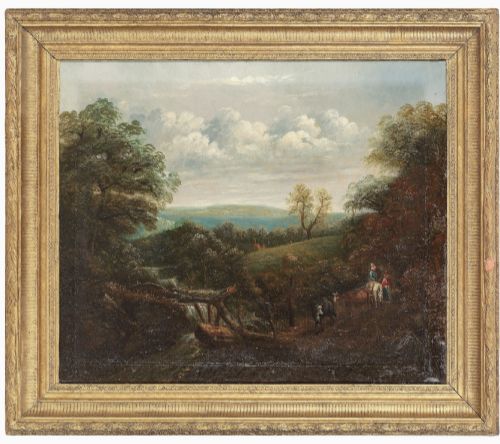
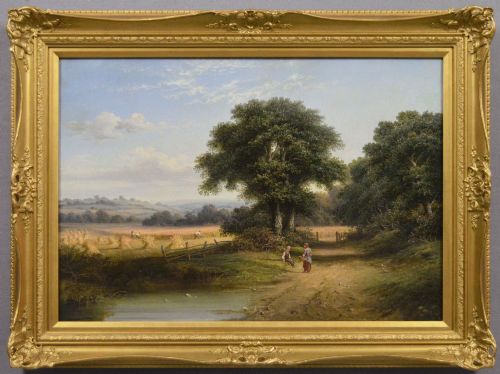
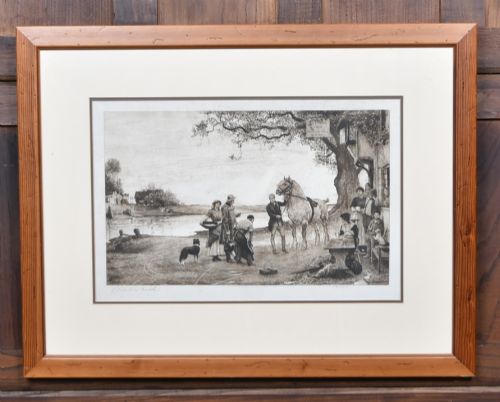
Antique country pastoral art encompasses framed oil paintings, watercolours, and wall tapestries focusing on rural scenes, farmland, and agricultural animals. Buyers encounter depictions of cattle, sheep, harvest fields, and river landscapes set in the English countryside or continental Europe.
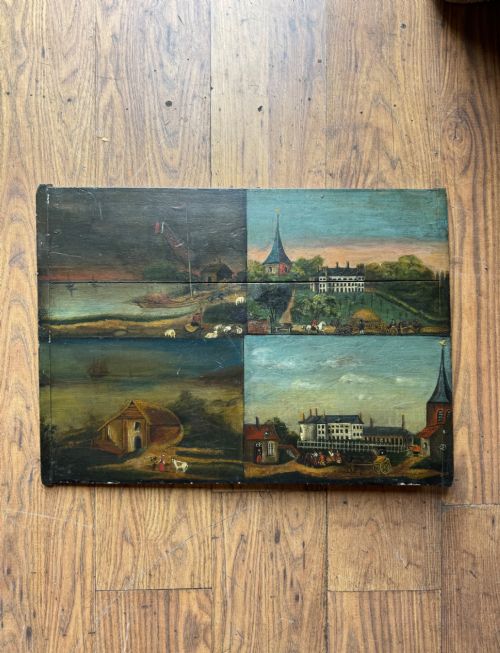
The selection on this page is dominated by nineteenth-century works, stretching from the Georgian era through Victorian, Edwardian, and early twentieth-century periods. These pieces range from naive folk art panels to professional works by established members of the English and French schools.
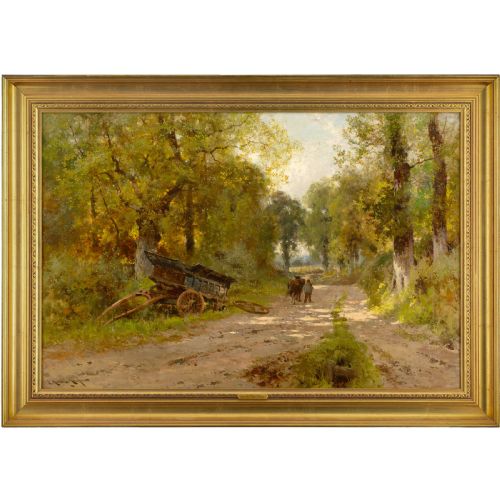
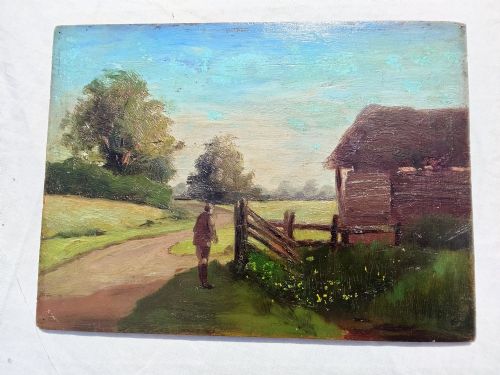
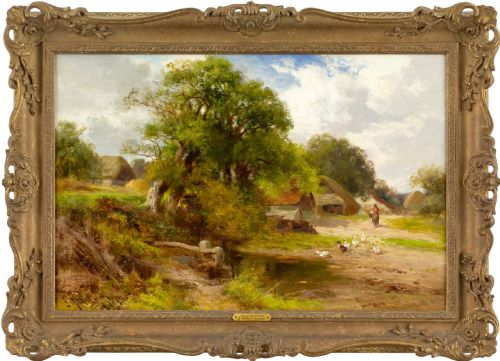
Common subjects include milkmaids, shepherds with flocks, plough horses, and figures beside ponds or country paths. Works appear on canvas, wooden boards, and paper, often retained within their original giltwood and gesso frames.
How they were made
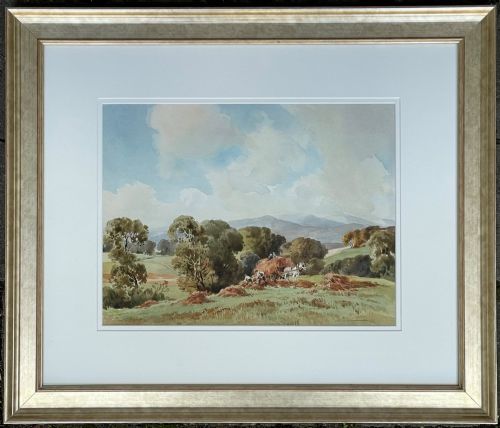
Artists utilised oil paint on stretched canvas, wooden board, or paper, applying pigment to capture natural light across farmland and riverbanks. Many watercolours on paper also survive from the period, recording delicate atmospheric conditions in rural settings.
Traditional framing involved carved wooden mouldings finished with gesso and giltwood, protecting the edges of the canvas or paper. Heavier works utilise solid wood panels or heavy canvas supports suited to large landscape compositions.
The selection includes contributions from the Norwich School, the Barbizon School, and various British and French realists.
What varies in quality
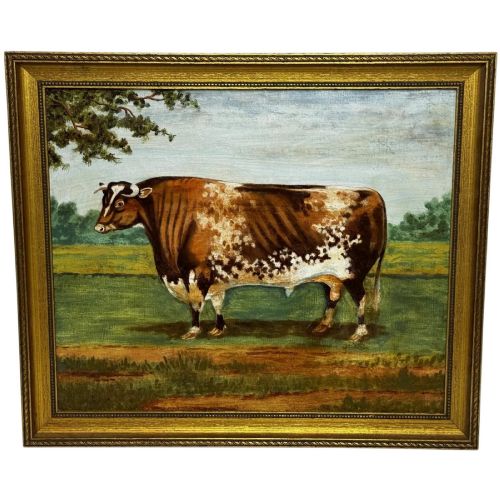
Quality rests in the handling of light, anatomical precision in animal painting, and the depth of the landscape perspective. Master works portray cattle and sheep with correct proportions and believable textures in fleece and hide, while simpler folk art pieces rely on flat planes and charming naivety.
The integration of figures within the rural environment distinguishes proficient academic painting from standard decorative output. Superior canvases show careful attention to atmospheric distance in the sky and foliage, whereas lesser examples employ formulaic backgrounds behind central subjects.
Percy Lancaster·John Horace Hooper·Walter Heath Williams·Thomas Sidney Cooper·Frederick James Kerr·Johann Friedrich Voltz·Henry H Parker·Henry Schouten·George Morland·Johannes de Haas·A M Gauci·Ernest Higgins Rigg·Henry John Kinnaird·Owen Bowen·Ernest Pile Bucknall·Jean-Baptiste Joseph Pater·Samuel Joseph Clark·Eugene Verboeckhoven·Andre de Moller·James Hardy Junior·Robert John Hammond·Frederick James Knowles
The Antique Country Pastoral Art Glossary
- Pastoral art
- Works depicting the rural lives of shepherds, farmers, and livestock within open landscapes. These scenes romanticise agricultural existence and agrarian traditions.
- Giltwood
- Wood carved and coated with gold leaf or a gold-coloured finish for picture frames. This material provides a reflective border that separates the painting from the surrounding wall.
- Gesso
- A plaster-like mixture applied to wooden frames as a base for gilding and ornamentation. It allows artisans to mould crisp decorative details before applying metal leaf.
- Naive art
- Artwork created by self-taught individuals working outside academic traditions. These pieces display simplified perspective and direct colour choices rather than strict anatomical accuracy.
Antique Country Pastoral Art: Frequently Asked Questions
What subjects appear in antique country pastoral art?
These works primarily feature agricultural scenes, including cattle grazing in meadows, sheep resting near streams, and farmyard landscapes with horses. Figures of milkmaids, harvesters, and shepherds frequently animate the foreground alongside rural cottages and river paths.
Compositions often focus on specific animals such as prized shorthorn bulls or flocks tended by local workers. The overarching theme celebrates traditional rural labour and the quiet rhythms of the countryside across different European regions.
How do I date a pastoral oil painting?
Dating relies on examining the substrate, stretcher construction, and artist signatures recorded alongside the piece. Nineteenth-century works frequently utilise hand-woven canvas and specific framing styles typical of the Victorian or Edwardian periods.
Written inscriptions on the reverse of the canvas or wooden board often supply specific locations, dates, and artist biographies. Stylistic cues, such as the clothing of figures or the application of realism versus impressionism, further narrow the decade of creation.
Where were these paintings originally displayed?
Landed gentry and Victorian homeowners displayed pastoral art in domestic reception rooms, libraries, and country house drawing rooms. These scenes provided urban or rural residents with a comforting connection to agrarian life and domestic agriculture.
Smaller watercolours and framed etchings were often hung in private studies or bedrooms. Larger oil paintings served as focal points above mantelpieces, framed in ornate giltwood to complement period interior decor.
How should I care for antique oil paintings?
Preservation requires hanging works away from direct sunlight and maintaining stable indoor humidity levels to protect canvas and wood. Gentle dusting with a soft, dry brush keeps the surface clear without disturbing delicate paint layers.
Avoid using liquid cleaners or chemical solvents on the canvas or the giltwood frame. Professional conservators should handle any structural repairs, cleaning of discoloured varnish, or canvas relining.