


Antique Country Kitchenware
Antique country kitchenware brings utilitarian warmth into the home through honest materials shaped by centuries of daily use.
Antique Country Kitchenware
Antique country kitchenware encompasses functional items used for food preparation and storage in domestic settings, spanning from the seventeenth century to the mid-twentieth century. These objects include cookware, kitchen utensils, tableware, mixing bowls, wall boxes, preserving pans, and saucepans.
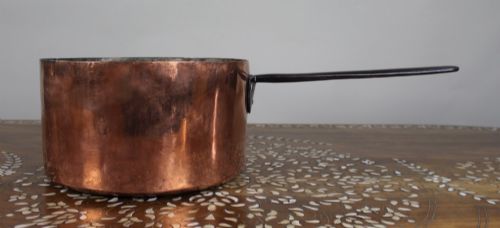
The pieces you meet on this page most commonly originate from the Georgian and Victorian eras, along with specific examples from French and Welsh vernacular traditions. They range from heavy copper saucepans and brass skimmers to turned wooden treen bowls and painted pine knife sharpeners.
Buyers seek these items for their robust utility and patinated surfaces that reveal long histories of domestic service. Each piece represents traditional rural craftsmanship tailored to practical kitchen tasks rather than formal dining rooms.
How they were made
Makers shaped these utilitarian objects from copper, brass, iron, pewter, tin, and various woods including oak, beechwood, fruitwood, sycamore, and pine. Metal items involved hammering, riveting, and casting to create durable vessels and utensils capable of handling heavy hearth cooking.
Wooden kitchenware relied on traditional turning on lathes and hand carving, producing smooth treen bowls, scoops, and mortared herb chopper bowls. Surfaces often retained original paint traces, natural grain patination, or structural iron hardware.
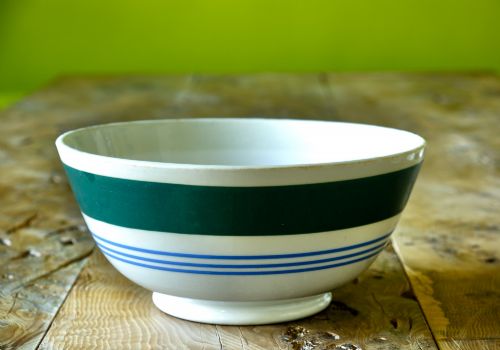
Object types include heavy saucepans, preserving pans, salt boxes, cream skimmers, and turned wooden bowls.
What varies in quality
Quality in antique country kitchenware rests on the integrity of the materials, the weight of the metal or density of the wood, and the preservation of original surfaces. Heavy gauge copper and thick turned sycamore represent superior domestic manufacture designed for intensive daily work.
The presence of original hardware, unaltered patination, and maker or regional characteristics elevate a piece above standard utility items. Wear from honest use enhances character, provided the structural form remains sound and uncompromised.
T G Green
The Antique Country Kitchenware Glossary
- Treen
- Small handmade wooden household objects. These items were turned or carved from native timbers for everyday domestic tasks.
- Oeufrier
- A specialised French egg cooker or holder. This uncommon kitchen item dates around the nineteenth century.
- Salt Box
- A wall-mounted container used for storing salt dry near the hearth. They often feature hinged wooden lids and original iron hardware.
Antique Country Kitchenware: Frequently Asked Questions
How were old copper pans used?
Old copper pans served as primary cooking vessels over open hearths and early kitchen ranges. Their excellent thermal conductivity made them ideal for preserving, boiling, and simmering.
Heavy saucepans and large preserving pans handled bulk food production in large country houses and farmhouses. Many retain riveted handles and specialised forms suited to specific culinary tasks.
What is treen kitchenware?
Treen encompasses small wooden objects created by turning on a lathe or hand carving. In the kitchen, this included bowls, scoops, basting spoons, and herb chopper mortars.
Sycamore, fruitwood, and beechwood were favored for their dense grain and clean surfaces. These wooden items offered lightweight durability for daily food preparation.
How do I date antique kitchenalia?
Dating antique kitchenalia involves examining construction methods, material types, tool marks, and hardware styles. Hand-hammered metal seams and forged iron hinges point to earlier periods.
Stylistic cues from Georgian or Victorian design traditions help narrow the origin. Makers' marks, where present, provide direct evidence of manufacturing dates and places.