
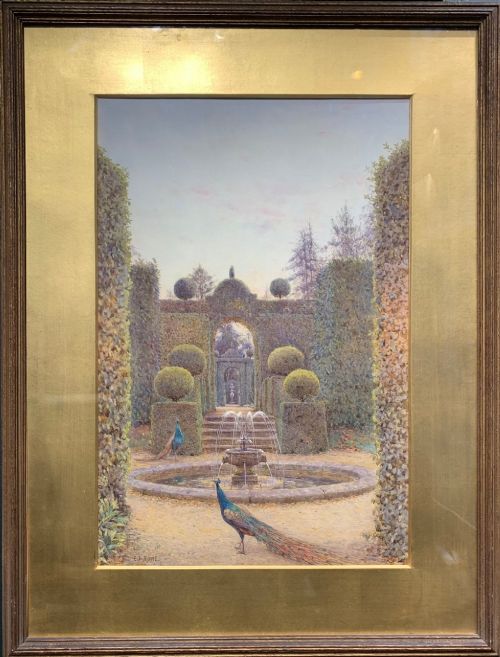
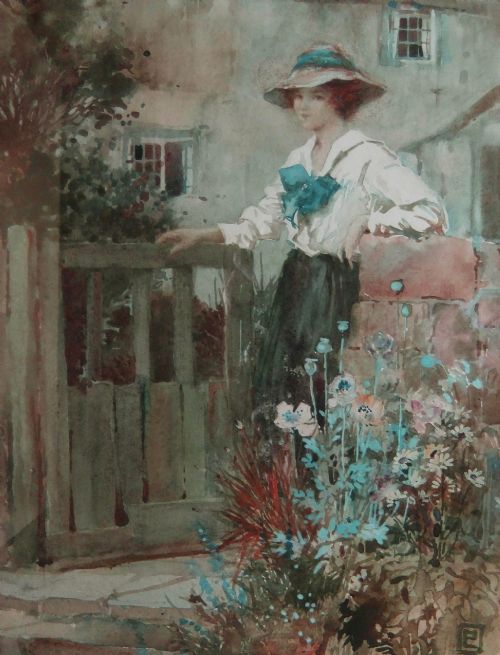


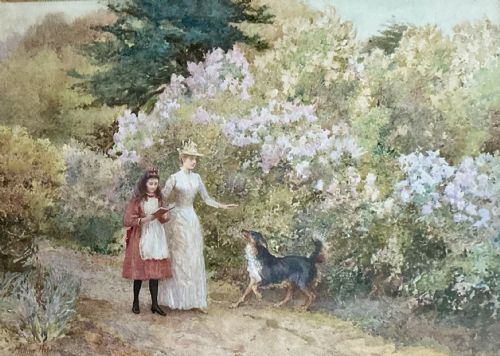


Antique Country Garden Painting
An antique country garden painting captures rural horticulture and domestic architecture on paper or canvas.
Antique Country Garden Painting
An antique country garden painting presents outdoor spaces, floral plots, and vernacular dwellings through the artistic conventions of the nineteenth and early twentieth centuries. These artworks depict rural domestic life, cottage boundaries, and cultivated grounds using media such as watercolour and oil on canvas.
The selections available here reflect British Impressionist, Edwardian, and Victorian sensibilities, often recording specific country houses, rustic cottages, and herbaceous borders. Painters of this tradition focused on natural light, seasonal colour, and the quiet routines of rural existence.
Buyers encounter works created across several decades, ranging from nineteenth-century academic oils to later watercolours from the nineteen-twenties and thirties. Each piece offers a distinct record of how artists viewed the British and European countryside during a period of industrial change.
Materials and construction
Watercolour pigment on paper and oil paint applied to canvas form the primary material basis for these artworks. Artists utilised traditional grounds, preparing supports with animal glue and gesso before laying down pigments with bristle and sable brushes.
Framing and mounting materials reflect the period of production, often incorporating moulded wood and gilt liners that protect the fragile paper or canvas surfaces. Pigment binders and varnishes applied by the artists ensure the longevity of the colour layers.
The documented pieces date from the nineteenth century through to the nineteen-forties.
Factors of quality
Quality rests upon the artist's handling of light, atmospheric perspective, and botanical detail within the painted garden scene. Superior examples demonstrate confident brushwork and a balanced composition that brings depth to the foliage and architecture.
The condition of the pigment and the integrity of the paper or canvas support influence the overall standard of the artwork. Works retained in original frames with minimal surface disruption command greater attention from collectors.
Ernest Arthur Rowe·Percy Lancaster·Arthur Hopkins·Rowland Henry Hill·Theresa Stannard·Owen Bowen·Ernest Higgins Rigg·William Hatherell·Samuel Sidley·David Woodlock·Arthur Claude Strachan·John Abernethy Lynas-Gray·John Emms·Henry John Sylvester Stannard·Benjamin D. Sigmund·Beatrice Parsons·George Frederick Nicholls·William Greaves·Ralph Hedley·Amy Antill·Alfred Walter Williams
The Antique Country Garden Painting Glossary
- Watercolour
- A painting method in which the paints are made of pigments suspended in a water-based solution. This technique allows for translucent washes of colour on paper supports.
- Canvas
- A heavy woven fabric used as a surface for oil painting. It is typically stretched over a wooden frame before pigment is applied.
- Impressionism
- A style of painting that focuses on the accurate depiction of light in its changing qualities. Practitioners often worked outdoors to capture immediate visual impressions.
- Provenance
- The chronology of the ownership of a work of art. Documented history aids in verifying the authenticity and origin of the piece.
Antique Country Garden Painting: Frequently Asked Questions
What periods do these paintings represent?
The works span from the nineteenth century through the early decades of the twentieth century. This encompasses Victorian, Edwardian, and interwar artistic movements.
Creators during these eras recorded rural subjects with varying degrees of academic precision and impressionistic freedom.
Are these works signed by the artists?
Many examples feature signatures or monograms applied by the painter, often accompanied by dated inscriptions. Attribution is further supported by historical exhibition records and stylistic analysis.
Unsigned pieces rely on material evidence and subject matter to indicate their period of origin.
How should I display a watercolour painting?
Watercolours require protection from direct sunlight to prevent the fading of delicate pigments. Conservation-grade framing with UV-filtering glass ensures the paper and colours remain stable.
Environmental stability in terms of humidity prevents warping of the paper support and degradation of the mount.
What is the difference between oil and watercolour?
Oils utilise slow-drying paint suspended in oil, applied to canvas or wood panels, allowing for rich texture and deep layers of tone. Watercolours employ water-soluble pigments on paper, producing a luminous and translucent effect.
Each medium offers distinct visual qualities suited to different interpretations of garden scenery.