


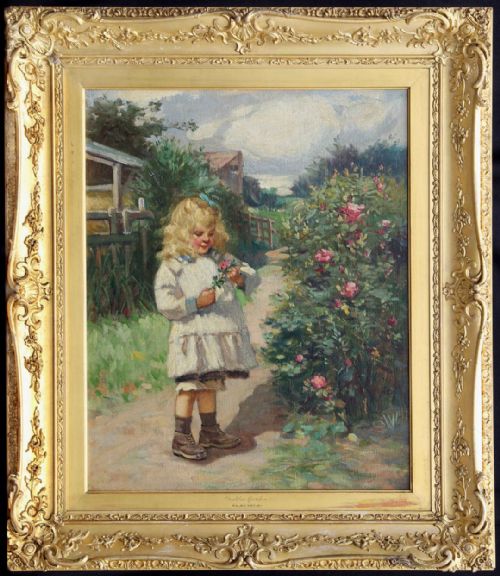

Vintage Floral Garden Artwork
Vintage floral garden artwork brings botanical life indoors, offering charming glimpses of landscaped grounds and blooms preserved on paper and canvas.
Vintage Floral Garden Artwork
Vintage floral garden artwork captures outdoor flora and domestic grounds across various historical periods, ranging from late Victorian scenes to mid-century mixed media pieces. When searching for vintage floral garden artwork, buyers encounter framed watercolours and oil paintings depicting walled gardens, water lilies, and cottage flowers.
The selections span British impressionism, Edwardian styles, and French impressionist influences, frequently presenting specific named locations like country houses and London parks. Most pieces date from the late nineteenth century through to the mid-twentieth century, highlighting traditional gardening aesthetics of those eras.
Object types vary between delicate watercolour paintings, oil paintings on canvas or wood panels, and Chinese embroidered textiles featuring garden birds. Buyers find substantial framed wall art alongside intimate studies of garden roses, crocuses, and rudbeckia flowers.
How they were made
Artists utilised watercolour paint on paper and oil paint on canvas or mahogany panels, often applying gesso to prepare wooden surfaces for detailed brushwork. These traditional mediums allowed painters to capture natural light and botanical textures across diverse outdoor subjects.
Makers framed their compositions in wood and glass to protect fragile watercolours and paper works from environmental moisture and handling damage. Embroidered works employed fine textiles and threads to render garden scenes and birds with tactile depth.
Mandarin ducks and garden birds quietly share space with the flora in antique Chinese embroideries.
What varies in quality
Quality separates through the artist's ability to render natural light, atmospheric depth, and botanical accuracy within the chosen medium of oil or watercolour. Works by established named painters often demonstrate superior brushwork control and compositional balance compared to anonymous pieces.
The preservation of the underlying paper or canvas influences the desirability of each piece, alongside the originality and condition of the framing and gesso details. Stronger provenance and documented attribution to recognised regional groups elevate the standing of individual artworks.
Harry Wanless·Ernest Higgins Rigg·Lilian Stannard·Owen Bowen·Jane Utley·Beatrice Parsons·Edgar Bundy·Theresa Sylvester Stannard·George Frederick Nicholls·Ralph Hedley·Fred Merriman·Arthur H Buckland·Minnie Smythe
The Vintage Floral Garden Artwork Glossary
- Watercolour
- A paint consisting of pigment suspended in a water-based solution, traditionally applied to paper for transparent botanical studies.
- Gesso
- A plaster mix applied as a surface preparation for wood panels or canvas before oil painting begins.
- Impressionism
- A nineteenth-century art movement focusing on accurate depiction of light and ordinary subject matter, visible in many garden scenes.
- Mixed media
- An artwork combining different materials such as paint and ink on a single surface.
- Mahogany panel
- A solid wood support used by artists instead of canvas for stability during oil painting.
Vintage Floral Garden Artwork: Frequently Asked Questions
What periods do these artworks cover?
The available pieces span from the late Victorian era and Edwardian period through to the 1930s and 1940s. This timeframe captures distinct shifts in early twentieth-century painting styles.
Most works cluster around the early decades of the twentieth century, reflecting popular British and French artistic interpretations of domestic gardens.
Are these paintings original artworks?
The selection consists of original hand-painted watercolours, oils on canvas or wood, and traditional textile embroideries rather than modern reproductions. Many bear original artist signatures and historical framing.
Each piece represents a unique hand-rendered study created by individual artists working on location or in studios.
How should I hang watercolour pieces?
Watercolours require careful placement away from direct sunlight to prevent fading of the delicate pigments used on paper supports. UV-protective glass and professional framing help safeguard these vulnerable works.
Maintaining stable indoor humidity levels protects both the paper base and the wooden frames from warping over time.
What subjects typically appear in these scenes?
Common subjects include walled kitchen gardens, country house grounds, water lily ponds, and urban parks filled with seasonal flowers. Artists frequently painted specific blooms such as roses, crocuses, and rudbeckia.
Certain pieces also incorporate architectural elements like cottages and garden seats alongside traditional garden birds.