


Edwardian Style Landscape Artwork
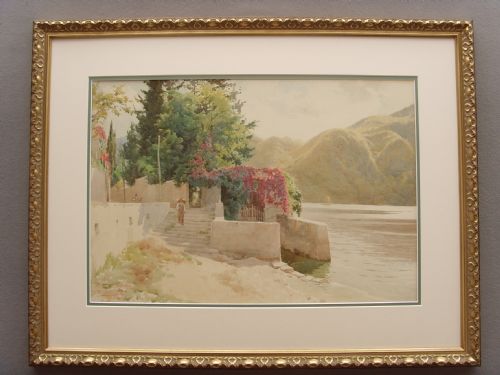
Edwardian style landscape artwork captures quiet rural scenes and atmospheric riversides, offering buyers a serene piece of historical British pastoral charm.
Edwardian Style Landscape Artwork
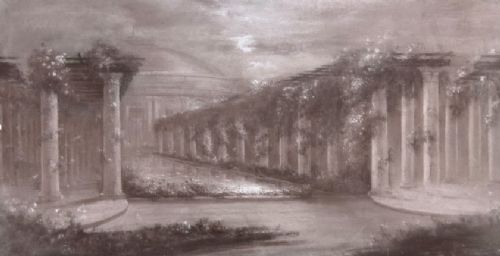
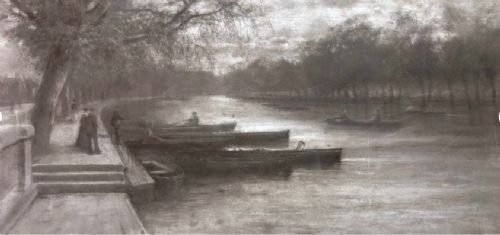
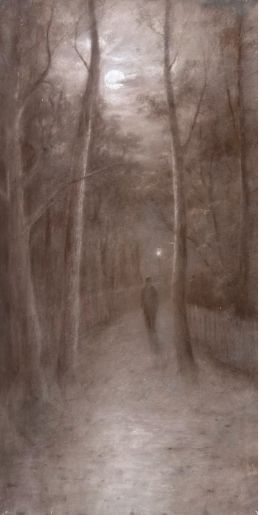
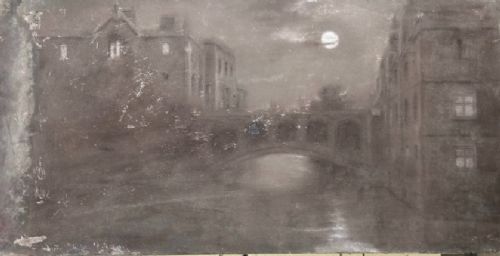
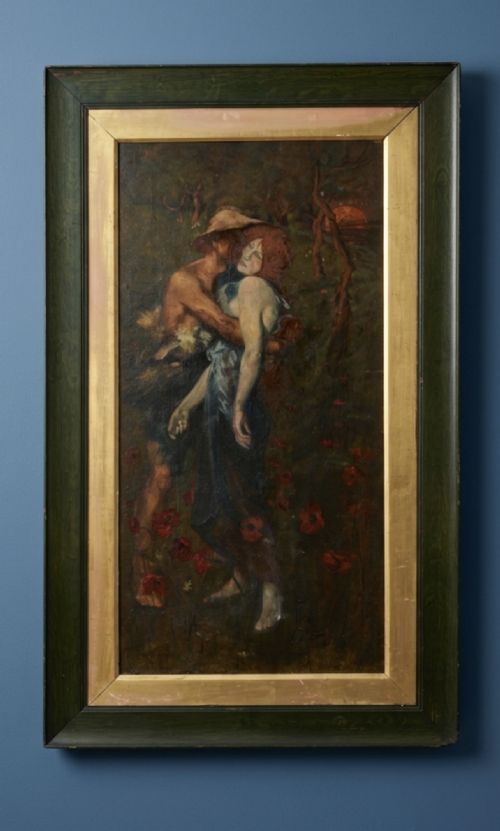
Edwardian style landscape artwork covers atmospheric drawings, watercolours and oil paintings created across the nineteenth and twentieth centuries. These pieces typically depict British pastoral scenes, river banks, country houses and coastal walks executed in distinct historical styles. Buyers meeting this selection encounter works that draw heavily upon tonalism, Victorian symbolism and British impressionism.
The visual character leans towards muted palettes, charcoal sketches and soft oils mounted on canvas or paper. Many examples reflect the stylistic influence of period masters like Whistler and Grimshaw, focusing on dusk light and quiet urban or rural vistas. Landscapes range from intimate charcoal drawings of winter gardens to larger framed watercolours and pastoral oil paintings.
Materials and Technique
Artists working within this tradition utilised traditional mediums such as oil paint on canvas, charcoal on paper, and watercolour on card. Charcoal works are frequently mounted directly onto canvas stretchers, preserving delicate tonal gradations achieved through smudging and fine line work. Oil paintings rely on layered brushwork built up on primed canvas or wood panels, often housed in original gilt wood frames.
Watercolour pieces demonstrate careful washes and fine detailing characteristic of late nineteenth and early twentieth century studio practice. Support materials vary from heavy art paper to traditional stretched canvas, reflecting the practical choices of contemporary painters working both en plein air and in studios.
Listings feature works spanning the nineteenth and twentieth centuries, utilising canvas, paper, charcoal, oil paint, and gilt wood.
Judging Quality in Landscape Works
Quality in these landscapes rests upon the artist's handling of light, atmosphere and spatial depth rather than mere subject matter. Stronger works display confident tonal control, particularly in capturing twilight or misty conditions reminiscent of tonalist and impressionist approaches. Weaker examples often rely on formulaic composition with flat colour application and minimal atmospheric tension.
The integrity of the primary support and the presence of a period frame contribute significantly to a piece's standing. Works that retain their original stretcher mountings, untouched paper integrity or period gilt frames demonstrate better preservation. Condition issues such as heavy foxing on paper or unstable paint layers separate accomplished survivals from heavily compromised pieces.
Philip Richard Morris·Frederick Septimus Lewis·Claude Cardon·Peter Jackson·John Charles Maggs·Fred Merriman
The Edwardian Style Landscape Artwork Glossary
- Tonalism
- An artistic style where shadow, atmosphere and a muted palette dominate over sharp outlines and bright primary colours. This approach creates a moody, poetic response to natural landscapes.
- Pre-Raphaelite
- A movement characterised by detailed observation, bright natural colours and serious literary or pastoral themes. Works associated with this circle emphasise fidelity to nature.
- Canvas stretcher
- A wooden frame that keeps a painted canvas taut and properly tensioned. Older works often feature wedged corners characteristic of traditional carpentry.
- Charcoal
- A dry drawing medium made from slowly burned wood used to achieve deep blacks and subtle grey tones. It requires careful fixing to prevent smudging on paper or canvas.
- Pastoral realism
- An artistic approach depicting rural life and agricultural scenes with unvarnished accuracy. This genre focuses on ordinary agricultural workers, animals and country settings.
Edwardian Style Landscape Artwork: Frequently Asked Questions
What defines Edwardian landscape art?
These artworks capture peaceful rural views, moody riverbanks, and pastoral scenes using soft tones and atmospheric lighting. They reflect the artistic preferences of the early twentieth century through traditional mediums.
Subjects range from quiet coastal walks to coaching inns and country houses, often showing clear influences from tonalism and British impressionism.
How should I display charcoal drawings?
Charcoal drawings on paper require professional framing behind protective glass to prevent dust accumulation and accidental smudging. Keeping them away from direct sunlight preserves the delicate carbon lines.
Works mounted on canvas stretchers need stable indoor humidity to prevent warping of the wooden support and cracking of the underlying paper.
How do I spot Whistler influences?
Works showing Whistler influences rely on moody, nocturnal, or dusk settings where distinct details dissolve into atmospheric haze. These pieces prioritize an overall tonal harmony above bright local colours.
Artists utilising this approach frequently employ charcoal or muted oil paints to evoke a quiet, contemplative mood across urban and rural vistas.
Are these paintings on original canvas?
Many period pieces utilise traditional stretched canvas or paper attached securely to vintage stretchers. Examining the reverse side often reveals period framing hardware and aged wooden supports.
Original mountings provide reliable clues to a work's age and help confirm whether the piece retains its historical integrity.